80% of the PS3 Library Is Now Playable on PC With Zero Black Screens as RPCS3 Tames Sony's Cell CPU
Long regarded as the most unforgiving hardware architecture in console history, the PlayStation 3's Cell Broadband Engine has just yielded another historic milestone. This October 2026, the open-source development team behind RPCS3 officially confirmed that over 80% of the entire PS3 game library is now classified as "Playable" on PC.
Behind that headline figure lies a massive triumph for software preservation and low-level systems engineering. Not a single commercial release in Sony's seventh-generation catalog remains stuck on a black screen at boot.
2,855 Completable Games and Zero Black Screens Across 3,568 Tested Titles
Real-time statistics published on the official RPCS3 compatibility database highlight just how strict the project's testing standards are. Out of 3,568 unique PlayStation 3 games cataloged and verified (excluding regional duplicates, demos, and betas), exactly 80.02% of the library, representing more than 2,855 titles, can now be played from the opening cutscene to the end credits with stable framerates and zero game-breaking glitches.
The intermediate "Ingame" tier, which tracks titles that enter active gameplay but still suffer from severe frame drops, visual artifacts, or crashes that prevent completion, has shrunk to 19.3% (around 688 games). Meanwhile, titles trapped in opening menus under the "Intro" category now account for less than 0.68% of all tested releases.
For systems engineers, the most remarkable metric sits at the bottom of the chart: the "Loadable" and "Nothing" categories stand at an absolute 0.00%. That level of maturity stands in sharp contrast to younger emulation frontiers, such as the recent AnyPS5 compatibility tracker recalibration across 385 tested PS5 games on PC, showing just how many years of low-level optimization separate initial boot sequences from full end-to-end stability.
| RPCS3 Status Tier (October 2026) | Share of PS3 Library | Estimated Volume (of 3,568 Titles) | Observed Technical Behavior |
|---|---|---|---|
| Playable | 80.02% | 2,855+ games | Completable from start to finish, stable performance, no critical bugs |
| Ingame | 19.30% | ~688 games | Enters gameplay but exhibits frame drops, rendering bugs, or crashes |
| Intro | 0.68% | ~25 games | Displays startup logos and menus without reaching stable gameplay |
| Loadable / Nothing | 0.00% | 0 games | Eliminated: 100% of the cataloged PS3 library boots and renders visuals |
From the Cell CPU to the RSX GPU: How Heavy First-Party Exclusives Were Tamed
Climbing from 75% compatibility earlier this year to over 80% this autumn required tackling the most notorious bottlenecks of Sony's 2006 console. Led by core contributors such as Nekotekina on the CPU side and lead graphics developer kd-11, the team focused heavily on how the Cell Broadband Engine coordinates its main PowerPC core (PPU) and six independent vector co-processors (SPU), each relying on 256 KB of ultra-fast local store memory alongside the Nvidia RSX graphics chip.
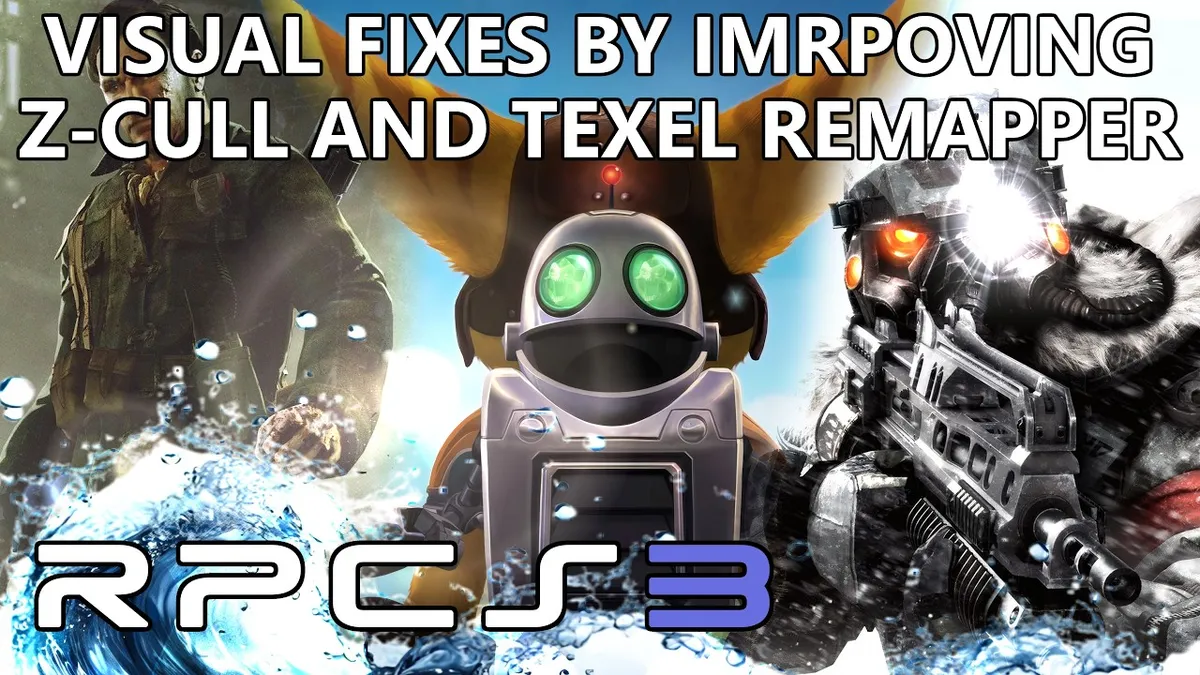
Recent overhauls to Z-Culling accuracy, the Texel Remapper, and Vulkan texture cache handling have squashed long-standing visual corruption and random lockups across Sony's heaviest first-party exclusives. Notoriously demanding flagship releases such as Gran Turismo 5, Gran Turismo 6, God of War III, God of War: Ascension, Twisted Metal, inFamous 1 and 2, Resistance 3, Uncharted 3, Puppeteer, Yakuza: Dead Souls, and the Ratchet & Clank series now run with vastly improved stability and rendering accuracy.
Hardware peripheral emulation also played a decisive role in pushing the counter past 80%. Refined support for PlayStation Move motion controllers, the PlayStation Eye camera, and USB microphones allowed the entire SingStar party catalog to graduate into the Playable tier, while the custom RPCN matchmaking servers continue to restore online multiplayer functionality across dozens of legacy classics.
Why AVX-512 and AMD Ryzen CPUs Rule PS3 Emulation on Desktops and Handhelds
From a hardware architecture standpoint, translating the 128-bit vector instructions of six Cell SPUs in real time via RPCS3's LLVM recompiler creates a massive divide among modern x86 processors. Leveraging native AVX-512 instruction sets allows the emulator to pack and execute Cell vector operations with a measured 30% to 35% performance uplift over standard AVX2 paths, while dramatically smoothing out 1% low frame times.
Because Intel disabled AVX-512 on consumer desktop chips following the introduction of hybrid E-Core architectures, AMD holds a commanding lead in RPCS3 with its Ryzen 7000 (Zen 4) and Ryzen 9000 (Zen 5) lineups. On Zen 5 processors, the transition to a full single-cycle 512-bit vector datapath gives heavy SPU-bound titles like The Last of Us and Red Dead Redemption the headroom needed to hold locked framerates without thread starvation.
Check Availability for AMD Ryzen on Amazon→
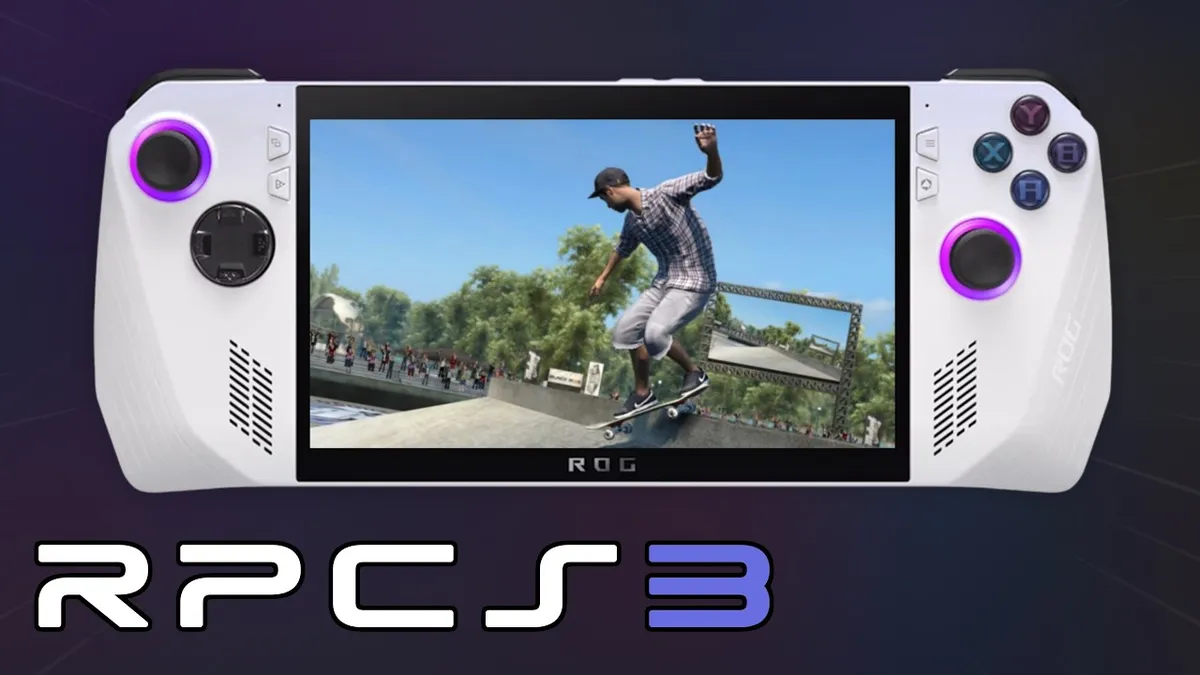
That architectural gap becomes even more apparent on handheld gaming PCs running Windows or Linux / SteamOS. Powered by the 4nm Zen 4 Ryzen Z1 Extreme APU with full AVX-512 support, handhelds like the ASUS ROG Ally and ROG Ally X can sustain 30 to 60 FPS at 720p and 1080p in demanding PS3 exclusives within a 15W to 25W thermal envelope.
By comparison, Valve's Steam Deck OLED relies on a custom four-core Zen 2 APU that lacks AVX-512 instructions, causing heavy late-era 3D exclusives to hit a hard CPU wall despite running lighter titles well. To improve usability across all portable devices, the RPCS3 team recently rolled out a redesigned controller-friendly In-Game Overlay alongside native ARM64 builds for Linux and Apple Silicon Macs.
My Test Bench: AVX-512 at 4K 60 FPS and the Real Challenge Behind the Final 19%
Running our standard Vulkan test suite with internal resolution scaling pushed to 300% (native 3840x2160 4K) and 16x anisotropic filtering enabled, the combined impact of the LLVM SPU recompiler and AVX-512 registers shows up immediately on frame-time graphs. Where shader pipeline compilation and texture cache misses used to trigger noticeable hitching during high-speed corners in Gran Turismo 6 or MotorStorm, modern vector throughput turns these classics into the high-frame-rate 4K remasters Sony never shipped.
Still, it pays to stay realistic about the engineering wall hiding inside the remaining 19.3% of "Ingame" titles. Pushing that final group into the Playable column is no longer just a matter of throwing higher clock speeds at the problem: it requires replicating cycle-accurate DMA transfer timings and non-standard Cell floating-point quirks without overwhelming mid-range desktop CPUs.
While RPCS3 is freely available for anyone to benchmark on their own rig today, we are eager to see how upcoming desktop and mobile silicon generations handle this extreme vector workload per watt. If the hardware teams at AMD or ASUS are reading this, our lab already has a spot cleared on the test bench to put their next Ryzen processors and handheld APUs through our custom RPCS3 SPU torture suite: feel free to reach out.

PC hardware enthusiast and competitive gamer, Arthur 'Heimdall' splits his time between France and the UK working in enterprise B2B software solutions. A business school graduate passionate about component benchmarking, he has been building, modding, and tuning PCs since childhood, optimizing every thermal degree and millisecond of display latency. An avid gamer across Assassin's Creed and sandbox titles, he forged his alliance with Grimtag and Chaya during late-night World of Warcraft raids before joining Pro-Gamer.