28 Cores, 144MB of bLLC Cache, and TSMC 2nm Silicon: Inside Intel's Core Ultra 9 4995HX "Nova Lake-HX" Flagship Laptop CPU
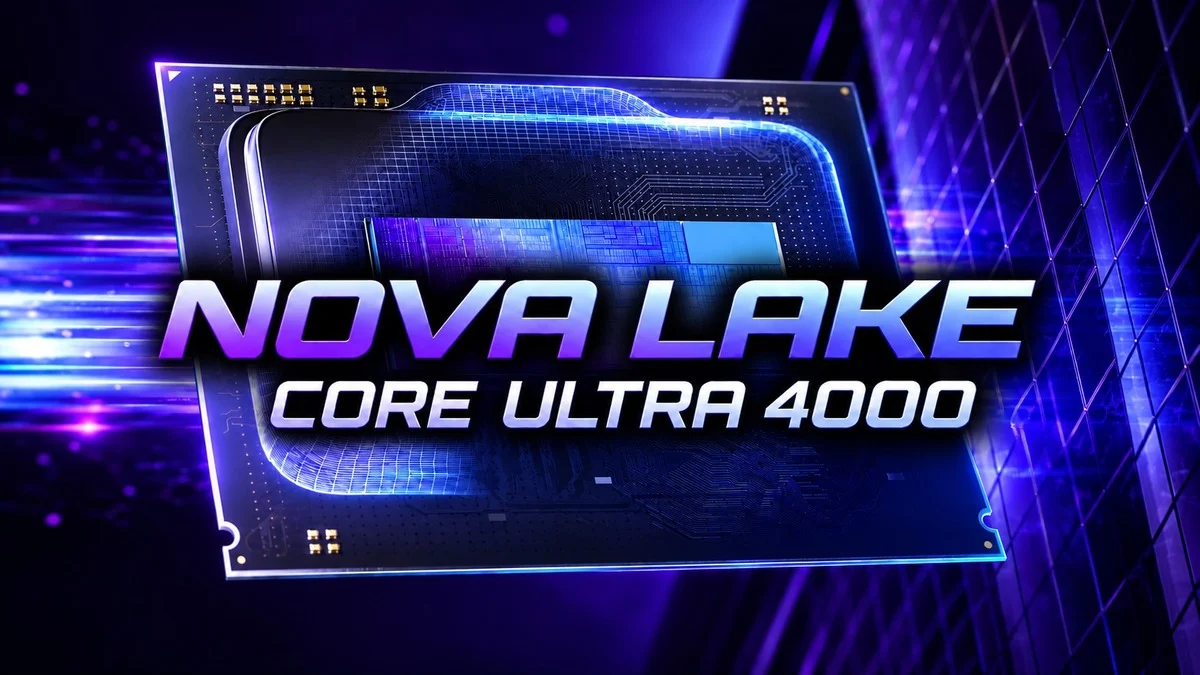
While Intel's current Arrow Lake-HX mobile lineup tops out at 24 cores on the Core Ultra 9 285HX, the company is preparing a major architectural leap for enthusiast gaming laptops and mobile workstations under its upcoming Core Ultra 4000 family. According to hardware specifications shared by hardware leaker @jaykihn0, the flagship Intel Core Ultra 9 4995HX processor from the Nova Lake-HX lineup will pack 28 cores and 28 threads on a single compute tile, backed by up to 144MB of bLLC (Big Last-Level Cache) and next-generation TSMC N2P manufacturing.
8 Coyote Cove P-Cores, 16 Arctic Wolf E-Cores, and 4 LP-E Cores: Breaking Down the 8+16+4 Layout
To reach 28 cores without resorting to a power-hungry dual-compute-tile package inside a laptop chassis, the Core Ultra 9 4995HX adopts an 8+16+4 hybrid core configuration. The processor pairs 8 P-Cores (Performance cores) built on the next-generation Coyote Cove microarchitecture with 16 E-Cores (Efficient cores) powered by the Arctic Wolf microarchitecture, alongside 4 LP-E Cores (Low-Power Efficient cores) also based on Arctic Wolf and housed directly on the SoC tile's low-power island.
Continuing the design shift introduced with the Core Ultra 200 series, Intel omits Hyper-Threading across the entire core stack, resulting in a 28-core, 28-thread chip. This single-compute-tile layout mirrors the standard desktop Nova Lake-S die (125W), whereas extreme desktop variants utilizing dual compute tiles are slated to scale up to 52 cores (16+32+4) within a 200W thermal envelope.
Bringing 4 dedicated LP-E cores to an HX-class processor directly addresses the biggest historical drawback of desktop-derived mobile silicon: poor idle battery life. Light background tasks can now run entirely on the low-power island without waking the main compute ring. Under full load, the thermal design power (TDP) stays within established enthusiast limits, starting at a 55W Processor Base Power (PBP) and scaling up to 160W Maximum Turbo Power. Managing that level of thermal density across disaggregated tiles remains a critical engineering focus, much like the extreme heat dissipation requirements we recently examined with the 901-gram solid brass Thermal Grizzly DeltaMate MPII water block for Intel 1851 CPUs.
Up to 144MB of bLLC Cache Against 3D V-Cache and a Stripped-Down 2-Core Xe3 iGPU
The biggest highlight for PC gamers is the inclusion of up to 144MB of bLLC (Big Last-Level Cache, also referred to as BFC) on the single compute tile. Over the past two generations, Intel's tile-based mobile processors have faced stiff competition from AMD's Ryzen 9 HX3D chips equipped with stacked 3D V-Cache due to inter-tile memory latency. By embedding up to 144MB of last-level cache directly accessible to the Coyote Cove and Arctic Wolf cores, Intel aims to drastically reduce trips to system DDR5 memory and boost 1% low frame rates in CPU-bound games.
To save die area and allocate the entire power budget to CPU compute and cache, the integrated GPU on the Core Ultra 9 4995HX is pared back to just 2 Xe3 cores. Because HX-series laptops are almost universally paired with high-wattage discrete graphics cards over PCIe 5.0, a massive integrated GPU would sit mostly idle.
Conversely, thinner laptops without dedicated graphics will rely on the Nova Lake-H family, led by the Core Ultra 9 4970H. That processor retains a 16-core CPU layout (4 Coyote Cove P-Cores, 8 Arctic Wolf E-Cores, and 4 LP-E Cores) rated between 28W and 115W, but pairs it with a hefty integrated GPU featuring up to 12 Xe3P cores (or 4 Xe3 cores on H-series SKUs intended for discrete GPU laptops). This bifurcated strategy directly counters AMD's push into high-CU mobile APUs, which we recently covered in our breakdown of the 8-core AMD Ryzen AI 7 HX 455 with a full 16-CU Radeon 890M iGPU.
| Processor / Segment | CPU Core Layout (P + E + LP-E) | Total Cores / Threads | Integrated GPU | Max bLLC Cache | TDP Envelope (Base / Turbo) |
|---|---|---|---|---|---|
| Core Ultra 9 4995HX (Nova Lake-HX) | 8 Coyote Cove + 16 Arctic Wolf + 4 LP-E | 28 Cores / 28 Threads | 2 Xe3 Cores | Up to 144MB | 55W / 160W |
| Nova Lake-HX (Entry HX Tier) | 4 Coyote Cove + 8 Arctic Wolf + 4 LP-E | 16 Cores / 16 Threads | 2 Xe3 Cores | TBA | 55W / ~160W |
| Core Ultra 9 4970H (Nova Lake-H) | 4 Coyote Cove + 8 Arctic Wolf + 4 LP-E | 16 Cores / 16 Threads | Up to 12 Xe3P Cores (or 4 Xe3) | N/A | 28W / 115W |
| Nova Lake-U (Thin & Light) | 4+0+4 or 2+0+4 | 8 or 6 Cores | 4 or 2 Xe3 Cores | N/A | 15W to 28W |
On the foundry side, although Intel produced early engineering samples on its internal Intel 18A-P process, retail compute tiles for Nova Lake-HX are slated to be fabricated on TSMC's N2P (2nm-class) node. Intel is expected to formally unveil the Core Ultra 4000 mobile family around CES 2027 in January.

My Lab Test
Having tested and benchmarked dozens of 16-inch and 18-inch HX-series gaming laptops over the past few years, I have consistently run into the same two architectural bottlenecks: disappointing battery life on the go because repurposed desktop dies lack a true low-power island, and a noticeable latency penalty against AMD's 3D V-Cache mobile chips in 1080p and 1440p gaming. On paper, the Core Ultra 9 4995HX directly targets both weaknesses.
Adding 4 Arctic Wolf LP-E cores on the SoC tile finally allows the main 24-core compute tile to power down during light productivity workloads, while packing up to 144MB of bLLC cache on TSMC N2P silicon is the exact hardware counterpunch Intel needed for high-refresh-rate gaming. If Intel can keep sustained gaming power draw closer to 85W-110W without hitting the full 160W ceiling, CES 2027 laptops built around Nova Lake-HX will be fierce contenders for both pure gaming and heavy workstation rendering.

PC hardware enthusiast and competitive gamer, Arthur 'Heimdall' splits his time between France and the UK working in enterprise B2B software solutions. A business school graduate passionate about component benchmarking, he has been building, modding, and tuning PCs since childhood, optimizing every thermal degree and millisecond of display latency. An avid gamer across Assassin's Creed and sandbox titles, he forged his alliance with Grimtag and Chaya during late-night World of Warcraft raids before joining Pro-Gamer.