56 TFLOPS and 30GB of GDDR7: Why Microsoft's Next-Gen Xbox Helix Won't Launch Under $800
The era of the sub-$500 home console is officially coming to an end. For the past two decades, video game console generations have relied on an unwritten economic contract, where hardware launched between $399 and $499 while manufacturers absorbed heavy early losses on every box sold.
For the next console generation targeted for late 2027, Microsoft is preparing to abandon hardware subsidies entirely. Built around a 56 TFLOP graphics pipeline and 30GB of unified GDDR7 memory, the upcoming Xbox Helix cannot realistically retail for anything less than $800.
The Soaring Silicon Cost of TSMC 3nm
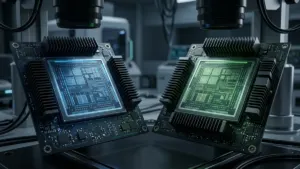
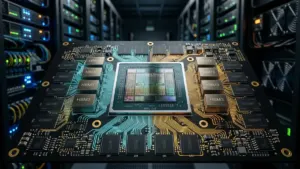
At the center of Project Helix sits a custom processor developed alongside AMD. The silicon unites Zen 6 CPU cores and RDNA 5 compute units on TSMC's cutting-edge 3-nanometer node (N3P), delivering massive computing density for home living rooms.
The manufacturing economics behind this process are brutal. Semiconductor industry analysts estimate that a single 3nm wafer currently exceeds $20,000, more than doubling the cost of the 7nm wafers used when current-gen consoles hit the market in 2020.
Fabricating a large monolithic die with enough compute units to sustain 56 TFLOPS inevitably results in higher defect rates, driving the raw unit cost of each finished APU into territory never before seen in mainstream consumer gaming hardware.
30GB of GDDR7 in an AI-Constrained Supply Chain
Feeding a 56 TFLOP GPU architecture requires massive memory bandwidth that conventional 16GB configurations cannot provide. Microsoft chose to equip Project Helix with roughly 30GB of unified GDDR7 memory operating between 28 and 32 Gbps.
That engineering ambition collides directly with global supply chain realities. The booming demand for artificial intelligence accelerators and data center infrastructure continues to swallow huge volumes of high-speed memory production capacity across major semiconductor plants.
Procuring 30GB of high-density GDDR7 modules translates to a bill of materials cost of $150 to $180 per console. Memory alone represents nearly half the total production budget of an entire previous-generation console.
High-End Thermal Engineering and a 400W Power Delivery
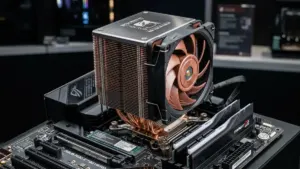
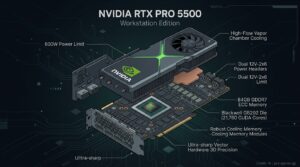
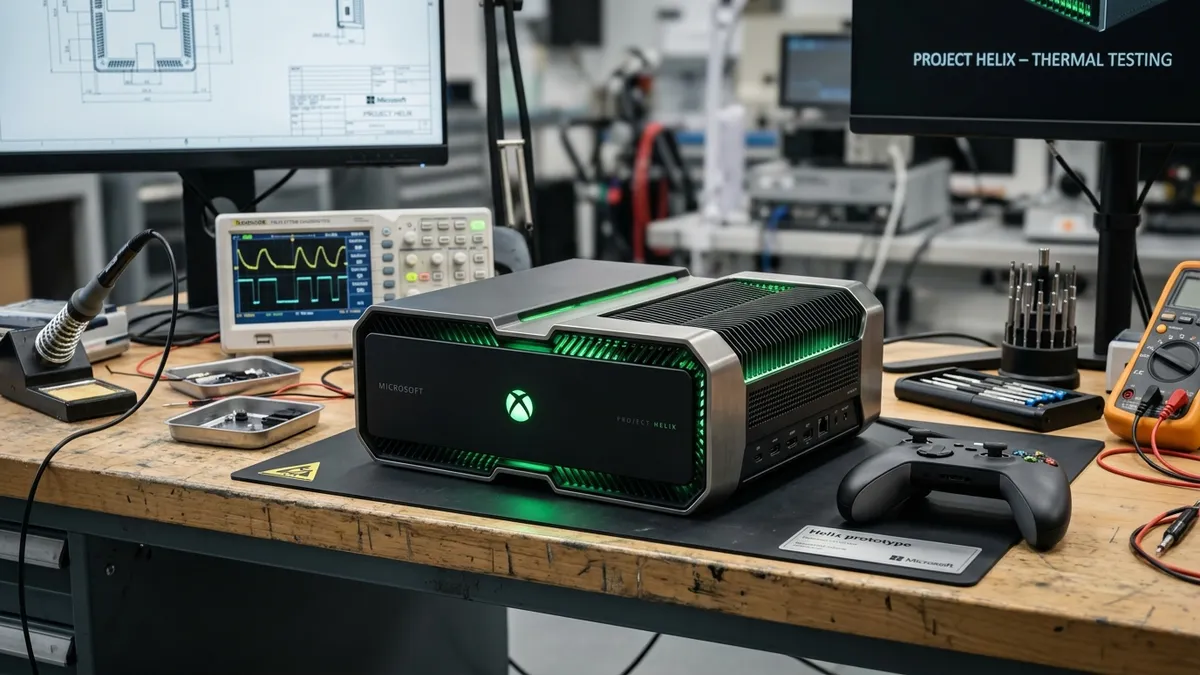
Taming the thermal output of a 56 TFLOP custom APU requires serious cooling hardware. Standard aluminum heatsinks and conventional heatpipes are no longer enough, forcing engineers to adopt an oversized vapor chamber cooling block.
To keep peak power delivery stable under heavy mixed workloads, the console incorporates an internal 350W to 400W power supply paired with a high-static-pressure axial fan. The reinforced metal chassis and multi-phase voltage regulation modules share far more DNA with boutique small-form-factor gaming PCs than traditional consoles.
| Component Group (Estimated BOM) | Standard Console ($500 Class) | Xbox Helix Architecture (2027) |
|---|---|---|
| Custom APU (CPU / GPU Die) | $140 to $170 (7nm / 6nm Wafers) | $260 to $310 (TSMC 3nm N3P Node) |
| Unified Memory (VRAM / RAM) | $50 to $65 (16GB GDDR6) | $150 to $180 (30GB High-Speed GDDR7) |
| Cooling System & Power Supply | $35 to $45 (Heatsink + 200W-250W PSU) | $75 to $95 (Vapor Chamber + 400W PSU) |
| Gen5 NVMe High-Speed Storage (2TB) | $40 to $55 | $70 to $90 |
| Chassis, PCB & Final Assembly | $45 to $55 | $65 to $80 |
| Total Estimated Hardware Cost (BOM) | $310 to $390 | $620 to $755 |
The PC Hybrid Pivot Against PlayStation 6
Microsoft's industrial roadmap stands in stark contrast to Sony's playbook. Semiconductor tape-outs indicate that the upcoming PlayStation 6 targets roughly 40 TFLOPS on a more mature node, a technical distinction detailed in our PS6 vs Xbox Helix hardware analysis.
That balance allows Sony to protect a traditional mass-market entry point around $599. Conversely, Microsoft is stepping away from the subsidized razor-and-blade model that previously governed console rollouts.
As industry planning confirms ahead of the Xbox Project Helix November 2027 release window, the system runs a lean Windows Core build with direct access to Steam and PC storefronts alongside Game Pass.
Priced between $799 and $899, Microsoft is no longer trying to sell a subsidized, locked-down toy. The company is delivering an optimized, premium living room PC, leaving the mass-volume price fight to its Japanese rival.

SEO consultant for over 20 years and digital entrepreneur, Charles 'Grimtag' Ronchain is the founder of Pro-Gamer.gg, Retrocharting.com, and Gamescharting.com. A competitive gamer, streamer, and retro game collector, he has worked in the video game industry for over 15 years, notably as a consultant for leading game price comparison platforms. Passionate about real-time performance data and gaming technology, he analyzes competitive esports, gaming hardware benchmarks, and creator workflows on Pro-Gamer.gg with an authentic player perspective.