Tired of Losing Your Ranked, Placement, or Decisive Matches? These 5 Simple Mental Rules Can Change Everything!
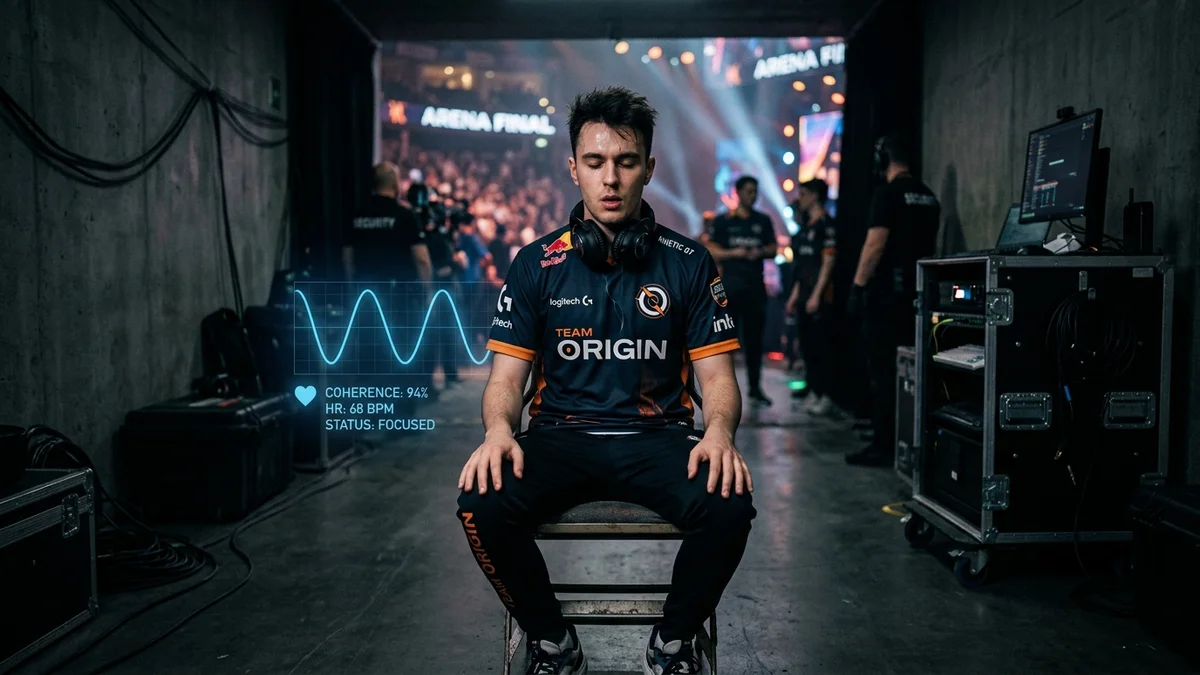
Spending five hundred hours in an aim trainer produces zero results if your hands turn ice-cold, your fingers tremble, and your field of vision narrows the moment an official match begins. In high-stakes competitive esports, the defining difference between a practice phenom and a tournament champion is not raw mechanical ability, but the systematic regulation of the autonomic nervous system.
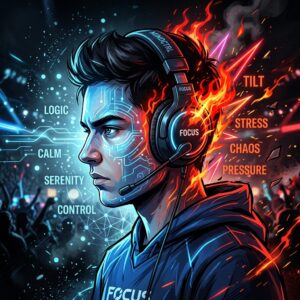
The notorious phenomenon of choking under pressure is not a moral failing or a lack of determination. It is an ancient neurophysiological survival mechanism triggered by perceived social and performance threats. Without a disciplined psychological protocol to defuse this stress response in the sixty minutes leading up to a match, the competitive brain automatically defaults into survival panic. Here is the chronological pre-match mental routine developed by sports psychologists and applied by tier-one organizations to enter every competition in an unshakeable flow state.
The Neurophysiology of Stage Fright: What Actually Happens Inside Your Body
When competitive stakes surge (whether during an open qualifier final, a crucial promotion series, or a stadium LAN match), the amygdala interprets performance anxiety as an existential threat. It immediately triggers the hypothalamic-pituitary-adrenal (HPA) axis, flooding the bloodstream with adrenaline and cortisol.
This hormonal surge creates three catastrophic physiological shifts for any precision gamer:
- Peripheral Vasoconstriction: blood flow is rapidly shunted away from the extremities to prioritize large muscle groups in the torso and legs. The immediate result: your hands turn cold, connective tissues lose elasticity, and your fingertip tactile sensitivity over the mouse shell drops drastically.
- Tunnel Vision: pupils dilate and peripheral visual perception shrinks by thirty to forty percent. Players lose the ability to track the minimap or catch flanker movements in the periphery of their displays.
- Prefrontal Cortex Inhibition: the brain region responsible for tactical reasoning, strategic patience, and nuanced decision-making is sidelined by primal fight-or-flight impulses. Competitors make rushed, reckless plays and force unfavorable duels.
Chronological Protocol: The 60-Minute Countdown
| Timeline Window | Neurological Objective | Actionable Steps |
|---|---|---|
| T-60 to T-45 min | Sensory decompression & cognitive energy preservation | Strict digital blackout, light walking, ambient water hydration |
| T-45 to T-30 min | Motor imagery & tactical pathway pre-activation | Closed-eye visualization of angles, utility line-ups, and rotations |
| T-30 to T-15 min | Physical motor calibration without neural fatigue | Targeted wrist articulation, hand stretches, and low-speed tracking |
| T-15 to T-5 min | Cardiac rhythm regulation & vagus nerve activation | Six minutes of 5-5 resonant breathing and physiological sighs |
| T-5 to T-0 min | Mental anchoring & transition to process execution | Triggering anchoring keyword, clean voice protocol alignment |
T-60 to T-45: Sensory Decompression and the Digital Blackout
The single most self-destructive habit among competitive players is spending the final sixty minutes scrolling through mobile feeds. Mindlessly refreshing Twitter, TikTok, or public Discord servers exhausts working memory and triggers random dopamine spikes that drain cognitive bandwidth before the server even loads.
One hour before kickoff, enforce an absolute digital blackout. Place your phone face down in another room, stand up from your gaming desk, and walk around your space for five to ten minutes. This simple movement releases tension in the hip flexors and upper trapezius while resetting your visual accommodation for distance.
Slowly drink eight to ten ounces of room-temperature water. Cut off high-dose caffeine and canned energy drinks at this juncture: consuming energy formulas right before match time supercharges baseline tachycardia and triggers nervous tremors once match pressure hits.
T-45 to T-30: Motor Imagery and Pre-Match Visualization
Motor imagery is a foundational pillar of sports psychology. Functional MRI studies demonstrate that mentally rehearsing precise motor actions with eyes closed activates nearly the exact same neural pathways within the supplementary motor area and cerebellum as physical execution.
Sit comfortably and close your eyes for ten to fifteen minutes. Completely banish outcome-focused thoughts (winning or losing the series). Instead, visualize tactical patterns with high-fidelity sensory detail:
- See the trajectory of your opening utility and grenade line-ups.
- Visualize crosshair placement snapping crisply to head level on every corner slice.
- Mentally rehearse maintaining emotional composure when facing an early round deficit or teammate miscommunication.
By priming these motor pathways into short-term working memory, your brain will not panic during unpredictable rounds: it simply executes an already familiar playbook.
T-30 to T-15: Targeted Physical Activation
This window bridges mental preparation with physical readiness. The goal is not an exhaustive marathon session that depletes wrist endurance, but a focused warm-up to lubricate joint capsules and calibrate hand-eye coordination.
For this crucial phase, utilize our structured framework in our guide to the perfect 15-minute mechanical pro warmup routine. There you will find specific dynamic tendon glides, thermal activation protocols, and low-speed tracking scenarios designed to awaken your aim without inducing motor fatigue.
T-15 to T-5: 5-5 Heart Rate Variability Breathing and the Physiological Sigh
This phase is where autonomic nervous control is won or lost. When performance anxiety tightens your chest and causes fine motor shaking, the only voluntary pathway to down-regulate your sympathetic nervous system is through deliberate diaphragmatic respiration.
For six uninterrupted minutes, maintain the 5-5 resonant breathing rhythm:
- Inhale deeply through your nose for five seconds, expanding your abdomen.
- Exhale steadily through your mouth for five seconds without pausing.
This six-breaths-per-minute tempo maximizes Heart Rate Variability (HRV) and stimulates the vagus nerve. The vagus nerve releases acetylcholine, immediately reducing heart rate, decreasing blood pressure, and restoring vascular flow to cold hands.
If you experience an acute panic spike right before map selection, perform two or three « physiological sighs » : take two consecutive inhales through your nose (one deep inhale followed by a sharp top-off sip of air to reinflate collapsed alveoli), followed by a slow, elongated exhale through your mouth. This neurobiological reflex immediately resets cardiac acceleration within fifteen seconds.
T-5 to T-0: Mental Anchoring and the Shift to Process Goals
During the final five minutes, sit firmly in your competition posture and lock in your cognitive mindset. Choking occurs almost exclusively when players fixate on outcomes they cannot directly control : « We cannot lose this map », « If I miss this shot, my team is finished ».
Shift your internal dialogue exclusively to immediate process goals :
- « Clean, concise callouts only. »
- « Crosshair discipline on every single peek. »
- « Deep nasal breath at every round reset. »
Reinforce this mindset with a personal anchoring keyword (such as « Reset », « Composure », or « Focus »). When pressure spikes mid-game, mentally repeat this keyword while relaxing your shoulders. By entering competition with this deliberate neurological armor, you transform destructive stage fright into razor-sharp focus, ready to perform at your peak from the opening round.
Building Your Complete Performance Stack: 3 Complementary Pillars to Rank Up
Pre-match mental regulation is the foundation that unlocks your potential, but turning cognitive composure into sustained match victories requires your physical ergonomics, movement precision, and physiological recovery to operate at the exact same standard.
1. Aim Biomechanics and Sensitivity Calibration
A tranquil mindset cannot overcome poor seating posture that exhausts your forearm muscles or an uncalibrated sensitivity setting. To stabilize your tracking and understand how elite players coordinate arm and wrist aiming, study our comprehensive breakdown of aim biomechanics, desk ergonomics, and calculating cm/360 like a pro.
2. Movement Mechanics and Counter-Strafing Precision
In competitive tactical shooters, first-bullet accuracy depends entirely on eliminating residual character velocity before clicking. To remove mechanical input delay and achieve instant dead-stops, check out our technical guide on how to configure Rapid Trigger and master counter-strafing on analog magnetic keyboards.
3. Neural Recovery and Slow-Wave Sleep
No breathing exercise can compensate for the severe micro-reaction degradation caused by chronic sleep debt. To restore your neurotransmitters and maintain razor-sharp focus under pressure, explore our scientific investigation on why sleeping eight hours per night directly improves your competitive ranking.

SEO consultant for over 20 years and digital entrepreneur, Charles 'Grimtag' Ronchain is the founder of Pro-Gamer.gg, Retrocharting.com, and Gamescharting.com. A competitive gamer, streamer, and retro game collector, he has worked in the video game industry for over 15 years, notably as a consultant for leading game price comparison platforms. Passionate about real-time performance data and gaming technology, he analyzes competitive esports, gaming hardware benchmarks, and creator workflows on Pro-Gamer.gg with an authentic player perspective.