How to Manage Tilt and In-Game Frustration: A Practical Guide
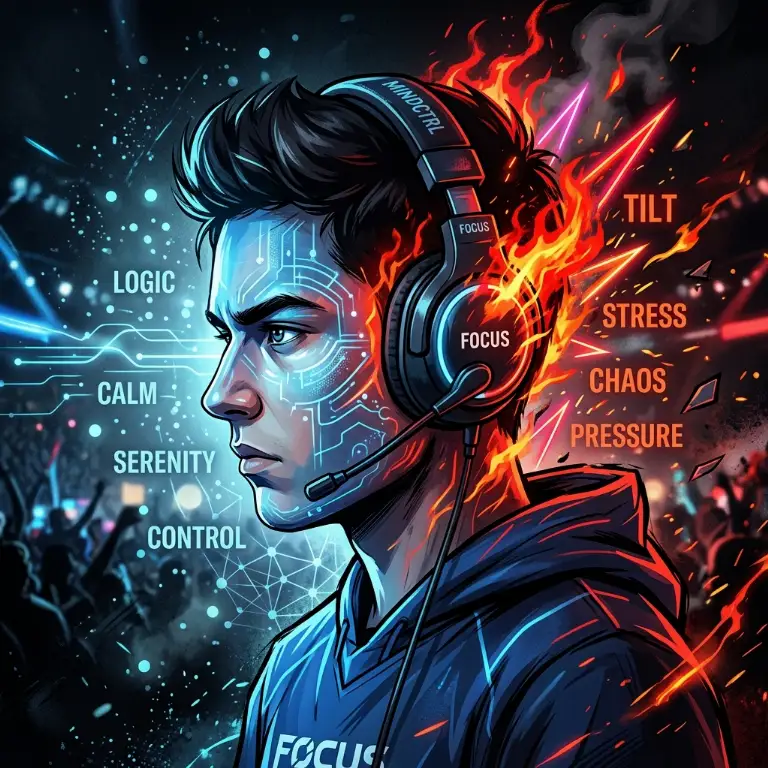
You have been grinding for forty minutes. You just suffered your third consecutive defeat on a heartbreaking overtime round. Your jaw is clenched, your chest feels tight, and your thoughts are clouded with irritation. Deep down, you know queueing again is a terrible idea and your chances of winning are slim to none. Yet your cursor hovers, and you hit "Find Match." That is tilt in its purest form. Contrary to popular belief, tilt is not a weakness of character: it is a precise, measurable neurological response.
What Happens Inside Your Brain During Tilt
From a neuroscience perspective, tilt occurs when your emotional brain (the amygdala) hijacks your rational analytical engine (the prefrontal cortex). As frustration mounts, your central nervous system floods with cortisol and adrenaline. This fight-or-flight cascade severely impairs working memory and cripples your ability to calculate complex in-game scenarios on the fly.
You begin rushing decisions, forcing reckless hero plays, overheating on risky peeks, and whiffing routine shots. This mental degradation is governed by the Yerkes-Dodson Law: while moderate arousal sharpens focus, excessive stress completely demolishes cognitive clarity.
A major 2024 empirical study by Cregan et al. published in Frontiers in Psychology involving 1,007 competitive players revealed that the primary risk factors triggering severe tilt are intense competitive drive coupled with high weekly gaming hours. Conversely, extensive competitive experience and structured psychological coping strategies served as strong protective buffers against emotional burnout.
The 3 Faces of Tilt in Ranked Play
Tilt does not always look like shouting or slamming your desk. In competitive environments, it typically manifests in three distinct archetypes:
Aggressive Tilt: The most frequent impulse. Spurred by impatience, you try to force aggressive duels, contest disadvantaged angles, and blindly rush in a desperate bid to win back lost rounds.
Passive Tilt: Paralyzed by the fear of making mistakes or deranking, you freeze up. You hesitate on wide-open opportunities, avoid taking calculated risks, and surrender map control to the opponent.
Social Tilt: You deflect personal responsibility onto your squad. You spend more energy typing complaints into team chat or venting over Discord than identifying your own misplays and openings for improvement.

Pro-Gamer Strategies for Diffusing In-Game Frustration
To sustain peak performance under extreme pressure, championship esports teams train their players in actionable emotional regulation protocols:
Box Breathing
Popularized by Navy SEALs and implemented by Tier 1 esports performance staffs such as Team Vitality's KARE program, box breathing swiftly lowers your heart rate and downregulates the sympathetic nervous system. The protocol is simple:
- Inhale deeply through your nose for 4 seconds.
- Hold your breath for 4 seconds.
- Exhale steadily through your mouth for 4 seconds.
- Hold your lungs empty for 4 seconds.
Cycle through this sequence 3 to 4 times between rounds to ground yourself in the present moment.
The A.C.E. Cognitive Protocol
A rapid, three-step cognitive reframing model to run mid-game:
- Acknowledge: Validate the frustration. State mentally: "I am tilted by that death." Simply labeling the emotion disarms amygdala overactivity.
- Correct: Diagnose the mechanical or tactical flaw dispassionately: "I peeked without utility or crosshair alignment."
- Execute: Redirect your immediate attention toward the upcoming objective: "What is my setup for next round?"
Player Mindset vs. Victim Mindset
League of Legends legend Faker consistently underscores the necessity of obsessing over personal execution rather than fixating on Elo gains or teammate shortcomings. This is the cornerstone difference between the Player Mindset (focusing strictly on what you control) and the Victim Mindset (feeling helpless and scapegoating external variables).
The Biological 19-Minute Reset Rule
From a biological standpoint, when an acute adrenaline rush hits during an aggravating match, human physiology requires approximately 19 minutes to metabolize circulating stress hormones and return to homeostasis. Hitting the "Queue Again" button immediately after a brutal loss means launching into the next match with rage neurochemistry still dictating your reflexes.
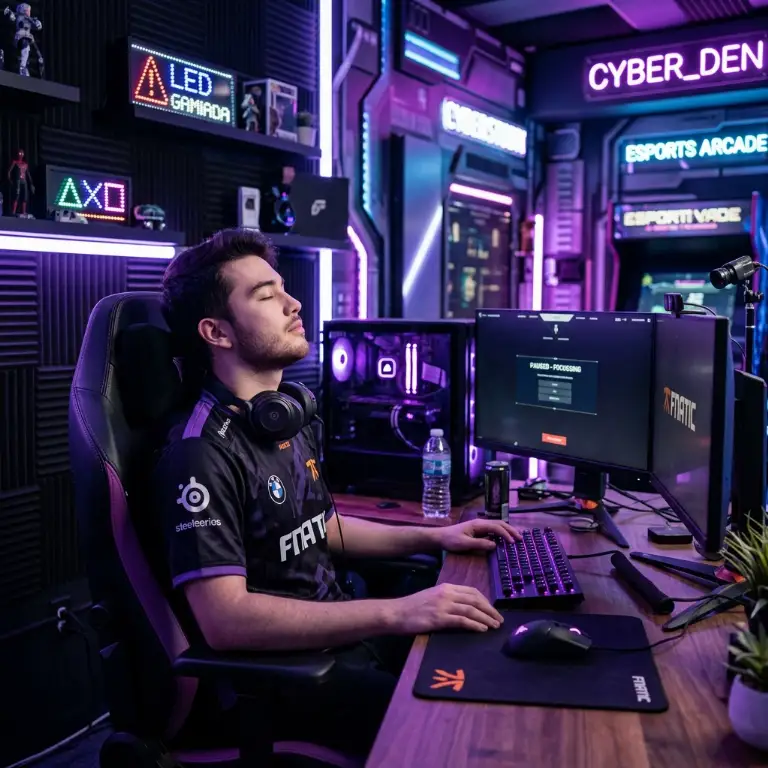
Build the non-negotiable habit of stepping away for 15 to 20 minutes after a frustrating loss. Grab a glass of cold water, walk around the room, or do light stretches.
Emotional volatility is heavily amplified by cumulative fatigue. If you have been skimping on sleep, discover why quality sleep is your ultimate training regimen to accelerate rank progression and shield against tilt.
To take your performance routine even further, check out our companion guide on the costly mistakes that 90% of competitive gamers make.

SEO consultant for over 20 years and digital entrepreneur, Charles 'Grimtag' Ronchain is the founder of Pro-Gamer.gg, Retrocharting.com, and Gamescharting.com. A competitive gamer, streamer, and retro game collector, he has worked in the video game industry for over 15 years, notably as a consultant for leading game price comparison platforms. Passionate about real-time performance data and gaming technology, he analyzes competitive esports, gaming hardware benchmarks, and creator workflows on Pro-Gamer.gg with an authentic player perspective.