Sleep and Gaming: Why 8 Hours of Sleep Will Rank You Up
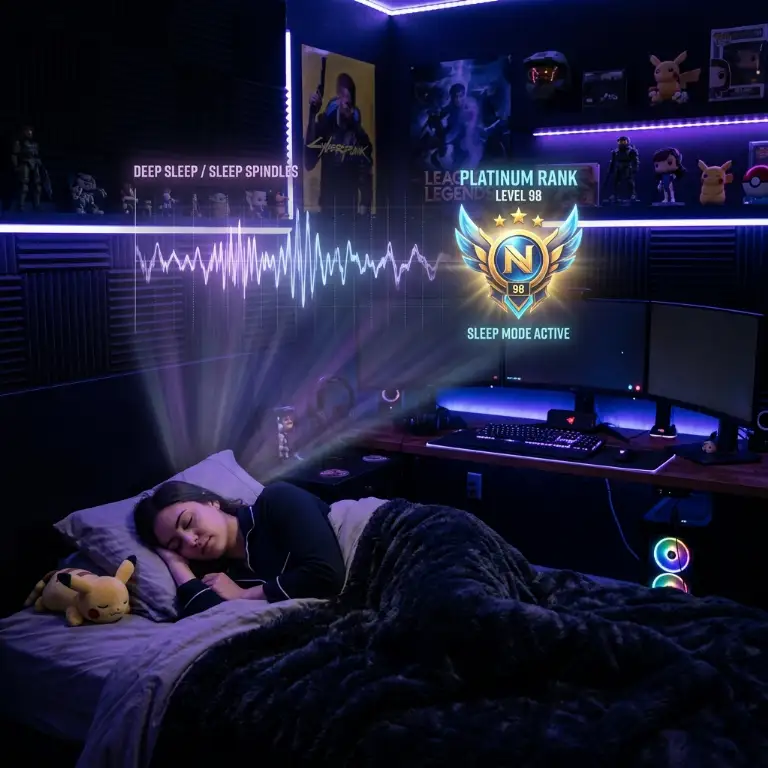
You spend countless hours grinding aim trainers, scrupulously reviewing VODs, and fine-tuning your peripheral settings. Yet your rank has been deadlocked for weeks. The culprit behind your competitive plateau might not be what you are doing in front of your display, but what you are doing in bed. Sleep is the single most underrated performance variable in competitive gaming.
The Direct Impact of Sleep Deprivation on Your Reaction Time
Reaction time is the decisive factor in shootouts across fast-paced tactical shooters like CS2 and Valorant, where Time-to-Kill (TTK) is routinely sub-200 milliseconds. A clinical study conducted by the Walter Reed Army Institute of Research demonstrated that a shortened night of sleep (under 6 hours) triggers a drop in cognitive vigilance equivalent to adding 50 to 100 milliseconds to your reaction time.
In practice, that sluggish response wipes out any competitive advantage gained from ultra-high-refresh monitors and flagship gaming mice. It is the functional equivalent of playing with a permanent latency handicap, guaranteeing you lose the lion's share of first-bullet gunfights.
A landmark 2024 study by the German Sport University Cologne (DSHS) revealed that 69.3% of esports athletes suffer from chronic sleep disruptions. While their recorded time in bed hovered between 6 hours 42 minutes and 8 hours 1 minute, their actual sleep efficiency plummeted to just 67.7%, driven by delayed sleep onset and restless, fragmented slumber.
Why Your Brain Needs Deep Sleep to Lock In Muscle Memory
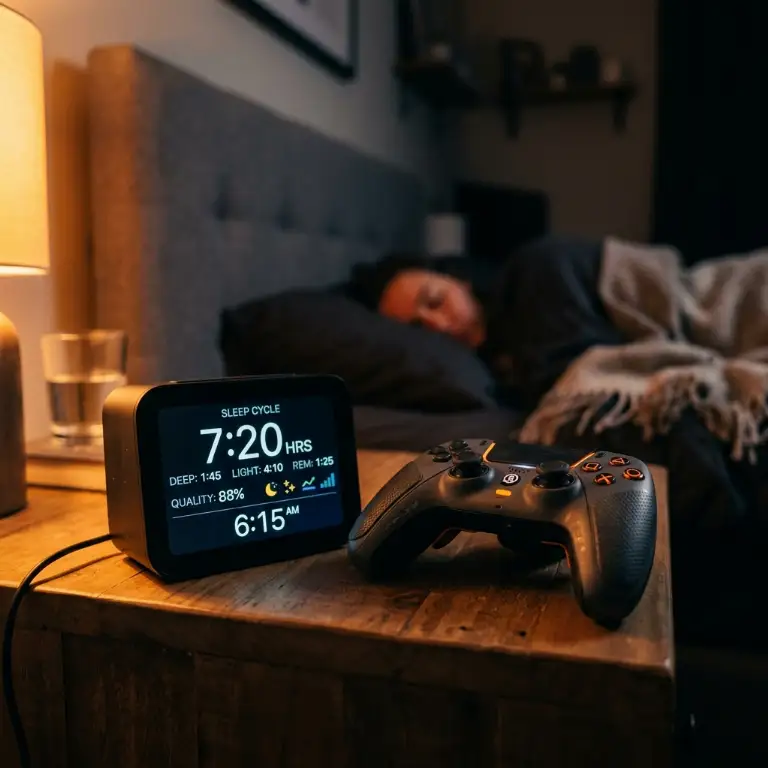
According to the groundbreaking research of Matthew Walker, neuroscientist at UC Berkeley and author of Why We Sleep, deep non-REM sleep, specifically Stage 2 NREM, is the precise window when your brain consolidates daytime skill acquisition.
During this stage, powerful electrical bursts called sleep spindles transfer fresh procedural data from your short-term buffer (the hippocampus) into long-term neurological storage (the cerebral cortex). This exact biological mechanism cements muscle memory and twitch reflexes. The micro-adjustments, crosshair flick shots, and complex keyboard rotations you drill during practice sessions only become seamless, subconscious second nature during sleep. Slashing your rest below 7 hours robs your brain of late-cycle NREM windows, which is where the bulk of that skill retention takes place.
The Destructive Trap of Blue Light and Late Caffeine
Your circadian rhythm (the internal biological clock) is governed by melatonin, the natural sleep hormone. High-energy blue light emitted by gaming monitors directly suppresses melatonin synthesis, tricking your brain into thinking it is still broad daylight and delaying sleep onset by hours.
Compounding the problem, caffeine carries a half-life of roughly 5 to 7 hours. Chugging an energy drink or espresso at 5:00 PM means that half of that active stimulant is still coursing through your central nervous system at midnight, severely degrading your slow-wave deep sleep architecture.
Sleep Protocols of Top Tier Esports Pros
The world's premier esports organizations treat restorative sleep as a core competitive pillar. At T1, mental and physical conditioning is supervised by dedicated medical staff. Legendary mid-laner Faker adheres to rigid sleep schedules, publicly emphasizing that his sustained longevity and clutch consistency stem directly from disciplined recovery.
Here are 5 actionable rules to optimize your cognitive recovery:
- Caffeine Cutoff: Eliminate coffee, pre-workouts, and energy drinks at least 7 to 8 hours before bedtime (ideally cutting off intake by 2:00 PM to 3:00 PM).
- Digital Wind-Down: Enable warm night-light filters on your monitors and dim ambient room lighting one hour before going to sleep.
- Cool Bedroom Temperature: Keep your bedroom chilled at around 65 degrees Fahrenheit (18 degrees Celsius) to facilitate the core body temperature drop required for swift sleep onset.
- Strategic Power Naps: If fatigue hits in the afternoon, limit naps to a maximum of 20 minutes before 3:00 PM so you do not sabotage your nighttime sleep pressure.
- Circadian Consistency: Go to bed and wake up at the exact same times every day, including weekends, to anchor your internal clock.
The Fatigue Paradox in Competitive Gaming
An exhausted player naturally defaults to oversimplified game plans, tunnel-visions on narrow angles, and repeats catastrophic positioning mistakes without realizing it. Worse, emotional volatility skyrockets. Recognizing and managing tilt in gaming becomes an uphill battle when your nervous system is running on empty from sleep deprivation.
To dive deeper into leveling up your training routine and eliminating common self-sabotaging habits, explore our breakdown of the costly mistakes that 90% of competitive gamers make.

SEO consultant for over 20 years and digital entrepreneur, Charles 'Grimtag' Ronchain is the founder of Pro-Gamer.gg, Retrocharting.com, and Gamescharting.com. A competitive gamer, streamer, and retro game collector, he has worked in the video game industry for over 15 years, notably as a consultant for leading game price comparison platforms. Passionate about real-time performance data and gaming technology, he analyzes competitive esports, gaming hardware benchmarks, and creator workflows on Pro-Gamer.gg with an authentic player perspective.