Esports Player Contracts & Legal Status: Global Standards, WESA, and Pro Player Labor Rights
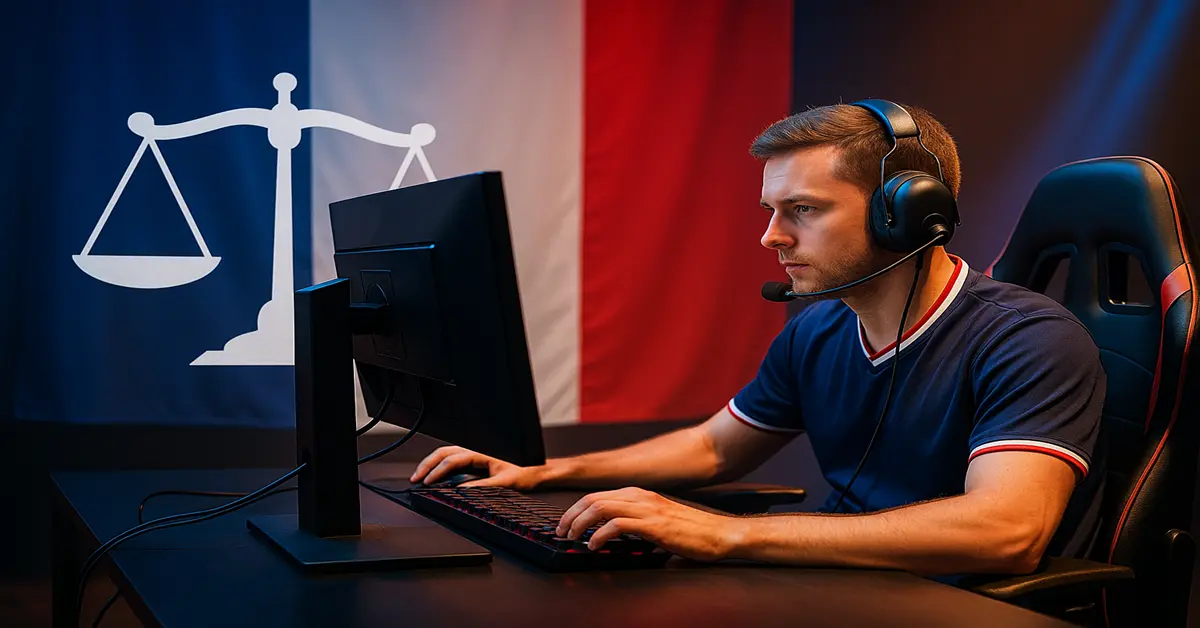
Courts and regulatory bodies are establishing landmark legal benchmarks in the esports landscape. Following a defining ruling by the Court of Appeals in Metz, judges formally reclassified a professional player's contract into a binding employment agreement. This decision represents a profound turning point for competitive gaming: professional players are legally recognized as full-fledged employees entitled to comprehensive labor protections rather than unprotected freelance contractors.
A Landmark Legal Precedent: The Subordination Test
The case pitted an international player against an esports organization operating under an informal "gamer agreement." Despite the organization's attempt to treat the relationship as a freelance arrangement, the judges identified unmistakable legal subordination: strictly mandated practice schedules, compulsory scrims, mandatory team reviews, and punitive internal financial penalties. As a direct result, the court reclassified the contract into standard employment, ordering the organization to pay over 82,000 euros (roughly $90,000) in back pay, severance, and damages.
This ruling reinforces established statutory frameworks such as the Digital Republic Act (Article 102), which established a formal legal status for salaried competitive video game players. This statutory foundation regulates employment conditions, sets contract durations between 12 and 60 months, establishes minimum wage floors, and prohibits arbitrary unilateral termination clauses.
Employee vs. Independent Contractor: The Global Battleground
The conflict over worker classification is not confined to Europe; it represents the primary legal battleground across North America and global esports ecosystems. In jurisdictions like California, stringent labor laws (such as the ABC Test) make it virtually impossible to defend classifying players as 1099 independent contractors when teams dictate daily streaming schedules, enforce uniform brand guidelines, and exercise disciplinary control.
Judges and labor regulators internationally are reaching the same conclusion: if an esports club controls when you wake up, what you practice, which sponsors you promote, and fines you for missed scrimmages, you are an employee under statutory law.
Moving forward, organizations must ensure their contracts align with established labor codes, such as the fixed-term esports employment contract framework, to avoid crippling retroactive liabilities. The objective is unmistakable: permanently professionalize the competitive sector, safeguard player wellbeing, and solidify esports as a legitimate economic pillar.
Publisher Standards and WESA Guidelines: Institutional Player Protections
As legal pressure mounts, tournament operators and publishers have implemented mandatory contract guidelines. Riot Games enforces strict contractual floors across the League of Legends Championship Series (LCS), League of Legends EMEA Championship (LEC), and Valorant Champions Tour (VCT), mandating minimum base salaries, guaranteed health coverage, and strict limits on buyout clauses to prevent "contract prison."
Similarly, guidelines established by regulatory bodies like the World Esports Association (WESA) and player advocacy groups like the LCS Players Association (LCSPA) emphasize transparent dispute arbitration, timely disbursement of prize money, and prohibitions on unreasonable non-compete clauses that could jeopardize a competitor's livelihood.
A Decisive Step Toward Industry Maturity
This evolving legal consensus provides professional players with a robust legal shield to assert their rights. Esports clubs must adapt to this new era of compliance, where contract transparency, worker protections, and statutory benefits replace informal verbal pacts.
Ultimately, these precedents confirm what the industry has long recognized: competing as a professional gamer is no longer a casual pastime: it is a legally protected profession.

SEO consultant for over 20 years and digital entrepreneur, Charles 'Grimtag' Ronchain is the founder of Pro-Gamer.gg, Retrocharting.com, and Gamescharting.com. A competitive gamer, streamer, and retro game collector, he has worked in the video game industry for over 15 years, notably as a consultant for leading game price comparison platforms. Passionate about real-time performance data and gaming technology, he analyzes competitive esports, gaming hardware benchmarks, and creator workflows on Pro-Gamer.gg with an authentic player perspective.