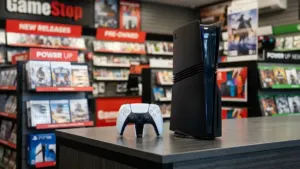
Delayed Until 2029 and Slower Than the PS6: Why Nvidia's GeForce RTX 6060 Spells Trouble for Budget PC Gamers
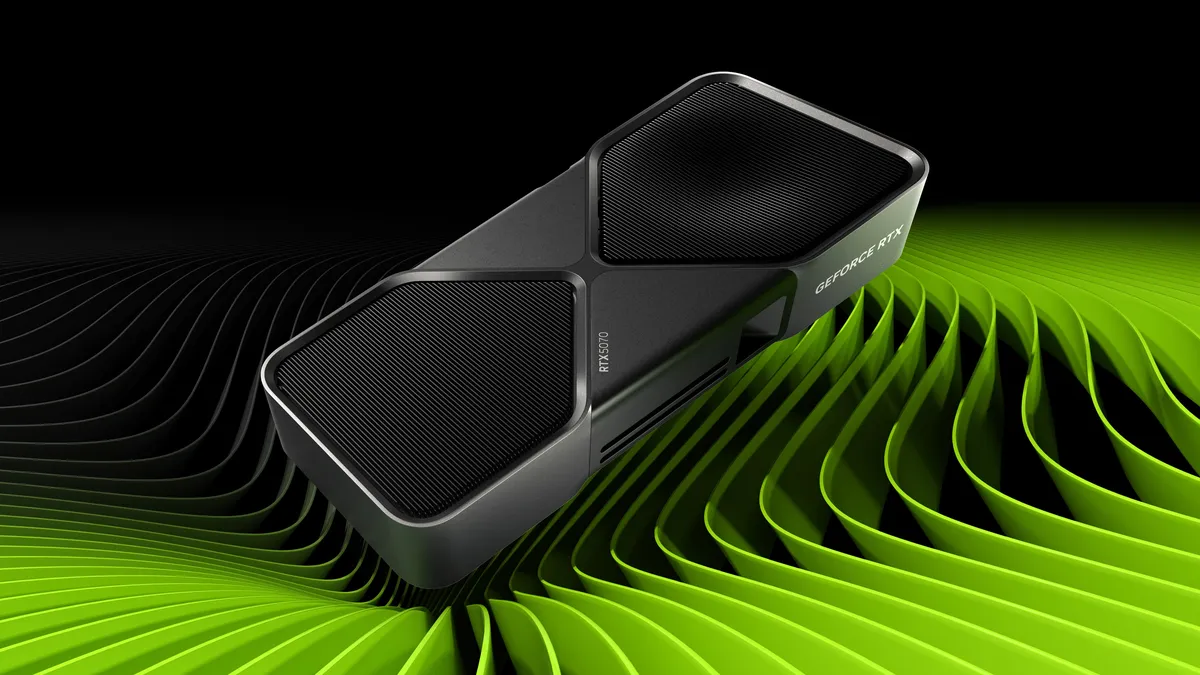
Long regarded as the undisputed backbone of mainstream PC builds on the Steam Hardware Survey, Nvidia's xx60 tier is heading into turbulent waters. While Sony finalizes the custom silicon for its next-generation home console, budget-conscious PC builders may have to wait until 2029 for the GeForce RTX 6060, only to get a graphics card that already trails behind console hardware.
A 2029 Release Window Driven by Memory and Wafer Shortages
The warning comes directly from hardware insider KeplerL2 during a technical breakdown on the NeoGAF forums. Asked about the rollout schedule for Nvidia's upcoming Rubin consumer architecture (the GeForce RTX 60 series, built on GR20x dies), the leaker pointed to a recurring pattern in Nvidia's playbook: "When there's a supply shortage NVIDIA tends to really drag the release of lower end cards. There's a good chance RTX 6060 comes out in 2029."
While flagship Rubin GPUs such as the anticipated GeForce RTX 6090 and RTX 6080 are currently projected by industry insiders to debut in the first quarter of 2028, mainstream gamers will once again bear the brunt of global semiconductor bottlenecks. As we recently detailed when examining how Samsung locked 80% of its memory capacity for AI data centers, global DRAM production and TSMC wafer allocations are heavily monopolized by enterprise hardware.
Whenever component supplies tighten, Nvidia systematically prioritizes its silicon wafers and GDDR7 memory modules for high-margin enthusiast cards priced well above $1,000. We saw the exact same staggered rollout during the Blackwell cycle, where the RTX 5090 and RTX 5080 launched in January 2025 while mainstream buyers had to wait until May for the base RTX 5060.
With severe pressure on both leading-edge foundry nodes and high-speed memory packages, the gap between top-tier Rubin flagships and entry-level xx60 cards could stretch to a full year. Mainstream PC builders will likely be forced to rely on leftover previous-generation stock well after next-gen architectures hit the market.
Why the PlayStation 6 Will Outmuscle the GeForce RTX 6060
Beyond the lengthy wait, the projected performance gap threatens to upend the traditional hierarchy between desktop GPUs and living-room consoles. Responding to forum members who assumed Sony's next machine would trade blows with an entry-level xx60 card, KeplerL2 delivered a blunt assessment in an earlier post: "6060 will launch much later (and based on recent trends I doubt it will match PS6)."
Looking at the silicon trajectories of both companies explains why that gap is widening. On one side, the PlayStation 6 is built around a custom AMD APU leveraging RDNA 5 architecture (Project Amethyst), targeting raw compute and ray-tracing figures in the ballpark of a current GeForce RTX 5070 Ti or RTX 5080, backed by a massive unified GDDR7 memory pool where RAM and SSD component costs alone exceed $680.
On the other side, Nvidia has steadily scaled back the relative die size and memory bus width of its xx60 class across the past two generations. By restricting entry-level desktop cards to cut-down silicon and narrow 128-bit memory interfaces, generational rasterization gains have hovered around 15% to 20%, leaving a future RTX 6060 unable to catch up to an RTX 5070 Ti.
Check Availability GeForce RTX 5070 Availability on Amazon→
Unlike the base PS5 era, where Sony's console roughly matched mid-tier desktop staples like the RTX 2070 Super or RTX 4060, the tenth console generation is poised to outclass entry-level PC graphics cards from day one. KeplerL2 also clarified that Sony has no intention of repeating the PS3 business model of losing hundreds of dollars per unit, opting instead for uncompromised hardware even if it pushes retail pricing higher.
My Test Bench: The 128-Bit Bus Trap Versus Unified Console Silicon
Having benchmarked every xx60-class card across our thermal and frametime rigs over the past five years, the underlying bottleneck is unmistakable on our telemetry graphs. Raw shader count is rarely what kills an entry-level Nvidia card against console hardware; it is the chronic starvation of memory bandwidth and VRAM capacity.
When an Unreal Engine 5 title floods the framebuffer at 1440p with path tracing and high-resolution streaming assets, a narrow 128-bit bus inevitably triggers severe 1% low frametime spikes, even with AI frame generation enabled. Meanwhile, a console APU wired directly to a wide unified GDDR7 pool absorbs heavy geometry and texture loads without ever hitting PCIe bus latency.
For builders planning a rig upgrade to handle upcoming heavyweights like GTA 6 on PC, waiting until 2029 for a budget RTX 6060 is a losing bet. Securing a GPU with at least 12GB to 16GB of VRAM on a wider memory bus today remains the smartest way to survive the next-gen transition without frametime stutters.

PC hardware enthusiast and competitive gamer, Arthur 'Heimdall' splits his time between France and the UK working in enterprise B2B software solutions. A business school graduate passionate about component benchmarking, he has been building, modding, and tuning PCs since childhood, optimizing every thermal degree and millisecond of display latency. An avid gamer across Assassin's Creed and sandbox titles, he forged his alliance with Grimtag and Chaya during late-night World of Warcraft raids before joining Pro-Gamer.