Over $680 for RAM and SSD Alone: Why Sony's PlayStation 6 Is Heading Straight Toward a $1,000 Price Tag
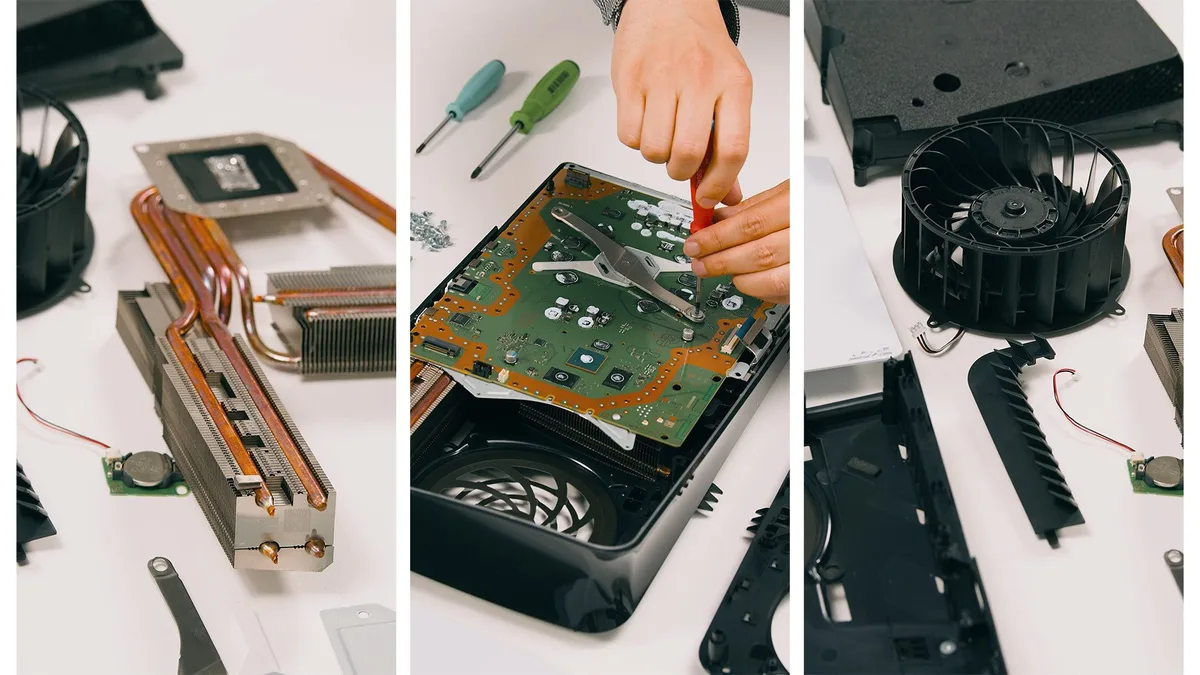
The economic equation behind the tenth console generation is turning into an industrial minefield for Sony Interactive Entertainment. While the PlayStation 6 remains internally targeted for a late 2027 launch window, fresh semiconductor supply chain figures indicate that the hardware bill of materials is spiraling upward long before factoring in the main processor or the outer chassis.
Responding to a discussion on the NeoGAF forums regarding the manufacturing Bill of Materials (BoM) for Sony's next home console, reliable hardware insider Kepler_L2, known for accurate disclosures on AMD architectures and console SoCs, shut down optimistic pricing theories. Addressing forum members who hoped the system might still hit a $600 to $680 retail target, he stated flatly that the PlayStation 6's RAM and SSD storage costs alone are over $680 ("RAM and SSD costs alone are over $680").
From $3 to Over $20 per Gigabyte: How the AI Boom Crushed GDDR7 Pricing
Understanding how just two component categories can swallow the entire budget of a traditional game console requires looking at the dramatic shift across the DRAM and NAND flash markets over the past two years. When Sony and AMD engineers initially mapped out the silicon architecture for the PlayStation 6 SoC (codenamed Orion), next-generation GDDR7 graphics memory was projected to cost roughly $3 per gigabyte.
Since then, relentless demand from artificial intelligence data centers has drained global manufacturing capacity. With memory giants Samsung, SK Hynix, and Micron reallocating up to 80% of their fabrication lines toward high-margin HBM stacks for enterprise AI accelerators, consumer and gaming memory supply has tightened severely. As a direct consequence, contract pricing for GDDR7 has surged to between $20 and $23 per gigabyte.
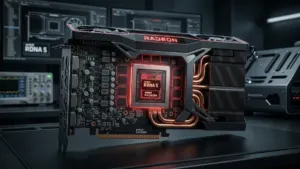
According to technical specifications detailed by Kepler_L2, Sony cannot afford to skimp on unified memory capacity without bottlenecking path tracing and next-gen game engines through the early 2030s. The PlayStation 6 is designed around 30GB of GDDR7 memory clocked at 32 Gbps, arranged across ten 3GB modules in a clamshell configuration on a 160-bit memory bus to deliver 640 GB/s of total bandwidth. At more than $20 per gigabyte, the GDDR7 memory pool alone approaches $600 before a single flash storage chip is soldered onto the board.
Check Availability for PS5 2TB NVMe SSD on Amazon→
Universal Compression and Project Amethyst: Smart Engineering Meets Brute-Force Silicon Inflation
Aware of rising silicon costs and memory bandwidth constraints, PlayStation lead architect Mark Cerny and Jack Huynh (Senior Vice President and GM of AMD's Computing and Graphics Group) sought to mitigate hardware overhead through their joint Project Amethyst initiative. Alongside dedicated AI compute blocks (Neural Arrays) and specialized path tracing units (Radiance Cores), Sony and AMD engineered Universal Compression.
This hardware-level compression allows the PlayStation 6 to rely on a narrower 160-bit memory interface, which is significantly cheaper to route across a motherboard than a sprawling 256-bit or 384-bit bus, while still maximizing effective throughput. Yet clever PCB engineering cannot reduce the physical capacity of RAM required by modern games, nor can it offset the surging cost of NAND flash wafers needed for a 2TB NVMe SSD in an era where blockbuster installs routinely exceed 130GB to 150GB.
A Manufacturing Bill of Materials Approaching $1,000 Before the Custom AMD APU
That is why Kepler_L2's figure carries such heavy implications for hardware pricing. If the GDDR7 RAM and NAND SSD alone exceed $680 on Sony's component sheet, that sum still leaves out every other essential part of the machine:
- The custom AMD Orion APU, fabricated on TSMC's 3nm (N3P) node, where wafer pricing has also climbed steeply.
- The multi-layer high-frequency motherboard PCB and power delivery stages.
- The internal power supply unit and thermal assembly, including copper heatpipes, heatsink fins, and liquid metal interface.
- The bundled DualSense wireless controller, outer casing, final assembly, global shipping, and retail margins.
Once those core components are added together, the total manufacturing BoM for the PlayStation 6 moves squarely toward or past the $1,000 mark. Nor is Sony facing this pressure alone: Microsoft's upcoming 56 TFLOP Xbox Project Helix with 30GB of GDDR7 confronts the exact same semiconductor cost wall ahead of its targeted late 2027 window.
Throughout 2026, hardware pricing has already broken away from historical norms. As we analyzed when console sales hit their lowest point since 2013 amid PS5 and Xbox price hikes, Sony has steadily shifted away from deep hardware subsidies, with the PS5 Pro now retailing at $749.99 / ?899.99 without a disc drive or vertical stand.
Check Availability for PlayStation 5 Pro on Amazon→
My Take on the Test Bench: The Tenth-Generation Pricing Trap
When I lay Kepler_L2's component numbers out on my bench, I struggle to see how Sony could launch a PlayStation 6 in late 2027 below $899 or $999 without absorbing massive losses on every single unit shipped. Watching GDDR7 jump from an initial $3-per-gigabyte projection during Orion's early design phase to over $20 per gigabyte today completely shatters the traditional subsidized console playbook.
In my view, Sony is left with two realistic paths: either embrace a $999 flagship price tag at launch while relying on the PS5 Slim and PS5 Pro to anchor the mainstream market well into 2029, or delay the PlayStation 6 into 2028 in hopes that new DRAM fabrication capacity finally cools down the AI memory frenzy.

PC hardware enthusiast and competitive gamer, Arthur 'Heimdall' splits his time between France and the UK working in enterprise B2B software solutions. A business school graduate passionate about component benchmarking, he has been building, modding, and tuning PCs since childhood, optimizing every thermal degree and millisecond of display latency. An avid gamer across Assassin's Creed and sandbox titles, he forged his alliance with Grimtag and Chaya during late-night World of Warcraft raids before joining Pro-Gamer.