After Skipping Two Intel GPU Generations, ASUS Returns With the 32GB Arc Pro B70
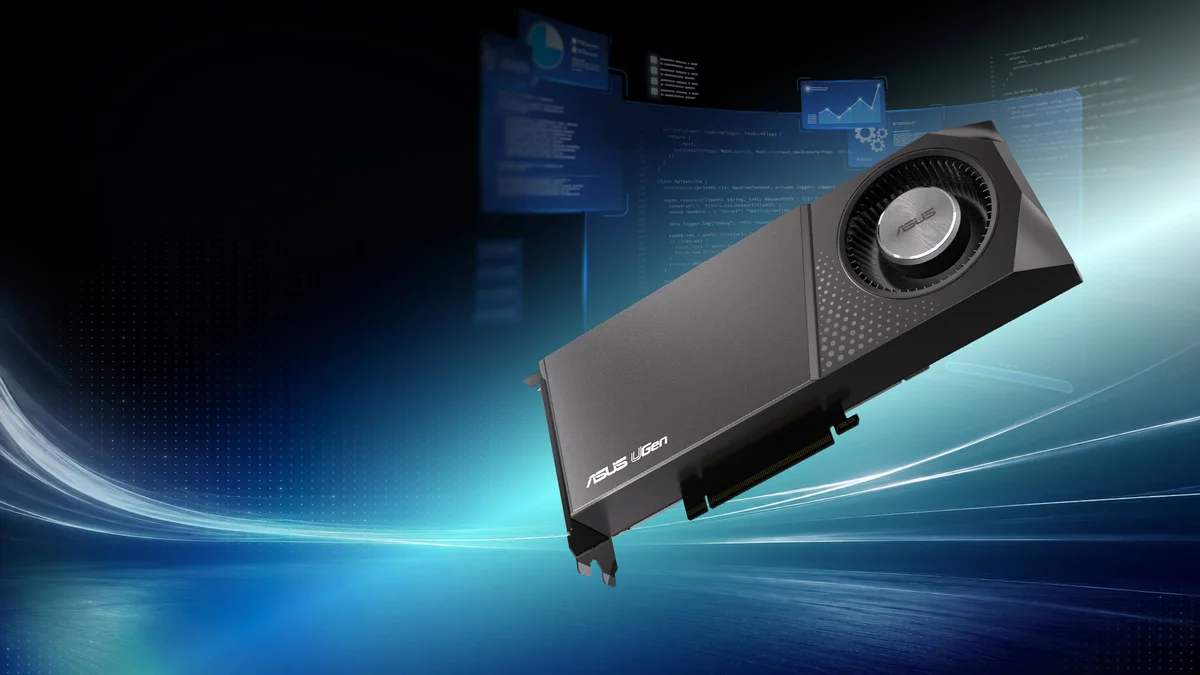
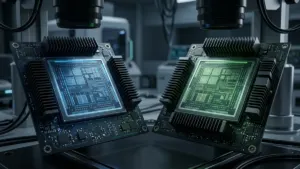
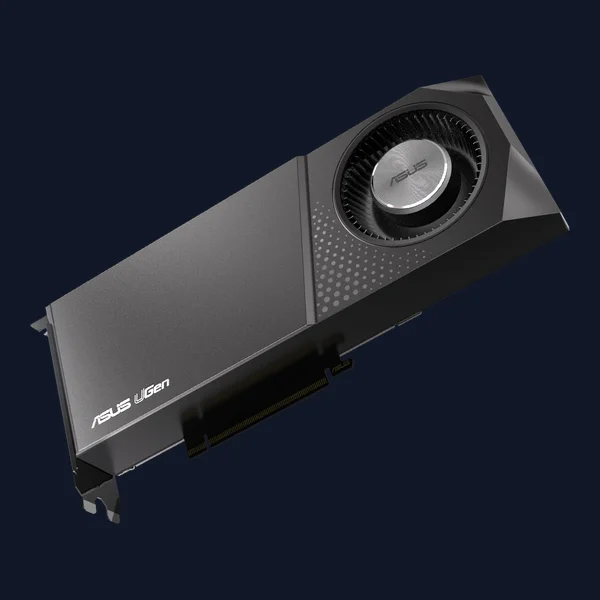
Five years after releasing its passively cooled DG1 card back in 2021, the Taiwanese hardware giant has officially ended its silence on Intel discrete graphics. After sitting out the entire first-generation Alchemist (Arc A-Series) lineup as well as the consumer Battlemage B580 and B570 gaming cards, the manufacturer has finally unveiled its first Xe2 graphics card: the ASUS UGen Intel Arc Pro B70 32GB GDDR6.
As detailed on the official ASUS UGen product specification page, this release inaugurates the company’s new UGen workstation and AI accelerator brand. Rather than targeting RGB gaming rigs, ASUS goes straight for local AI inference and professional workstations by deploying Intel’s flagship "Big Battlemage" silicon paired with 32GB of video memory.
Full BMG-G31 Silicon: 32 Xe2 Cores and 32GB GDDR6 on a 256-Bit Bus
Until now, mainstream PC builders were limited to the mid-range BMG-G21 die powering the Intel Arc B580 with 20 Xe2 cores and 12GB of VRAM. With the Arc Pro B70, ASUS taps into the full-fat BMG-G31 flagship die in its unlocked configuration, delivering a massive leap in compute density and memory throughput.
Under the shroud, the processor packs 32 Xe2-HPG cores (4,096 shading units), 32 ray tracing units, and 256 XMX (Xe Matrix Extensions) AI engines. Boosting up to 2,800 MHz, the chip delivers up to 367 TOPS of INT8 AI inference performance (and roughly 22.94 TFLOPS of FP32 compute) over a full PCIe 5.0 x16 interface.
- Graphics Processor: Intel BMG-G31 (full Xe2-HPG Battlemage architecture)
- Compute Units: 32 Xe2 cores (4,096 shaders), 256 XMX AI engines, and 32 Ray Tracing units
- Video Memory (VRAM): 32GB GDDR6 with ECC support on a 256-bit memory interface
- Memory Bandwidth & Clock: 608 GB/s bandwidth and up to 2,800 MHz GPU boost clock
- Total Board Power (TBP): 310W via a rear-mounted 12V-2x6 power connector
- Display Outputs: 3x DisplayPort 2.1 and 1x HDMI 2.1b
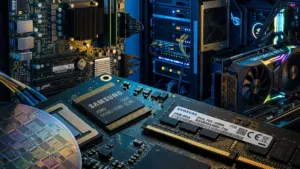
Equipping a 256-bit bus with 32GB of ECC GDDR6 yields 608 GB/s of memory bandwidth, further highlighting the ongoing AI memory crunch driving up GPU prices across the consumer PC hardware market.
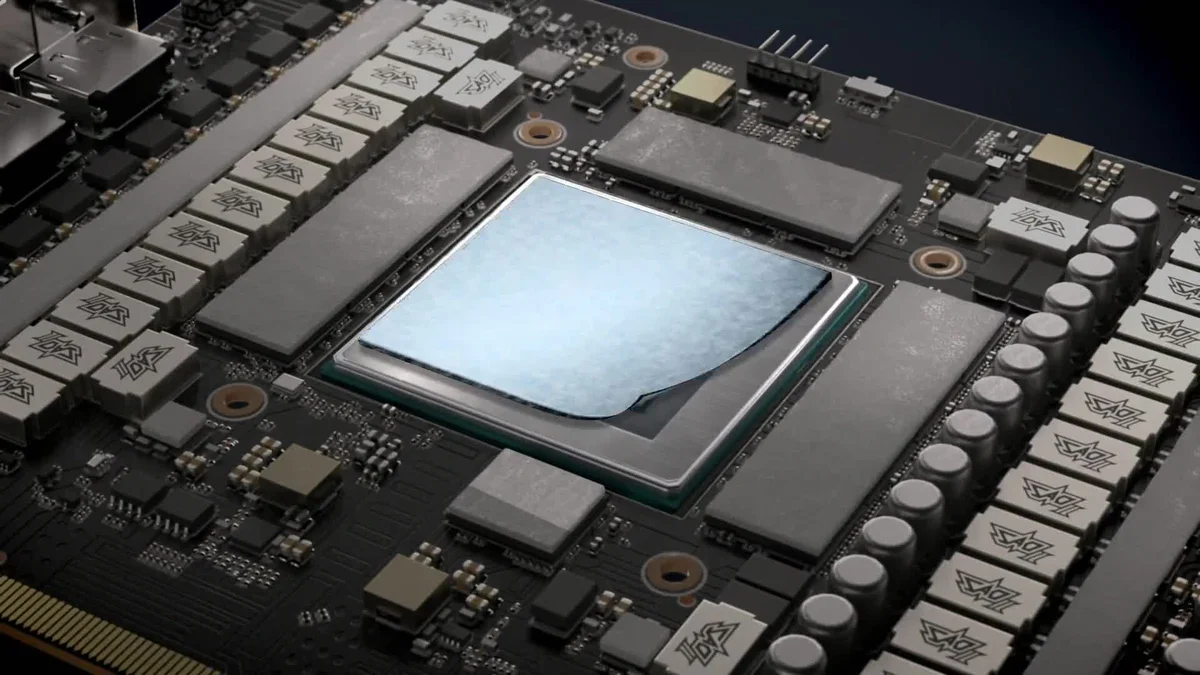
2-Slot Blower Cooling, Phase-Change Thermal Pad, and 128GB Multi-GPU Scaling
To keep the 310W TBP in check inside dense workstation chassis, ASUS engineered a strict 2-slot form factor cooled by an active blower fan with dual-ball bearings. Exhausting heat directly out of the 304 stainless steel bracket allows system integrators to stack up to four cards in a single workstation without thermal throttling.
Instead of standard thermal paste, ASUS applies a phase-change GPU thermal pad that melts under operating temperatures to fill microscopic gaps between the BMG-G31 die and the heatsink. Structural rigidity is reinforced via ASUS GPU Guard adhesive at all four corners of the silicon, while the 12V-2x6 power header is positioned at the far end of the shroud for clean server cable routing.
When scaling four ASUS UGen Arc Pro B70 cards together using Intel SuperClaw tensor parallelism and vLLM, workstations unlock a combined 128GB of VRAM. That memory pool is large enough to run 70B to 120B parameter large language models locally (including DeepSeek-R1-Distill-Llama-70B, Qwen3-NEXT-80B, and gpt-oss-120b), reaching up to 540 tokens per second on a four-card setup while cutting cloud token expenses by up to 70%.
Intel Arc Battlemage Graphics Cards (B-Series)
- Intel Xe2-HPG Battlemage Architecture & XMX Engines
- Hardware-Accelerated XeSS 2 & Ray Tracing
- Dual AV1 Media Engines & DisplayPort 2.1
WHQL 32.0.101.9150 Drivers: Bridging Workstation AI and DirectX 12 Gaming
While the UGen lineup is tailored for developers running llama.cpp (SYCL/Vulkan), Ollama, OpenVINO, and the single-card ASUS Zenni Claw local agent stack (delivering a 191K usable KV cache and a 0.08-second Time to First Token in MLPerf Client v1.0), the underlying BMG-G31 silicon retains all of its gaming hardware blocks. Just days after launching the ROG Xbox Ally X20 handheld, ASUS shows it is expanding across every tier of custom silicon.
According to Intel’s official Arc Graphics 32.0.101.9150 WHQL driver release notes rolled out this week, Intel’s unified driver branch supports the Arc Pro B70 alongside full Game On Driver optimizations. The package enables Microsoft Advanced Shader Delivery to speed up shader compilation across modern DirectX 12 and Vulkan workloads.

My Test Bench: The Dream Gaming Silicon Hijacked by Local AI Workstations
Looking at the board layout and core configuration of the ASUS UGen Arc Pro B70, it is tough not to feel a sting of frustration as a PC builder. A full BMG-G31 die with 32 Xe2 cores and a 256-bit bus pushing 608 GB/s is the exact hardware specification gamers have been begging Intel to release as a desktop Arc B770 to shake up the 1440p and 4K market.
Seeing ASUS return to Intel discrete graphics after a five-year hiatus with such a well-engineered card (phase-change thermal interface, dual-ball bearing blower, and a well-controlled 310W TBP) proves that the Battlemage architecture has earned the trust of top-tier board partners. Yet the 2026 silicon economy leaves no room for sentiment: when a 32GB GDDR6 die commands workstation margins for local LLM clusters, gaming cards inevitably take a back seat.
Check Availability Intel Arc B580 Availability on Amazon→
The next key indicator will be the street pricing ASUS sets for the UGen Arc Pro B70 across workstation integrators this quarter, and whether this partnership paves the way for ROG and TUF consumer graphics cards when Intel’s next-generation Celestial architecture arrives.

PC hardware enthusiast and competitive gamer, Arthur 'Heimdall' splits his time between France and the UK working in enterprise B2B software solutions. A business school graduate passionate about component benchmarking, he has been building, modding, and tuning PCs since childhood, optimizing every thermal degree and millisecond of display latency. An avid gamer across Assassin's Creed and sandbox titles, he forged his alliance with Grimtag and Chaya during late-night World of Warcraft raids before joining Pro-Gamer.