16.5% Faster Than Zen 5 at 4.1 GHz: What the 256-Core AMD Zen 6c Geekbench 7 Test Reveals for Future Ryzen CPUs
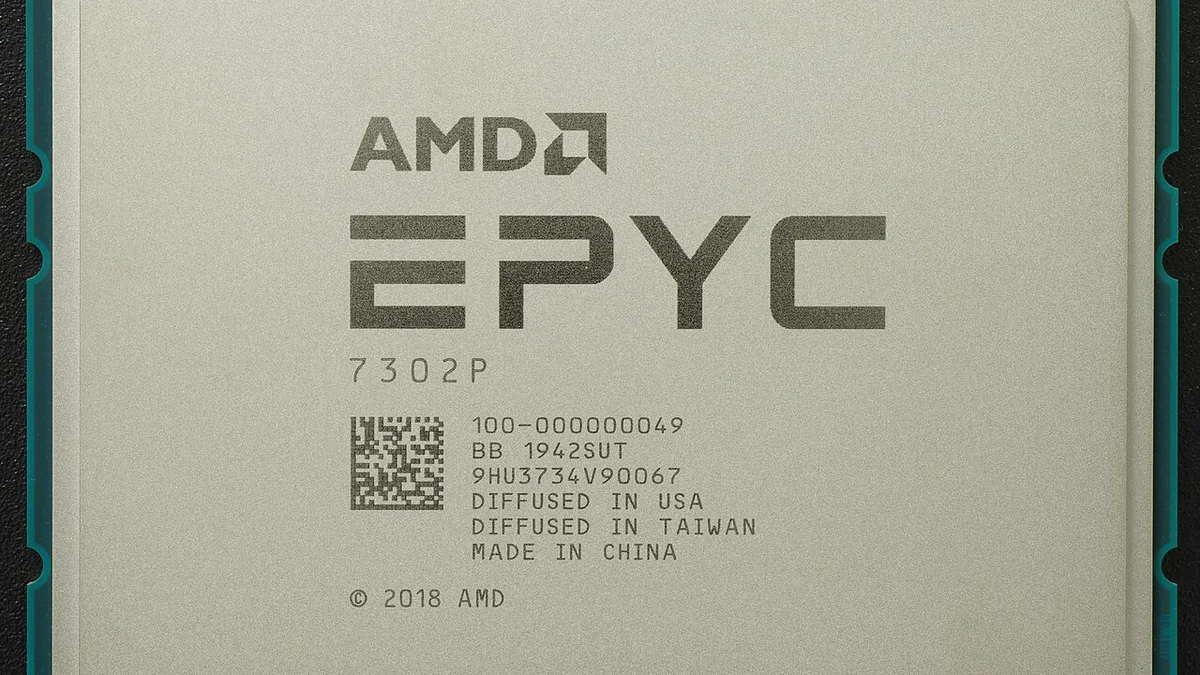
An early benchmark entry from the Geekbench 7.1 database has provided the clearest look yet at the single-threaded efficiency of AMD's next-generation Zen 6 microarchitecture. Tested under Linux (Ubuntu running AVX2 instructions) inside a Dell PowerEdge R9815 server platform, the flagship AMD EPYC 9996 from the "Venice" lineup packs a massive 256 Zen 6c cores and 512 threads. Operating near its maximum boost clock at roughly 4.12 GHz, this 2nm (TSMC N2) powerhouse scored 2,847 points in the single-core test and 68,427 points in multi-core. When compared directly against a desktop Zen 5 processor locked to a matching 4.1 GHz clock speed, the result translates to a 16.5% average single-core performance uplift.
2,847 vs. 2,444 Points: The 4.1 GHz Clock-for-Clock Showdown Against the Ryzen 7 9700X
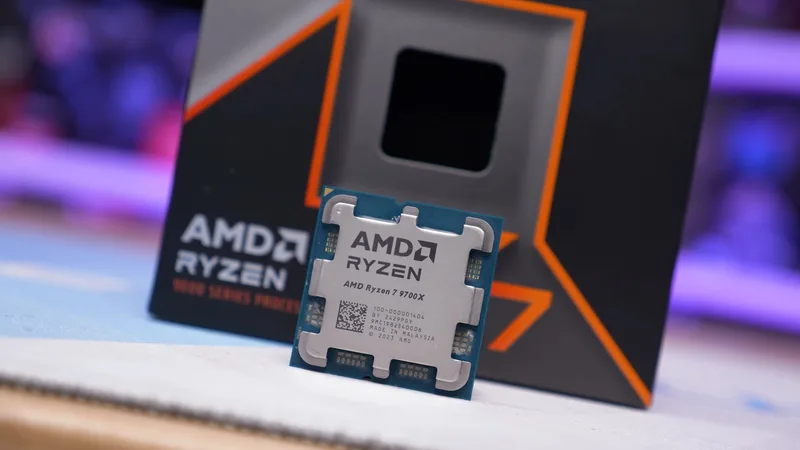
Evaluating true generational Instructions Per Cycle (IPC) progress between a high-density 256-core server chip and a consumer desktop processor boosting past 5.5 GHz requires normalizing operating frequencies. To establish a strict clock-for-clock baseline under Linux, the 4.12 GHz Zen 6c benchmark was measured against a desktop AMD Ryzen 7 9700X (Zen 5 architecture) manually locked at a flat 4.1 GHz and paired with DDR5-6000 CL34 memory. In the exact same Geekbench 7.1.0 suite, the 4.1 GHz Ryzen 7 9700X scored 2,444 points in single-core, compared to 2,847 points for the Zen 6c-powered EPYC 9996.
At matched frequencies, AMD's new architecture delivers a 16.5% overall single-core advantage. Looking closer at individual workloads that heavily tax branch prediction and memory subsystems reveals even wider gaps: the Zen 6c core jumped ahead by 25.7% in the HTML5 Browser sub-test and by 24.8% in the Photo Editor workload.
Comparing the chip against a higher-clocked Zen 5 server counterpart, the AMD EPYC 4545P, further highlights the architectural leap. While the EPYC 4545P reaches 3,064 points in Geekbench 7.1 single-core, it requires a 5.47 GHz boost clock (roughly 33% higher frequency) to edge out the 4.12 GHz Zen 6c core by just 7.6%. When normalized per megahertz across these runs, Zen 6 demonstrates an estimated 16.5% to 24% improvement in per-cycle throughput (IPC) over Zen 5.
| Processor | Architecture & Node | Cores / Threads | Tested Clock Speed | Single-Core Score (Geekbench 7.1) | Delta at 4.1 GHz |
|---|---|---|---|---|---|
| AMD EPYC 9996 "Venice" | Zen 6c (TSMC N2 2nm) | 256C / 512T | ~4.12 GHz (Max Boost) | 2,847 points | +16.5% (up to +25.7%) |
| AMD Ryzen 7 9700X | Zen 5 (TSMC N4P 4nm) | 8C / 16T | 4.10 GHz (Locked, DDR5-6000 CL34) | 2,444 points | Baseline (100%) |
| AMD EPYC 4545P | Zen 5 (TSMC N4P 4nm) | 16C / 32T | ~5.47 GHz (Max Boost) | 3,064 points | N/A (+33% higher clock speed) |
256 Cores on 2nm (TSMC N2), 1 GB of L3 Cache, and Socket SP7: Inside the Venice Flagship
Beyond its single-core efficiency, the AMD EPYC 9996 represents a massive platform leap for the 6th Gen EPYC "Venice" family. To pack 256 physical cores and 512 threads into a single socket, AMD utilizes compute chiplets fabricated on TSMC's N2 (2nm-class nanosheet) process, a foundational node transition as AMD scales its Zen 6 Venice architecture up to 32,768 cores per rack for next-generation data centers.
Carrying a launch list price of $14,904 USD, the flagship EPYC 9996 brings major platform upgrades across the board:
- Core Configuration & Clocks: 256 Zen 6c cores and 512 threads running at a 2.55 GHz base clock and up to a 4.1 GHz maximum boost clock.
- Cache Pool: A massive 1,024 MB (1 GB) of total L3 cache feeding the dense core arrays.
- 16-Channel DDR5 Memory Subsystem: Support for 16-channel DDR5 using RDIMMs up to 8,000 MT/s or MRDIMMs up to 12,800 MT/s, delivering between 1,024 GB/s and 1,638 GB/s of memory bandwidth per socket.
- I/O, Socket & Power: Built for the new SP7 socket with 128 lanes of PCIe Gen 6.0, CXL 3.1 support, and a default 600W TDP (configurable from 400W to 600W).
My Test Bench: What This IPC Leap Means for Future "Olympic Ridge" Ryzen CPUs on AM5
The most telling detail in this Geekbench 7.1 validation run is that the 16.5% clock-for-clock gain was achieved by Zen 6c density cores rather than standard desktop Zen 6 cores. In AMD's engineering playbook, "c" (compact) cores trade away physical L3 cache area per core and peak frequency headroom to maximize core density per square millimeter. However, they share the exact same underlying instruction set, front-end decode pipelines, and execution engines as their full-sized counterparts.
Seeing a density-optimized server core beat a clock-matched Ryzen 7 9700X by 16.5% on average (and by nearly 25% in heavy browser and image-processing workloads) sets a high floor for consumer hardware. When desktop Ryzen "Olympic Ridge" processors and upcoming Zen 6 "Medusa" APUs arrive with full-sized Zen 6 cores, larger per-core L3 cache pools, and boost clocks pushing well past 5.5 GHz to 6 GHz, PC builders on Socket AM5 can expect a substantial generational jump in both gaming and productivity.

PC hardware enthusiast and competitive gamer, Arthur 'Heimdall' splits his time between France and the UK working in enterprise B2B software solutions. A business school graduate passionate about component benchmarking, he has been building, modding, and tuning PCs since childhood, optimizing every thermal degree and millisecond of display latency. An avid gamer across Assassin's Creed and sandbox titles, he forged his alliance with Grimtag and Chaya during late-night World of Warcraft raids before joining Pro-Gamer.