Hidden DLSS 5 Neural Rendering and a 561W GeForce RTX Surge: How Metro Redux's Next-Gen Update Overhauls Character Faces
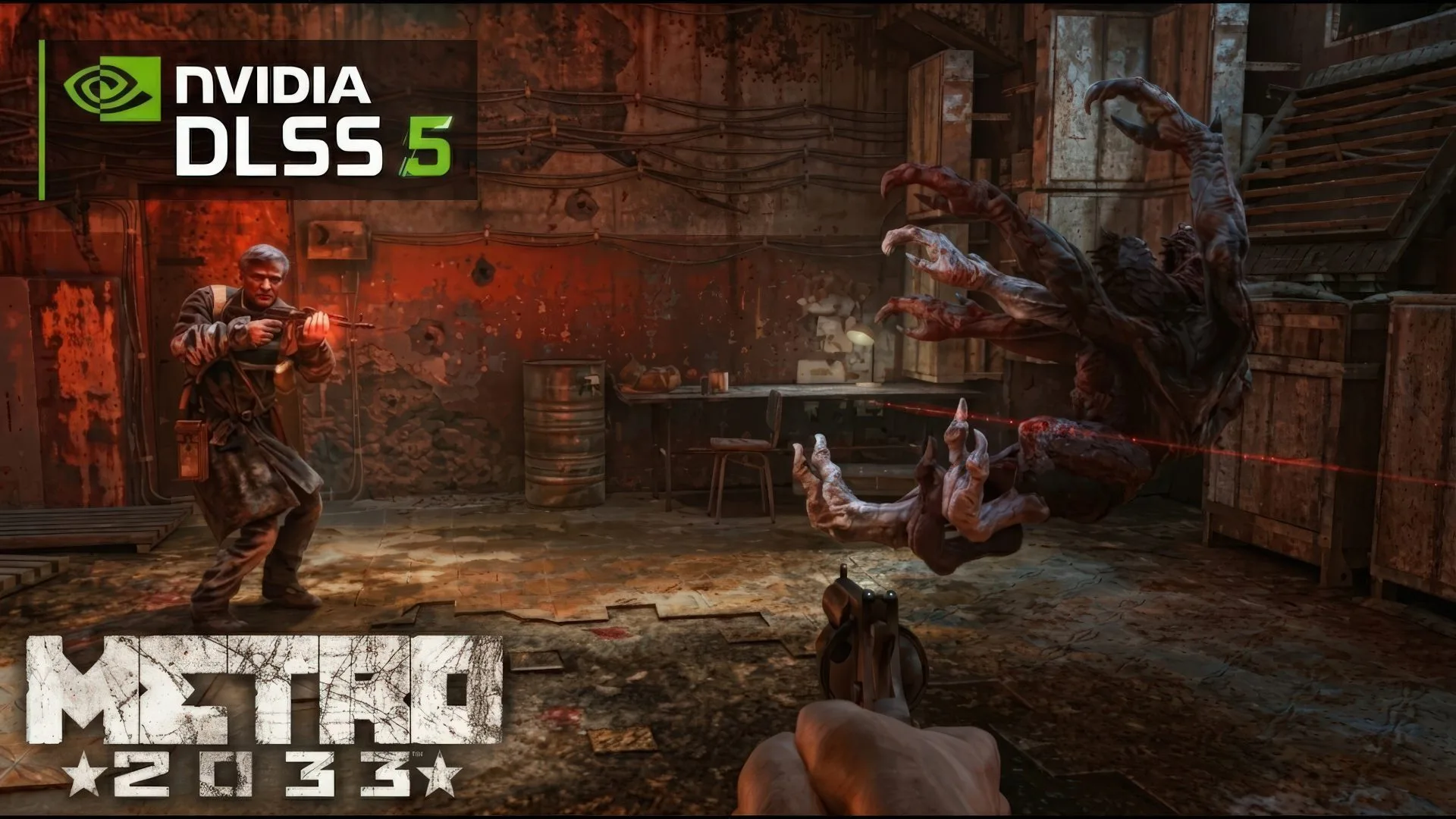
When Ukrainian studio 4A Games and publisher Deep Silver rolled out their free Next-Gen Update on October 22 for Metro 2033 Redux and Metro: Last Light Redux across PC (Steam, Epic Games Store, and GOG) and current-gen consoles, the official patch notes left out the biggest technical surprise under the hood. Tucked behind a generic mention of NVIDIA upscaling support is native integration for NVIDIA DLSS 5 3D-Guided Neural Rendering (DLSS-NR), which selectively rebuilds the dated 2014 character models in real time.
A Hidden Video Toggle That Beats Hogwarts Legacy to the Punch
On paper, the official Steam changelog already delivered a substantial technical overhaul for the first two post-apocalyptic shooters based on Dmitry Glukhovsky's novels. The update removes the legacy framerate cap on PC, enables Advanced PhysX by default, adds 4K texture packs, upgrades PBR (Physically Based Rendering) materials, and introduces Screen Space Global Illumination (SSGI). On the audio and input front, 4A Games added spatial audio, PlayStation DualSense adaptive triggers, Xbox Impulse Triggers, and a wide sweep of stability fixes for Windows 11, high-refresh-rate monitors, and modern AMD GPUs.
Once players enable NVIDIA DLSS in the video menu on a compatible GeForce RTX graphics card running the latest NVIDIA GeForce 621.01 WHQL driver, an extra toggle for Neural Rendering (DLSS-NR) unlocks. This quiet release makes Metro 2033 Redux and Metro: Last Light Redux only the second and third commercial titles to ship with DLSS 5 Neural Rendering following NBA 2K27 in September, arriving nearly two weeks ahead of Hogwarts Legacy's scheduled DLSS 5 update on November 5, 2026.
Selective Neural Rendering Targets Faces While Preserving Moscow's Tunnels
Unlike conventional upscaling or frame reconstruction passes such as those examined in our recent 1440p benchmarks testing the DLSS 4.5 mod, NVIDIA's DLSS 5 SDK lets developers selectively apply generative neural rendering to specific object classes within a 3D scene. At 4A Games, the engineering team made a deliberate choice: concrete walls, rusted pipes, and static tunnel geometry remain virtually untouched, relying instead on the new SSGI lighting and upgraded 4K PBR textures to preserve the oppressive atmosphere of the Moscow Metro.
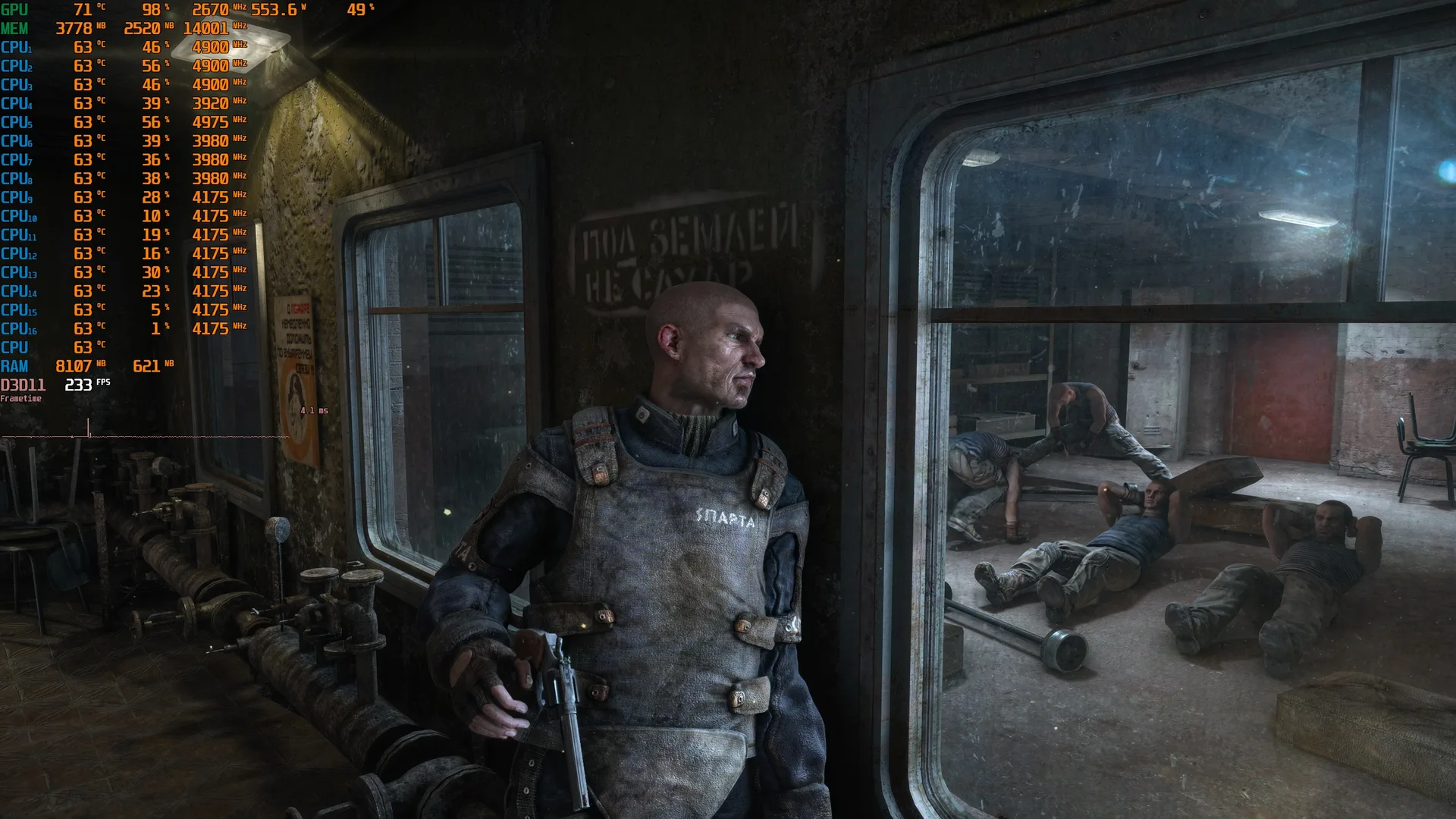
Instead, the neural network focuses almost exclusively on the biggest visual bottleneck of the 2014 Redux remasters: stiff, waxy human faces. Flipping DLSS 5 Neural Rendering on immediately transforms Artyom's Spartan Ranger allies and station NPCs, adding lifelike skin subsurface scattering across cheekbones and ears, sharper facial pores and stubble, deeper contact shadows around eye sockets, and realistic fabric and leather micro-textures on striped undershirts and tactical vests.
From 305W to 561W Under DirectX 11: The Real Hardware Cost
While the visual leap during close-up character dialogues is striking, hardware telemetry captured under DirectX 11 (D3D11) at 1440p resolution highlights just how demanding the neural rendering pass is on modern silicon:
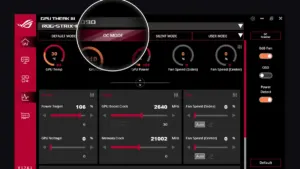
- GPU Load and Power Draw: With DLSS 5 Neural Rendering turned off, a GeForce RTX 5090 cruises at 48% to 50% GPU utilization while drawing between 305.0W and 318.1W. Enabling the DLSS-NR toggle in the exact same scene pins GPU usage at 98% and sends board power surging to 553.6W to 561.5W, an extra 235W to 256.5W dedicated to real-time neural character synthesis.
- VRAM Footprint: Dedicated video memory allocation climbs from 1,877 MB (3,169 MB total) to 2,520 MB dedicated (3,778 MB total), adding roughly 570 MB to 640 MB of VRAM overhead. This heavy footprint suggests 4A Games integrated the initial September DLSS 5 model that debuted in NBA 2K27 rather than NVIDIA's newly optimized 118-million-parameter revision, which cuts model size by 24%, lowers 4K VRAM usage by 20%, and runs up to twice as fast.
- Framerate Impact: Because the underlying 2014 4A Engine already runs at extreme framerates on modern rigs, performance only drops from 250-261 FPS down to 233-236 FPS (-6% to -11%), and remains comfortably playable at 1440p and 4K even on mainstream GeForce RTX 5060 cards.
A Live Testbed Ahead of Metro 2039 on February 4, 2027
Alongside the graphical upgrades, the update introduces optional Deep Silver Account linking, rewarding players with an exclusive digital comic book and sweepstakes entries tied to the series. More importantly, shipping DLSS 5 Neural Rendering inside the 4A Engine serves as a live production testbed ahead of Metro 2039, which is scheduled to launch on February 4, 2027.
My Test Bench: Neural Rendering Fixes 2014 Character Models, Though Your GPU Power Meter Will Feel It
Looking at the telemetry from this Next-Gen patch, I really appreciate how targeted 4A Games' implementation of DLSS 5 is. Rather than plastering a generative filter across every wet concrete wall and ruining the gritty art direction of the Moscow tunnels, the studio isolated the single element that aged poorly in Metro 2033 and Last Light: plastic-looking NPC faces. The subsurface scattering and skin micro-detail bridge a decade of rendering tech without breaking the lighting mood. That said, watching a flagship GPU pull an extra 250W under DirectX 11 just to shade character faces at over 230 FPS is a strong reminder to cap your framerate to your monitor's refresh rate until 4A Games swaps in NVIDIA's faster, lighter DLSS 5 model.

PC hardware enthusiast and competitive gamer, Arthur 'Heimdall' splits his time between France and the UK working in enterprise B2B software solutions. A business school graduate passionate about component benchmarking, he has been building, modding, and tuning PCs since childhood, optimizing every thermal degree and millisecond of display latency. An avid gamer across Assassin's Creed and sandbox titles, he forged his alliance with Grimtag and Chaya during late-night World of Warcraft raids before joining Pro-Gamer.