Logitech G Pro X2 SUPERSTRIKE vs. Razer Viper V4 Pro: Inductive Haptics vs. Analog Optical Clash
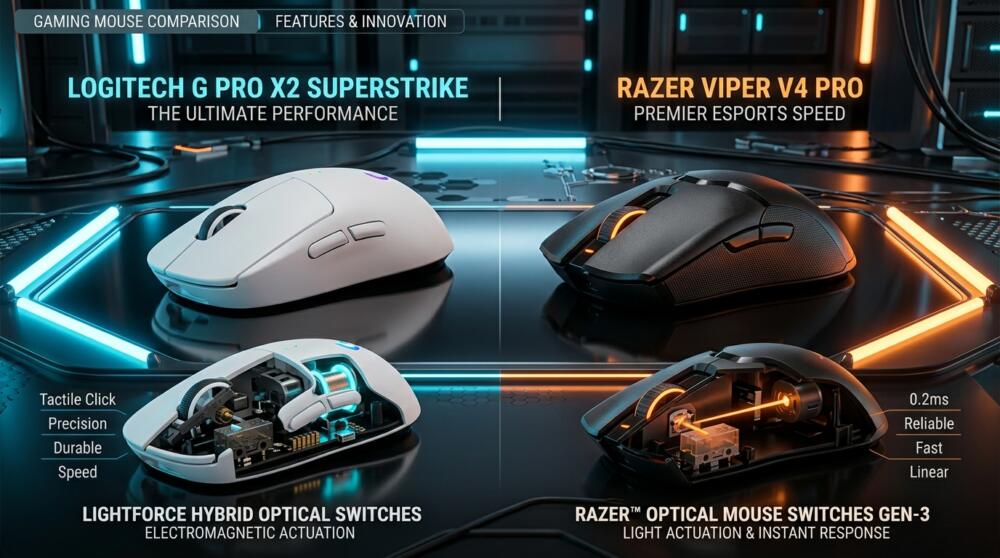
In 2026, the esports peripheral arms race took an unprecedented technological turn. For years, the mouse wars revolved around shaving off grams and boasting astronomical DPI specs on spec sheets. Today, however, the competitive frontier has shifted to where every single millisecond decides matches: click actuation latency.
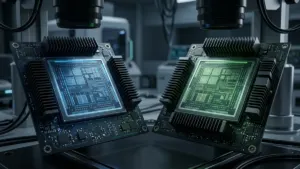
Watching the evolution of pro gear across the tournament circuit, two tech titans are clashing with completely divergent visions of the future: on one side stands Logitech G with its groundbreaking G Pro X2 SUPERSTRIKE and electromagnetic inductive haptic clicks; on the other, Razer with the Viper V4 Pro, pushing analog optical switches and 8000 Hz polling rates to their absolute limits.
Which technology delivers a genuine competitive advantage in CS2, Valorant, or Overwatch 2? Which flagship truly earns a permanent spot on your desk? Here is our comprehensive breakdown and benchmark.
The Extinction of Traditional Mechanical Switches
To understand this heavyweight clash, we need to look at the classic Achilles' heel of gaming mice: physical-contact mechanical switches.
Inside a conventional mechanical switch, clicking forces a small metal leaf spring to strike an electrical contact point. This physical collision produces microscopic electrical vibrations known as contact bounce. To prevent accidental double clicks, manufacturers program a software filter known as debounce delay (typically set between 4 and 8 milliseconds).
In top-tier esports, 8 milliseconds can be the difference between hitting a game-winning flick shot or getting sent straight to the spectator screen. To permanently eliminate this delay, Logitech and Razer took two completely distinct engineering paths.
Inductive Haptic Switches vs. Analog Optical Switches
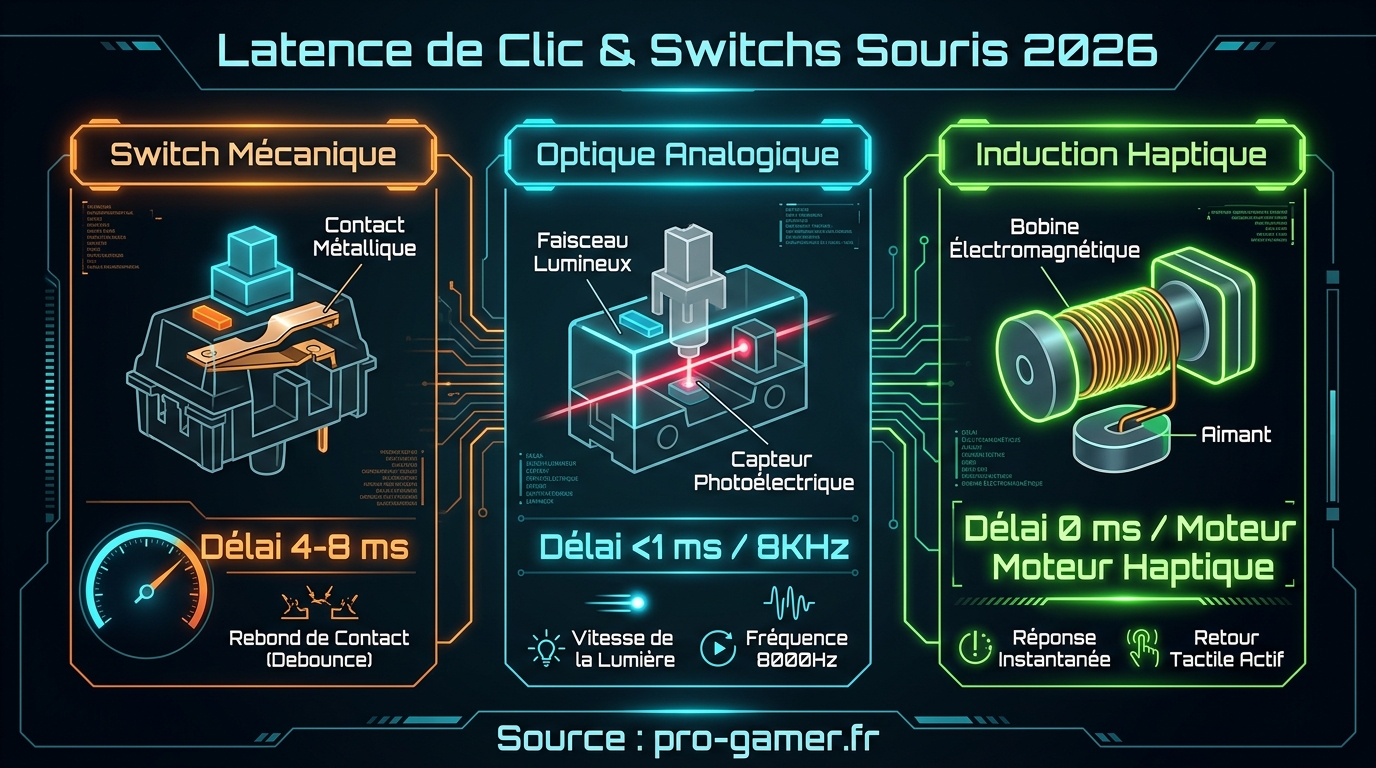
Here is how both game-changing technologies operate under real-world competitive conditions:
Logitech G Pro X2 SUPERSTRIKE: Contactless Haptic Induction
Logitech made the bold design choice to completely eliminate physical metal contacts. Beneath each click paddle on the SUPERSTRIKE sits an electromagnetic induction coil paired with an inductive sensor.
- Zero Debounce Delay (0 ms): Actuation registers the instant the magnetic field shifts, completely eliminating electrical noise and debounce wait times.
- Customizable haptic feedback: A miniature induction motor simulates crisp mechanical click tactility beneath your fingertip. You can fine-tune click firmness and tactile response via G HUB without altering actuation latency.
Razer Viper V4 Pro: The Power of Analog Optical and 8000 Hz
Razer, meanwhile, has refined its analog optical switch architecture. An infrared light beam travels through the switch housing, and as you press down, the sensor continuously measures changes in transmitted light.
- Adjustable actuation down to 0.1 mm: Much like Rapid Trigger mechanical keyboards (such as Wooting), you can tune the exact actuation point of your mouse clicks.
- 8000 Hz Polling Rate: Data packets stream to your PC 8,000 times per second, delivering flawless cursor tracking and instant click transmission.
Latency Benchmarks and In-Game Feel
In hands-on testing, the difference is immediately palpable for competitive players.
Raw Responsiveness: Click-to-Photon Latency
During end-to-end latency testing on CS2 and Valorant, the Logitech G Pro X2 SUPERSTRIKE clocked average click processing latency under 0.3 ms, trading blows with dedicated lab gear. The Razer Viper V4 Pro matches its rival step-for-step, capitalizing on its high-speed 8000 Hz data throughput.
Grip, Ergonomics, and Build
- Logitech G Pro X2 SUPERSTRIKE: Retains the universally beloved symmetrical shape favored by pros, weighing in at a featherlight 49 grams. If you love ultralight gear, explore our buyer's guide to the best ultralight gaming mice.
- Razer Viper V4 Pro: Delivers a slightly lower profile with textured side grip coating engineered for intense tournament matches. To learn how mouse weight impacts aim precision, check out our analysis of sub-45g gaming mice.
Verdict: Which Mouse Belongs on Your Battlestation?
If your budget allows for high-end esports mice in the $179 to $199 range:
- Pick the Logitech G Pro X2 SUPERSTRIKE if you demand unmatched tactile feel with zero compromises. The ability to customize haptic feedback while maintaining instant 0 ms debounce latency is a phenomenal engineering feat.
- Pick the Razer Viper V4 Pro if you want custom analog actuation points and your PC rig can fully take advantage of 8000 Hz polling on a 240Hz or 360Hz monitor.
Thank you for diving into this hardware showdown! Which technology feels better under your fingers: inductive haptics or analog optical precision? Share your thoughts in the comments below!

SEO consultant for over 20 years and digital entrepreneur, Charles 'Grimtag' Ronchain is the founder of Pro-Gamer.gg, Retrocharting.com, and Gamescharting.com. A competitive gamer, streamer, and retro game collector, he has worked in the video game industry for over 15 years, notably as a consultant for leading game price comparison platforms. Passionate about real-time performance data and gaming technology, he analyzes competitive esports, gaming hardware benchmarks, and creator workflows on Pro-Gamer.gg with an authentic player perspective.