Best Ultra-Lightweight Gaming Mice in 2026: Aim Like a Pro
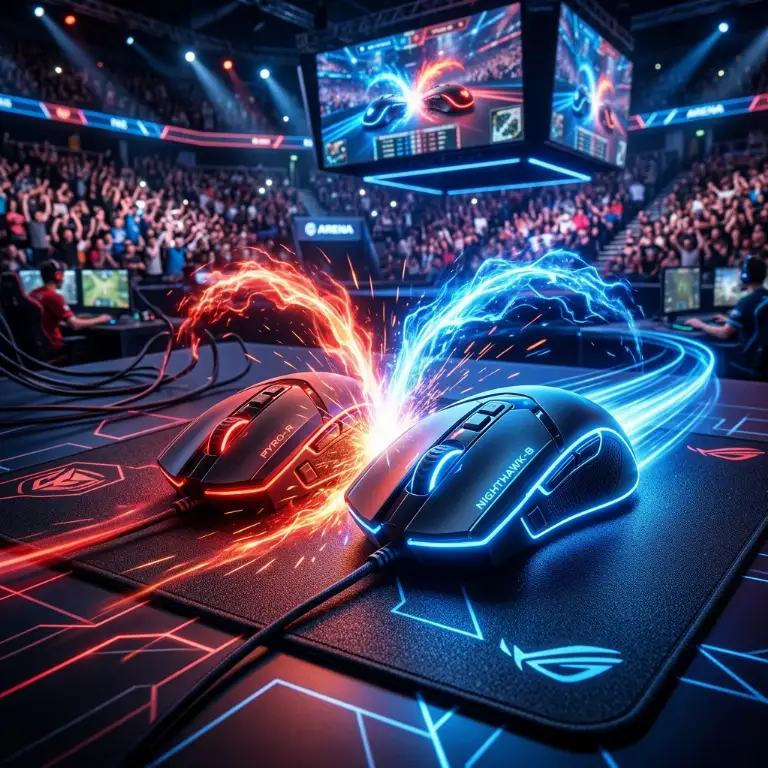
In esports, every single millisecond and every gram can make the difference between a clutch victory and a bitter defeat. Choosing the best gaming mouse is no longer just about flashy aesthetics or brand loyalty. Today, it comes down to hard data: oscilloscope-verified click latency, sensor tracking consistency, and ultra-lightweight engineering.
Ready to level up your setup with serious tournament-grade gear? Forget marketing hype. We put the top wireless contenders through rigorous lab testing. Whether you are eyeing industry giants or featherweight boutique outsiders, here is our definitive verdict on which wireless gaming mouse truly earns a spot on your desk pad.
The Science Behind Performance: What Really Matters
Before comparing models, let's cut through the marketing noise. Scientifically evaluating a wireless gaming mouse boils down to several measurable physical metrics that separate elite peripherals from generic budget mice:
- Real Click Latency: Measured with specialized hardware (like NVIDIA LDAT or oscilloscopes wired directly into the switches), this represents the exact delay between your finger actuation and the PC registering the click. Top-tier mice dip well below 1 ms.
- Sensor DPI Deviation: If you configure your mouse to 800 DPI but the sensor actually tracks at 830 or 780 DPI, your muscle memory suffers. A flawless sensor maintains near-zero deviation for true 1:1 tracking, free from artificial acceleration or jitter smoothing.
- Stable High Polling Rates: Jumping from 1000 Hz to 8000 Hz slashes reporting intervals from 1 ms down to 0.125 ms. However, true 8K polling demands rock-solid wireless stability without hogging unnecessary CPU cycles.
- Switch Architecture (Optical vs. Mechanical): Optical switches (actuated via light beams) completely eliminate debounce delay, preventing accidental double-clicking while offering practically infinite click lifespans compared to mechanical switches (check out our in-depth guide on mechanical gaming keyboards).
The Esports Meta: What the Pros Actually Use
Beyond laboratory spec sheets, tracking what professional esports athletes actually compete with on stage is illuminating. According to data from ProSettings.net, elite players across CS2, Valorant, and Apex Legends overwhelmingly gravitate toward two dominant lineups:
- Logitech G Pro X Superlight (1 & 2): The undisputed tournament standard, commanding between 38% and 42% market share among active pros.
- Razer Viper (V2 Pro & V3 Pro): The primary rival, powering roughly 20% to 25% of competitive tournament setups.
Why Such a Monopoly?
Pro players stick to these two giants not just for their sensors, but for shape consistency and global logistics. If a mouse fails backstage at an international Major, a pro can walk into any local electronics retailer and buy an identical replacement within an hour. That safety net is something boutique brands (like Ninjutso or WLmouse) simply cannot match yet.
Technical Shootout: The Top 4 Esports Contenders
Here is our comprehensive, lab-tested breakdown of the four finest wireless gaming mice dominating the competitive scene.
Razer Viper V3 Pro: The Hyper-Responsive Powerhouse
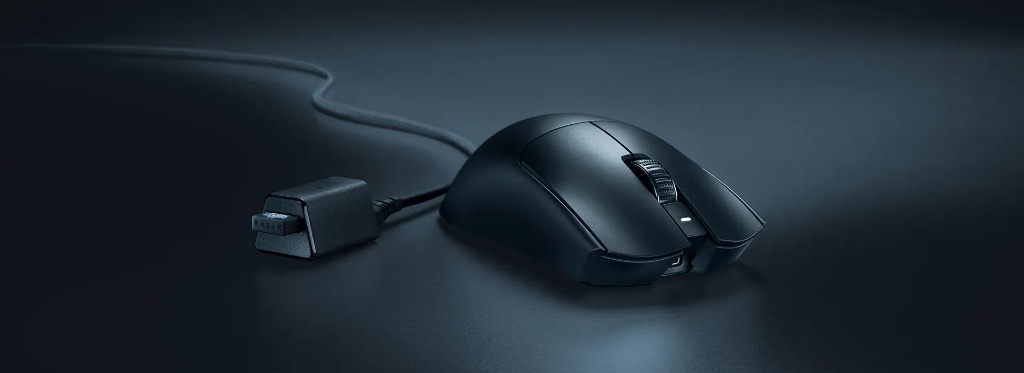
Razer completely reinvented its flagship design with the Viper V3 Pro. Moving away from its historically ultra-flat hump, it adopts fuller, universally ergonomic curves (closely echoing the G Pro silhouette). It is an absolute weapon for anyone chasing bleeding-edge performance. If you are building a balanced rig to go with it, check out our guide on assembling a budget gaming PC build.
| Metric | Lab-Tested Value |
|---|---|
| Actual Weight | 54 grams |
| Sensor | Razer Focus Pro 35K Optical Sensor Gen-2 |
| Click Latency (1000 Hz) | 0.9 ms |
| Click Latency (8000 Hz) | 0.4 ms |
| Switches | Razer Optical Mouse Switches Gen-3 (Optical) |
| Max Polling Rate | True 8000 Hz (HyperPolling Wireless Dongle included) |
Lab Test Insights: Click latency testing confirms the Viper V3 Pro is the fastest wireless mouse ever benchmarked at 8000 Hz, recording a blistering 0.4 ms average response. The Focus Pro 35K Gen-2 sensor delivers surgical tracking with under 0.5% deviation. Furthermore, its 8K polling implementation is remarkably stable, avoiding CPU spikes or micro-stutters in modern game engines.
Ideal Grip Styles: Fingertip and Claw Grip.
👉 Check Razer Viper V3 Pro Price on Amazon
Logitech G Pro X Superlight 2: The Tournament Benchmark
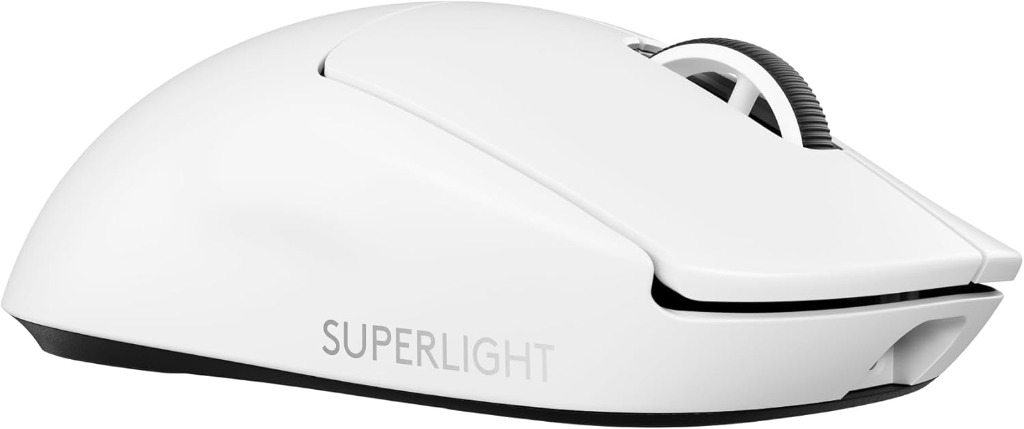
The benchmark esports mouse remains the default weapon of choice for competitive pros. While its classic symmetrical shape fits virtually any hand size, Logitech also offers the ergonomic, right-handed DEX variant for palm grip enthusiasts.
| Metric | Lab-Tested Value |
|---|---|
| Actual Weight | 60 grams |
| Sensor | HERO 2 |
| Click Latency (1000 Hz) | 1.2 ms |
| Click Latency (8000 Hz) | 0.7 ms (via free firmware update) |
| Switches | LIGHTFORCE Hybrid (Optical-Mechanical) |
| Max Polling Rate | 8000 Hz (Compatible with stock dongle) |
Lab Test Insights: Even though it gives up a few grams to ultra-light competitors, the Superlight 2 shines in structural rigidity. The unibody shell exhibits zero creaking or chassis flex under heavy grip pressure. Its Lightforce hybrid switches blend tactile mechanical feedback with optical actuation speeds, yielding a rock-steady 0.7 ms click latency at 8000 Hz following Logitech's free firmware patch.
Ideal Grip Styles: Universal (Palm, Claw, Fingertip). The DEX edition is tailored specifically for ergonomic Palm Grippers.
👉 Check Logitech G Pro X Superlight 2 on Amazon
Ninjutso Sora V2: Record-Breaking Featherweight Without Holes
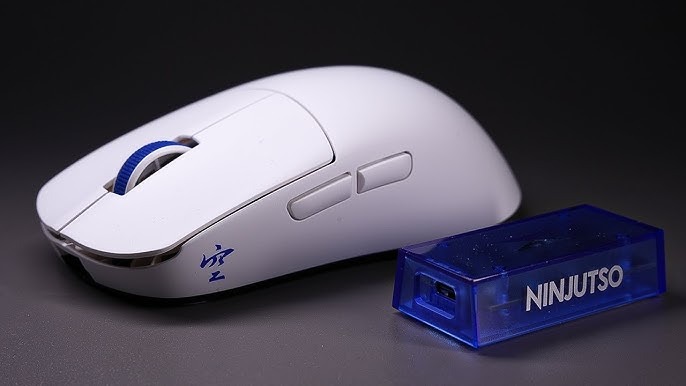
For weight purists who despise honeycomb-perforated shells, the Ninjutso Sora V2 is an absolute engineering marvel.
| Metric | Lab-Tested Value |
|---|---|
| Actual Weight | 39 grams (scale verified) |
| Sensor | PixArt PAW3395 |
| Click Latency (1000 Hz) | 1.1 ms |
| Click Latency (8000 Hz) | 0.6 ms (requires optional 8K dongle) |
| Switches | Omron Optical |
| Max Polling Rate | 8000 Hz (8K dongle sold separately) |
Lab Test Insights: Weighing in at an incredible 39 grams, the Sora V2 has practically zero rotational inertia, drastically reducing wrist fatigue during marathon aim-training sessions. Its PixArt PAW3395 optical sensor offers rock-solid tracking. Click response times match the best on the market at 0.6 ms at 8000 Hz. The only caveat to keep in mind: the 8K wireless dongle must be purchased separately.
Ideal Grip Styles: Aggressive Claw Grip and Fingertip (small to medium hands).
👉 Find Ninjutso Sora V2 on Amazon
WLmouse Beast X: Premium Magnesium Alloy Skeleton
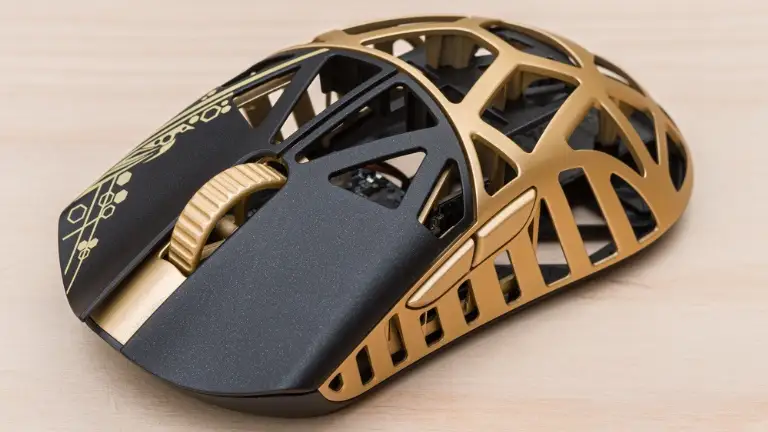
If you crave an ultra-lightweight piece of tech art that remains rigid under pressure, the WLmouse Beast X features a CNC-machined magnesium alloy skeleton.
| Metric | Lab-Tested Value |
|---|---|
| Actual Weight | 39g to 42g (depending on model/feet) |
| Sensor | PixArt PAW3950 |
| Click Latency (1000 Hz) | 1.0 ms |
| Click Latency (8000 Hz) | 0.5 ms |
| Switches | Omron Optical |
| Max Polling Rate | True 8000 Hz (Dongle included) |
Lab Test Insights: Thanks to its metal magnesium alloy construction, the Beast X exhibits zero side flex despite its open skeleton frame. Sensor benchmarks demonstrate textbook tracking from the flagship PixArt 3950, accompanied by bulletproof 8000 Hz wireless stability. Clicks are crisp with near-zero perceptible pre-travel or post-travel.
Ideal Grip Styles: Fingertip and Claw Grip.
👉 Buy WLmouse Beast X on Amazon
Technical Details That Make or Break Gameplay
Software and Bloatware: The Boutique Advantage
One crucial yet frequently overlooked factor is software bloat. Legacy titans like Razer (Synapse) and Logitech (G Hub) install background services that consume CPU cycles and occasionally crash.
Conversely, boutique disruptors like Ninjutso and WLmouse score huge points with browser-based Web Drivers. No software installation is required. Plug in your mouse, navigate to the config web page (via WebHID) in Chrome or Edge, and adjust DPI stages, polling rates, and debounce settings on the fly. All changes save directly to onboard hardware memory. Clean, effortless, and bloat-free.
PTFE Skates vs. Glass Skates: Choosing the Right Glide
Featherweight agility means nothing without the right mouse feet for your game of choice:
- Virgin PTFE (Teflon): The standard for 99% of esports pros. It delivers balanced dynamic friction and dependable stopping power. It is ideal for tactical shooters like Valorant or CS2 where micro-adjusting and snapping your crosshair onto target heads is critical.
- Aluminosilicate Glass Skates: Highly popular on mice under 45g. Static friction is virtually nonexistent, meaning micro-movements begin with zero initial resistance. This is incredible for high-speed tracking in games like Apex Legends or Overwatch 2, but requires elite motor control to prevent jittery aim.
Lab Benchmark Comparison Table
Here is an empirical comparison between the flagship mice from Razer, Logitech, and leading boutique innovators:
| Model | Actual Weight | Click Latency (8K Hz) | Switch Type | Sensor | 8K Dongle | Web Driver |
|---|---|---|---|---|---|---|
| Razer Viper V3 Pro | 54g | 0.4 ms | Optical Gen-3 | Focus Pro 35K G2 | Yes (included) | No |
| Logitech G Pro X Superlight 2 | 60g | 0.7 ms | Lightforce Hybrid | HERO 2 | Yes (firmware) | No |
| Ninjutso Sora V2 | 39g | 0.6 ms | Omron Optical | PixArt 3395 | No (sold separately) | Yes |
| WLmouse Beast X | 39g - 42g | 0.5 ms | Omron Optical | PixArt 3950 | Yes (included) | Yes |
Buyer's Guide: Finding the Right Shape for Your Grip
While laboratory numbers are essential, shape is still king. A mouse with world-record sensor numbers is useless if the ergonomics do not match your hand size and grip style.
- For Claw Grip (Small to Medium Hands): The Ninjutso Sora V2 is unmatched. Its tapered waist and rear hump provide reliable palm support while allowing agile finger placement.
- For Fingertip Grip (Micro-Aim Adjustments): The WLmouse Beast X and Razer Viper V3 Pro take the lead. Their balanced center of gravity and featherweight chassis enable lightning-quick flick adjustments.
- For Palm Grip and Larger Hands: The Logitech G Pro X Superlight 2 (or its ergonomic DEX edition) delivers maximum palm contact and comfort. Its taller profile fills your hand naturally, preventing forearm fatigue over long sessions.
The Technical Verdict
If you demand bleeding-edge speed, the lowest measured click latency, and a complete plug-and-play package with no extra dongles required, the Razer Viper V3 Pro earns the crown as the best gaming mouse in 2026.
If you prioritize pure featherweight agility, the 39g Ninjutso Sora V2 delivers an incredible weight-to-rigidity ratio that transforms your target acquisition speed. Finally, the Logitech G Pro X Superlight 2 remains the safest long-term investment for build quality, battery endurance, and tournament dependability.

SEO consultant for over 20 years and digital entrepreneur, Charles 'Grimtag' Ronchain is the founder of Pro-Gamer.gg, Retrocharting.com, and Gamescharting.com. A competitive gamer, streamer, and retro game collector, he has worked in the video game industry for over 15 years, notably as a consultant for leading game price comparison platforms. Passionate about real-time performance data and gaming technology, he analyzes competitive esports, gaming hardware benchmarks, and creator workflows on Pro-Gamer.gg with an authentic player perspective.