
Liquid Cooling Performance Without Water: Noctua Teams Up With Forced Physics for Micro-Channel PC Coolers
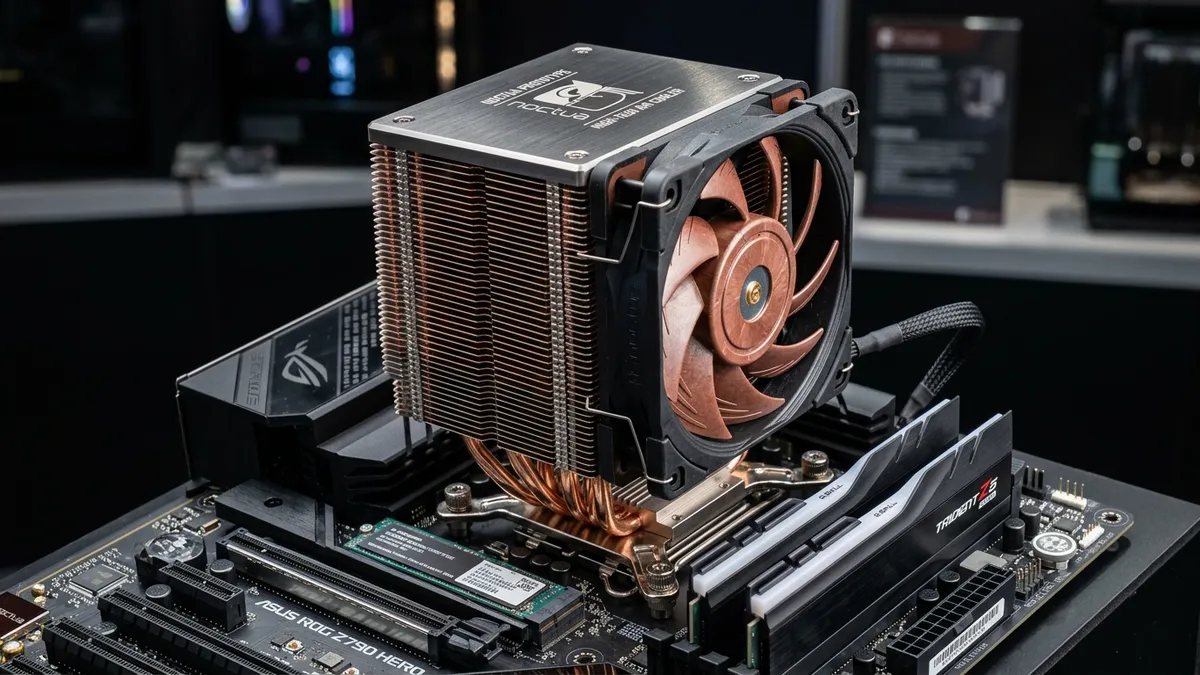
PC cooling may be standing on the verge of its biggest architectural shift since the invention of the heat pipe. Austrian cooling specialist Noctua and American thermal engineering firm Forced Physics DCT have officially announced a long-term research partnership to bring patented JouleForce micro-channel technology to desktop PCs and workstations.
The goal is bold and straightforward: deliver the cooling performance of a 360mm or 420mm all-in-one liquid cooler using pure air, without a single drop of liquid, without pumps, and without the threat of catastrophic leaks.
How JouleForce Micro-Channels Bypass Air Cooling Limits
In traditional aluminum and copper heatsinks, thermal efficiency eventually hits a hard thermodynamic barrier. A thin blanket of stagnant air, known as the boundary layer, clings to heatsink fins and acts as a thermal insulator between hot metal and moving air.
Forced Physics designed its JouleForce micro-channel arrays specifically to eliminate this bottleneck. By directing air through precision-engineered micro-channels, the architecture forces direct molecular collisions against the metal walls, preventing the insulating boundary layer from ever forming and ensuring continuous heat transfer along the entire channel.
In high-density enterprise environments, this technology has already demonstrated the ability to cool over 2,000 watts of heat across server racks using ambient air alone.
The Acoustic Hurdle: Noctua High-Pressure Aerodynamics
Adapting enterprise micro-channels to a quiet desktop chassis presents a massive engineering challenge. Because the micro-channels are so tightly packed, they generate extreme airflow impedance and require immense static pressure to push air through.
In industrial installations, this resistance is handled by high-speed blowers and vacuum pumps that generate unbearable acoustic noise. This is precisely where Noctua aerodynamic pedigree comes into play.
Under the leadership of CEO Roland Mossig, Noctua is leveraging its world-renowned research in aeroacoustics and fluid dynamics. The engineering team is working to optimize channel geometry and pair it with next-generation high-pressure fans, such as the NF-A12x25 and G2 series built with liquid-crystal Sterrox polymer, to achieve the necessary airflow at desktop-friendly noise levels.
Taming Next-Gen Processors Without Coolant Risks
This joint development effort arrives as enthusiast hardware reaches unprecedented power density. As modern high-end CPUs push thermal limits, builders turning to monster systems like the ASUS ROG G1000 desktop have increasingly felt forced toward liquid cooling loops to sustain peak boost clocks.
Adapting JouleForce technology to mainstream sockets like AMD AM5 and Intel LGA1851 could provide massive thermal headroom in a compact footprint, eliminating oversized radiators from case ceilings.
Editorial Perspective: When Air Finally Challenges Custom Loops
Full custom liquid cooling looks stunning, runs dead quiet, and delivers undeniable style inside a glass showcase. Yet, my own hands-on journey with liquid cooling left me with a much more cautious perspective.
I once had an absolute powerhouse custom-built by a specialized builder, complete with dual pumps and an elaborate loop cooling both the CPU and an RTX 4090. A dream rig. But with time and a lack of rigorous fluid maintenance, the loop gave out right in the middle of a live stream. Instant black screen, stream dead, immediate cold sweats.
Luckily, the fluid did not fry the expensive electronics. However, reviving the PC turned into a grueling salvage operation. I spent hours sweating bullets while dismantling that massive integrated loop and the two pumps, praying that not a single droplet of trapped coolant would drip onto the motherboard.
Next came the delicate surgery of completely rebuilding the RTX 4090 to reinstall its factory air heatsink, thermal pads, and stock shroud. In the end, going straight back to good old-fashioned air cooling was the best decision I ever made to get that beast running again with zero stress.
Liquid cooling is great when everything works, but the threat of a failing pump or an unexpected leak over thousands of dollars of hardware never truly goes away. Seeing Noctua pursue micro-channel cooling without a single drop of water feels like the holy grail. If this partnership succeeds, builders will finally enjoy the best of both worlds: uncompromised thermal performance with the eternal peace of mind of air cooling.

SEO consultant for over 20 years and digital entrepreneur, Charles 'Grimtag' Ronchain is the founder of Pro-Gamer.gg, Retrocharting.com, and Gamescharting.com. A competitive gamer, streamer, and retro game collector, he has worked in the video game industry for over 15 years, notably as a consultant for leading game price comparison platforms. Passionate about real-time performance data and gaming technology, he analyzes competitive esports, gaming hardware benchmarks, and creator workflows on Pro-Gamer.gg with an authentic player perspective.