160GB of VRAM in a Gaming Tablet: Why the AMD Strix Halo-Powered OneXPlayer Super X Pro Reaches $8,000
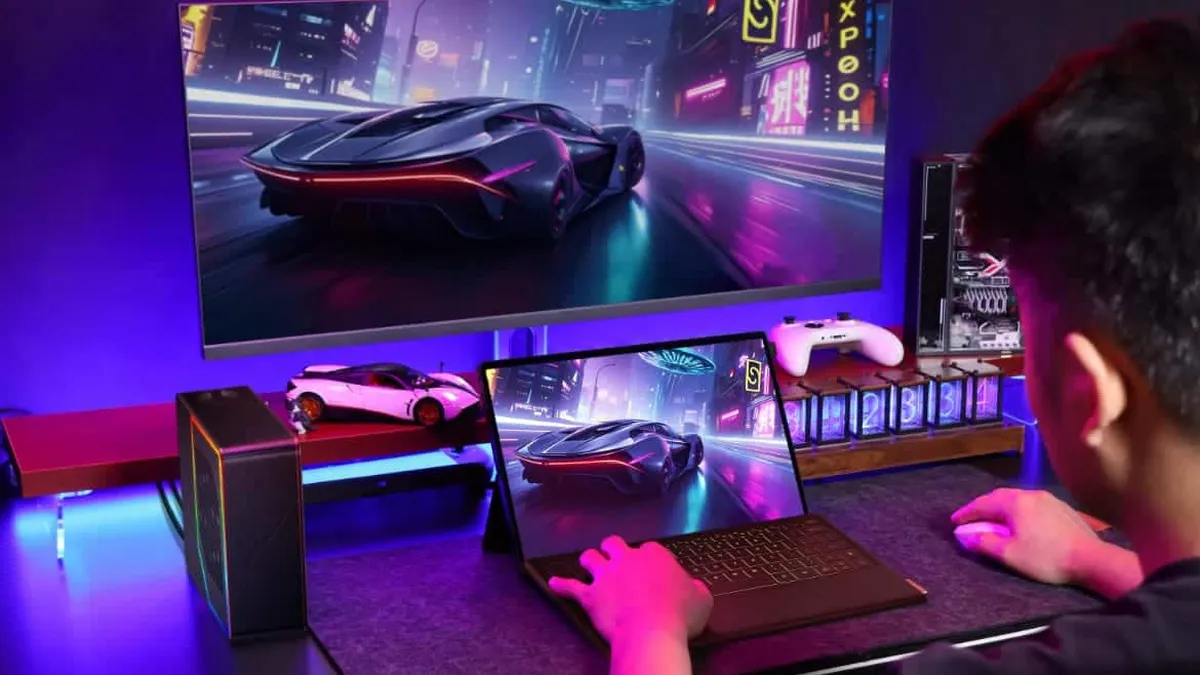
The portable computing arena has officially crossed into territory once deemed mathematically impossible for a tablet form factor. OneXPlayer has unveiled the OneXPlayer Super X Pro, an extraordinary 2-in-1 Windows 11 hybrid that completely shatters mobile hardware conventions. Encased in a sleek 14-inch tablet chassis with a magnetic detachable keyboard, this engineering marvel functions as a legitimate mobile supercomputing workstation powered by AMD's flagship Strix Halo platform.
Featuring configurations scaling up to a staggering 192GB of unified memory with the ability to allocate up to 160GB of dedicated VRAM to its integrated graphics processor, this machine caters to AI researchers, 3D artists, and hardcore hardware enthusiasts alike. However, extreme engineering commands a steep premium: the fully loaded edition approaches an eye-watering $8,000 price point.
AMD Strix Halo and 40 RDNA 3.5 Compute Units Under the Hood
At the core of the Super X Pro sits AMD's most ambitious mobile silicon to date: the Ryzen AI Max+ PRO 495 APU. Fabricated using cutting-edge TSMC process nodes, this monolithic design pairs 16 full-fledged Zen 5 cores and 32 threads with a dedicated neural processing unit outputting 55 TOPS of local AI performance. Yet the centerpiece of this silicon architecture is the integrated Radeon 8065S graphics array.
Packing 40 Compute Units based on the advanced RDNA 3.5 graphics architecture, this integrated silicon delivers raw graphics compute comparable to a dedicated RTX 4070 mobile discrete GPU. For a slate device measuring approximately 13 millimeters in thickness, matching discrete high-end GPU performance on a single unified chip represents an unprecedented milestone for portable computing.
192GB Unified Memory and an Unprecedented 256-bit Bus
The perpetual bottleneck of integrated graphics has always been shared system memory bandwidth. To eliminate this hurdle once and for all, OneXPlayer and AMD equipped the Super X Pro with a massive 256-bit memory bus, mirroring the architecture of dedicated desktop graphics boards. Paired with soldered LPDDR5X-8533 modules, the memory subsystem delivers a blistering 273 GB/s of sustained throughput.
In its top-tier configuration, the device packs 192GB of unified RAM. Through dynamic buffer allocation in the UEFI firmware, users can designate up to 160GB of VRAM solely to the Radeon GPU. This unprecedented video memory capacity allows developers to run 300-billion-parameter large language models locally or render massive architectural scenes without ever hitting memory ceiling limits.
Frost Bay Dock and 120W TDP Sustained Under Liquid Cooling
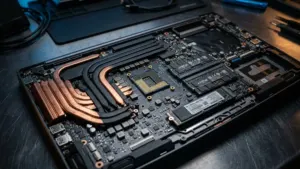
Dissipating the thermal load generated by 16 Zen 5 cores and 40 RDNA 3.5 compute units within a slim CNC aluminum chassis demands innovative engineering. While the Super X Pro features an internal vapor chamber and high-pressure dual fans for on-the-go productivity, OneXPlayer has integrated quick-connect liquid cooling valves for its proprietary external desktop dock, dubbed Frost Bay.
Once docked to this closed-loop external watercooling module, the tablet unlocks its thermal constraints to sustain an astonishing 120-watt continuous TDP without thermal throttling. The system maintains calm thermals across punishing 2.8K gaming sessions and intensive simulation renders.
The visual experience is anchored by a 14-inch 2.8K (2880 x 1800) AMOLED display running at 120Hz with variable refresh rate (VRR) and HDR support. An 85.58Wh internal battery paired with 240W GaN fast charging delivers robust power delivery to match this uncompromising hardware package.
Explore high-capacity PCIe 4.0 NVMe SSDs on Amazon→
My Bench Review: The Absurd Engineering Behind a 160GB VRAM Handheld Workstation
Examining the technical blueprints of the OneXPlayer Super X Pro provides that rare sense of wonder that only completely unapologetic, boundary-pushing hardware can still evoke. Seeing a 256-bit memory bus coupled with 192GB of LPDDR5X memory inside a 13-millimeter tablet feels like a passion project where engineers were handed complete architectural freedom with zero corporate constraints.
In my view, the real masterstroke lies in how effectively AMD Strix Halo circumvents traditional hardware bottlenecks. Integrating 40 RDNA 3.5 compute units directly onto the processor die removes PCIe bus overhead entirely. Having 160GB of addressable VRAM inside a machine that fits neatly into a travel backpack creates extraordinary opportunities for on-site machine learning and portable 3D rendering, where dedicated desktop workstation cards typically command astronomical costs on their own.
While an $8,000 price tag on the 192GB RAM and 8TB storage flagship clearly positions this device as an elite halo product for specialized professionals, it serves as a stunning glimpse into the future of unified mobile computing. OneXPlayer has crafted an undeniable technological statement piece that sets a new high-water mark for portable hardware.

PC hardware enthusiast and competitive gamer, Arthur 'Heimdall' splits his time between France and the UK working in enterprise B2B software solutions. A business school graduate passionate about component benchmarking, he has been building, modding, and tuning PCs since childhood, optimizing every thermal degree and millisecond of display latency. An avid gamer across Assassin's Creed and sandbox titles, he forged his alliance with Grimtag and Chaya during late-night World of Warcraft raids before joining Pro-Gamer.