ROG Swift OLED PG259QWS Ace: Is the 720Hz Official CS2 Major Monitor Worth €1,149?
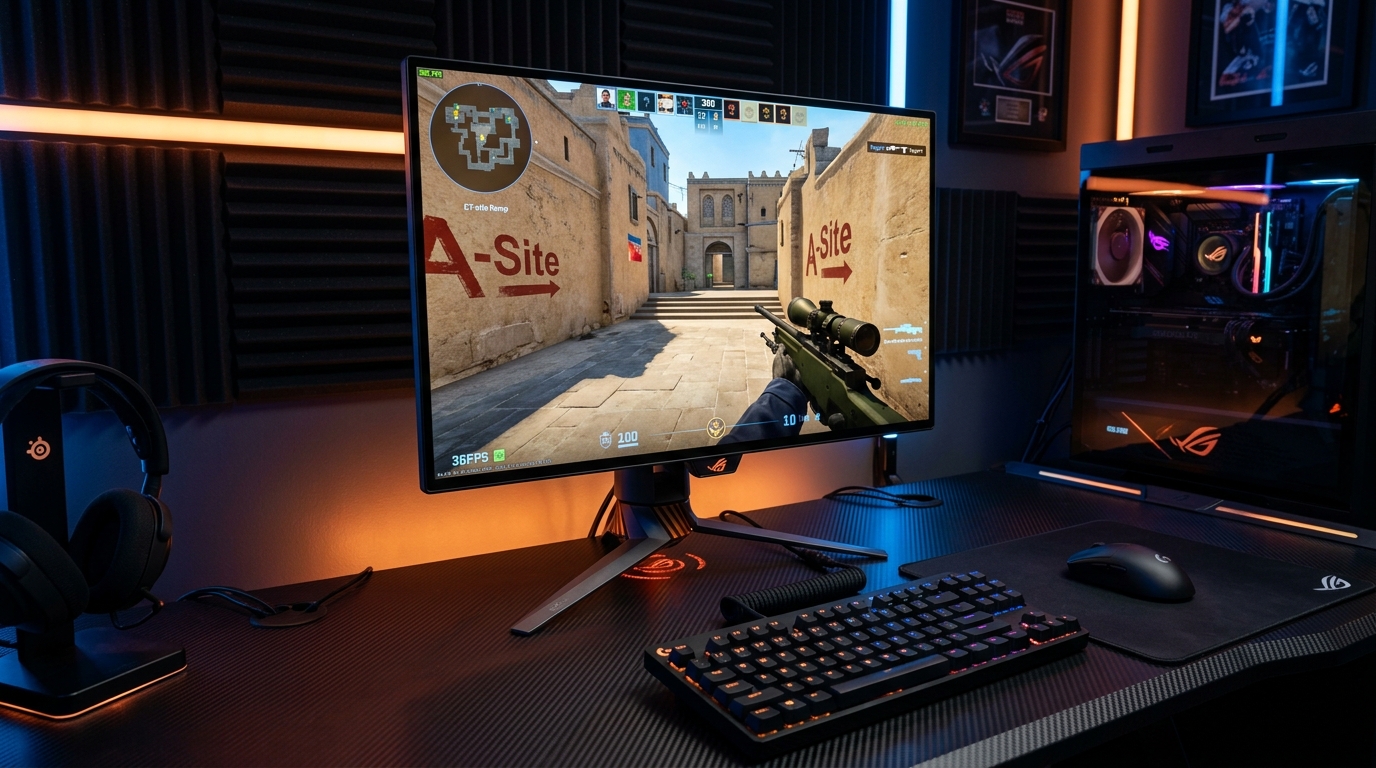
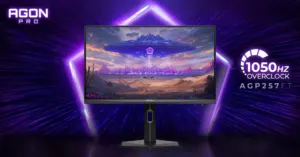
The esports refresh rate arms race just reached a dizzying new summit. Unveiled at Gamescom 2026 by ASUS Republic of Gamers and immediately crowned as the official competition monitor for the PGL CS2 Major Singapore, the ROG Swift OLED PG259QWS Ace shatters established competitive standards. Featuring a 24.5-inch Tandem WOLED panel maxing out at an eye-watering 720Hz alongside a gray-to-gray response time of 0.02ms, this technological tour de force carries a price tag of €1,149.90 ($1,250). That premium begs an existential question for every serious competitor: are we looking at a genuine gameplay breakthrough or the peak of diminishing returns?
Specs and Innovations: ASUS ROG's Elite Competitive Arsenal
Engineered in close collaboration with esports pros across the Counter-Strike 2 and Valorant circuits, the PG259QWS Ace refuses to compromise on visual clarity or tournament ergonomics. Here is what this beast packs under the hood:
- 24.5-Inch Tandem WOLED Panel: Native Full HD resolution (1920 x 1080 pixels), the undisputed competitive standard favored by pros to maintain a tight field of view while maximizing framerates.
- 720Hz Refresh Rate: A new world record for OLED panels running at 1080p resolution.
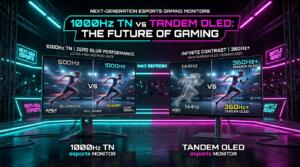
- 0.02ms Response Time (GtG): Virtually eliminates ghosting and pixel transition blur, easily outclassing even the fastest Fast-LCD TN panels equipped with strobing backlights (such as DyAc+).
- OLED Care Pro with Neo Proximity Sensor: A built-in infrared sensor detects when the player steps away from their battlestation, automatically dimming the display to prevent burn-in risks.
- Ergonomic Position Sensor: A calibration module memorizes screen tilt, height, and exact viewing distance, ensuring tournament players can replicate their precise millimeter setup at LAN events.
If you are still weighing today's display technologies, check out our comprehensive guide to the best gaming monitors in 2026 to understand the real-world performance gap between Fast-IPS and OLED.
360Hz vs 540Hz vs 720Hz: The Cold Hard Math of Frame Times
To evaluate actual in-game benefits, raw Hertz figures only tell half the story. The metric that truly matters is frame time, the delay between two consecutive frames:
| Refresh Rate | Frame Time (Display Latency) | Delta vs Previous Tier |
|---|---|---|
| 144 Hz | 6.94 ms | Baseline Reference |
| 240 Hz | 4.16 ms | -2.78 ms (Massive leap) |
| 360 Hz | 2.77 ms | -1.39 ms (Noticeably smoother) |
| 540 Hz | 1.85 ms | -0.92 ms (Perceptible only to elite reflexes) |
| 720 Hz (ROG Swift PG259QWS) | 1.38 ms | -0.47 ms (Diminishing returns) |
The numbers do not lie: jumping from 540Hz to 720Hz yields a mere 0.47-millisecond reduction in frame delivery. That is more than ten times smaller than the average neuromuscular reaction time of an elite esports athlete (benchmarked between 140ms and 170ms). However, where the PG259QWS Ace truly pulls ahead is not purely raw input speed, but absolute motion clarity. By pairing 720 refreshes per second with near-instant OLED pixel transitions, motion blur is completely obliterated during rapid crosshair micro-adjustments, target transfers, and 180-degree flickshots.
What PC Rig Do You Need to Drive Stable 720 FPS?
Buying a 720Hz monitor without a battle-station capable of feeding it that many frames is pure folly. On demanding modern esports engines like Counter-Strike 2 (powered by Source 2 with its notoriously CPU and GPU heavy volumetric smoke grenades), maintaining 1% low framerates above 720 FPS is a monumental challenge.
To push this monitor to its full potential, here is the baseline hardware profile you will need:
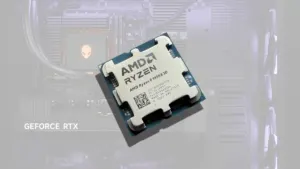
- Processor (CPU): The primary system bottleneck. A chip packed with massive 3D V-Cache is mandatory, such as the AMD Ryzen 7 7800X3D or Ryzen 7 9800X3D. At 1080p competitive low settings, the CPU works overtime pushing draw calls to the GPU.
- System Memory (RAM): At least 32GB of low-latency DDR5 (6000MHz CL30 or 6400MHz with tight sub-timings) to eliminate micro-stutters during heavy team utility executes.
- Graphics Card (GPU): An NVIDIA GeForce RTX 4080 Super or higher to hold rock-solid frame pacing, even through chaotic site hits with multiple volumetric smokes and incendiary molotovs blooming at once.
If your current rig already struggles to break past 300 FPS, focus on balancing your internal hardware first. Check out our guide on optimizing your gaming PC build before investing in flagship esports glass.
Verdict: An Esports Revolution or an Overpriced Luxury at €1,149?
With the ROG Swift OLED PG259QWS Ace, ASUS delivers an indisputable engineering triumph. By securing its role as the official tournament monitor for the PGL CS2 Major Singapore, ASUS guarantees top-tier visibility across the global esports stage.
Should You Buy It?
- YES for elite esports competitors: If you are a contracted pro player, high-tier streamer, or dedicated Faceit Level 10 / FPL grinder ready to invest in zero visual compromises. Check out full product specs directly on the official ASUS ROG website.
- NO for 98% of gamers: At €1,149.90, the price premium over outstanding 360Hz OLED monitors (now routinely found under €700 / $750) is vastly disproportionate to the tiny 0.47ms frame time gain. For the overwhelming majority of competitive players, 360Hz or 540Hz panels deliver peak visual speed without requiring a $3,000 PC to power them.

Counter-Strike 2
Explore official trailers, technical specs and all latest coverage for Counter-Strike 2.

SEO consultant for over 20 years and digital entrepreneur, Charles 'Grimtag' Ronchain is the founder of Pro-Gamer.gg, Retrocharting.com, and Gamescharting.com. A competitive gamer, streamer, and retro game collector, he has worked in the video game industry for over 15 years, notably as a consultant for leading game price comparison platforms. Passionate about real-time performance data and gaming technology, he analyzes competitive esports, gaming hardware benchmarks, and creator workflows on Pro-Gamer.gg with an authentic player perspective.