Custom 3nm AMD Chip and Native PS5 Games: Sony Is Building a Portable PlayStation 6
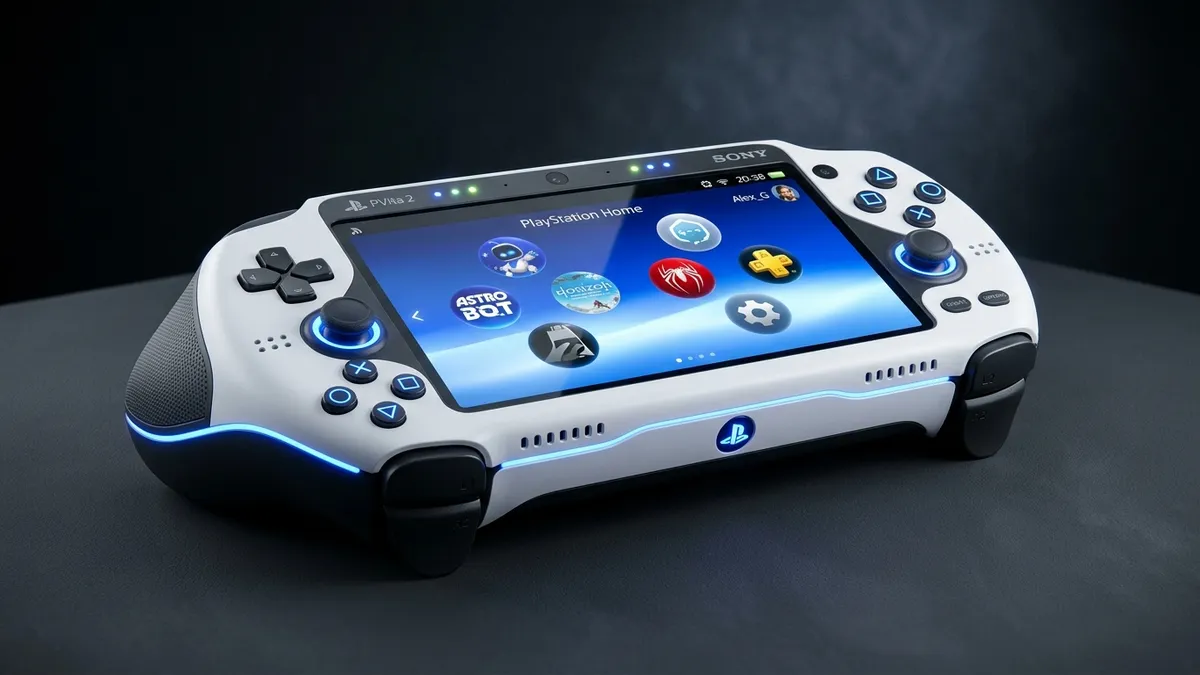
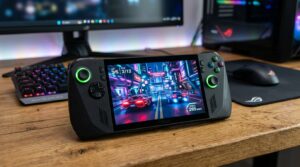
The PlayStation Portal was merely an opening move to test market appetite. According to consistent hardware leaks originating from the semiconductor supply chain and reported by community insiders, Sony is actively developing a fully autonomous handheld console codenamed Project Canis.
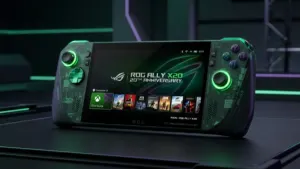
This initiative directly reflects the "Beyond the living room" vision championed by Sony Interactive Entertainment CEO Hideaki Nishino. Faced with the runaway momentum of Valve's Steam Deck, the Asus ROG Ally, and the upcoming Nintendo Switch 2, Sony recognizes that a remote streaming screen over Wi-Fi is no longer sufficient to lock in modern gamers.
A Custom AMD SoC Built on TSMC's 3nm Process
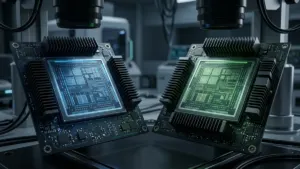
To bring this standalone machine to life, Sony and AMD are continuing their engineering partnership with a custom system-on-chip manufactured on TSMC's cutting-edge N3P 3-nanometer node. This advanced lithography provides the strict thermal efficiency needed to run demanding modern titles without overheating a slim handheld chassis.
The processing unit relies on a 6-core hybrid configuration, pairing 4 high-density Zen 6c cores with 2 ultra-low-power Zen 6 LP cores dedicated to the operating system and background tasks. On the graphical side, AMD's RDNA 5 architecture takes command with 16 Compute Units (CUs) supporting Dual-Issue FP32 calculations.
| Hardware Component | Technical Specification |
|---|---|
| Process Node | 3nm TSMC (N3P Node) |
| CPU Architecture | 4 Zen 6c cores + 2 Zen 6 LP cores |
| GPU Architecture | AMD RDNA 5 (16 Compute Units) |
| Handheld Performance (15W) | 1.2 GHz GPU clock (~4.91 TFLOPS FP32) |
| Docked Performance (25W) | 1.65 GHz GPU clock (~6.75 TFLOPS FP32) |
| Unified Memory | 24 GB LPDDR5X (192-bit bus) |
| Neural Upscaling | PSSR 3.0 with Frame Generation |
Native PS4 and PS5 Game Library on the Go
The decisive breakthrough compared to the PlayStation Portal is local execution. Project Canis is engineered to run your digital PlayStation 4 and PlayStation 5 game library natively, requiring zero internet connectivity or active home console stream.
Packing 24 GB of unified LPDDR5X memory across a 192-bit bus, the portable handheld delivers generous bandwidth to handle high-resolution assets smoothly. While the next-generation home console prepares an unprecedented leap in graphical raw power (see our technical breakdown of the PS6 taped-out APU compared to Xbox Helix), this portable hardware preserves complete continuity for your existing library.
PSSR 3.0 Neural Upscaling Overcomes the Handheld Limit
Running modern console titles within a tight 15W to 25W power envelope demands intelligent compromises on native rendering. On the go, the GPU clocks at 1.2 GHz to produce roughly 4.91 raw TFLOPS, scaling up to 6.75 TFLOPS at 1.65 GHz when docked to a television screen.
To eliminate performance bottlenecks, Sony is integrating PSSR 3.0 (PlayStation Spectral Super Resolution). By rendering demanding gameplay internally at 540p or 720p and reconstructing the frame to clean 1080p using dedicated neural hardware, the system achieves perceived fidelity comparable to a 10 to 14 TFLOPS GPU without burning through battery life.
This portable console is also set to leverage Sony's latest ergonomic breakthroughs, such as newly registered controller solutions for the PS6 DualSense 2.0 to eliminate stick drift.
A Dual-Tier Strategy to Challenge Steam Deck and Switch 2
Abandoning the PS Vita in 2011 left a massive market vacuum that Nintendo and dedicated PC handheld manufacturers capitalized on for over a decade. By pairing Project Orion for the living room with Project Canis for everyday transit, Sony is crafting an integrated ecosystem to keep players engaged anywhere.
Balancing battery longevity and thermals in a compact frame remains an engineering challenge, but delivering native PlayStation 5 gaming in a backpack is exactly what fans have been demanding for years.

SEO consultant for over 20 years and digital entrepreneur, Charles 'Grimtag' Ronchain is the founder of Pro-Gamer.gg, Retrocharting.com, and Gamescharting.com. A competitive gamer, streamer, and retro game collector, he has worked in the video game industry for over 15 years, notably as a consultant for leading game price comparison platforms. Passionate about real-time performance data and gaming technology, he analyzes competitive esports, gaming hardware benchmarks, and creator workflows on Pro-Gamer.gg with an authentic player perspective.