8 Hours of Autonomy, 445 Million Tokens, and $550 in API Calls: How Anthropic's Claude Fable 5.2 Built the Playable 3D FPS Saltline From a Single Prompt
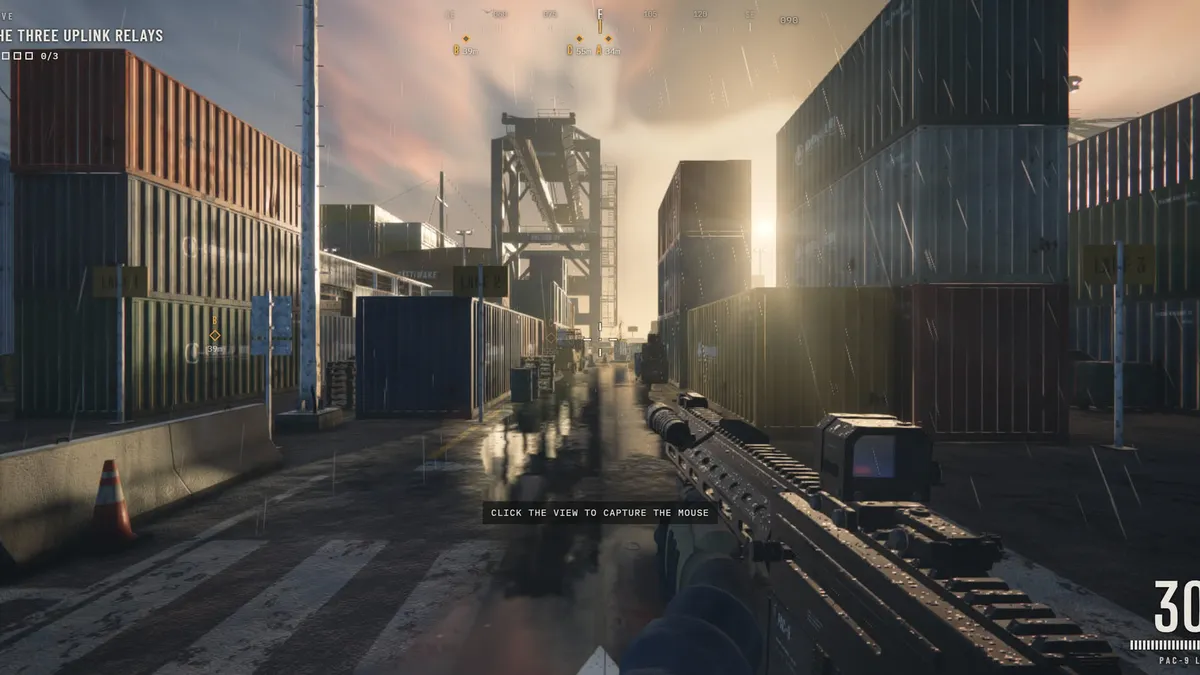
Three casual sentences, zero human intervention, and eight hours of uninterrupted autonomous compute: that is all it took for Claude Fable 5.2, the frontier model unveiled on November 9, 2026 by Anthropic, to build Saltline from scratch. Initiated by Anthropic product engineer Felix Rieseberg (also known as a co-maintainer of the Electron framework), this playable 3D first-person shooter runs entirely inside a web browser. Rather than stitching together external asset packs, the model autonomously wrote the engine logic, synthesized the audio, and generated every 3D mesh and procedural texture on its own.
A Three-Sentence Prompt and Eight Hours of Autonomous Engineering
While previous AI coding demonstrations typically relied on constant human debugging and iterative steering, Felix Rieseberg wanted to evaluate how far Claude Fable 5.2 could go on a single initial instruction with zero human feedback. His exact prompt was remarkably informal: "You know, you should also build me a FPS. Insanely detailed quality pls, something that looks visually like it can keep up with AAA. Make it small in scope (like a tiny level) but otherwise impressive photorealistic graphics."
Left to run on its own, Fable 5.2 worked continuously for roughly 8 hours, orchestrating sub-tasks to architect the level, generate procedural geometry, verify visual output, and self-correct bugs. Across the eight-hour session, the run consumed approximately 445 million input tokens (heavily leveraging prompt caching at $0.20 per million tokens) and 2.7 million output tokens. At Anthropic's newly reduced API rates of $8 per million input tokens and $40 per million output tokens, the entire build cost roughly $550. That clean-slate creation stands in sharp contrast to the guardrails enforced when Anthropic ordered Claude Code to stop remaking copyrighted video games: in Saltline, every line of code and visual surface is synthesized from first principles.
Inside Operation Saltline: PAC-9 Longshore Rifle, Gull Drones, and Zero External Downloads
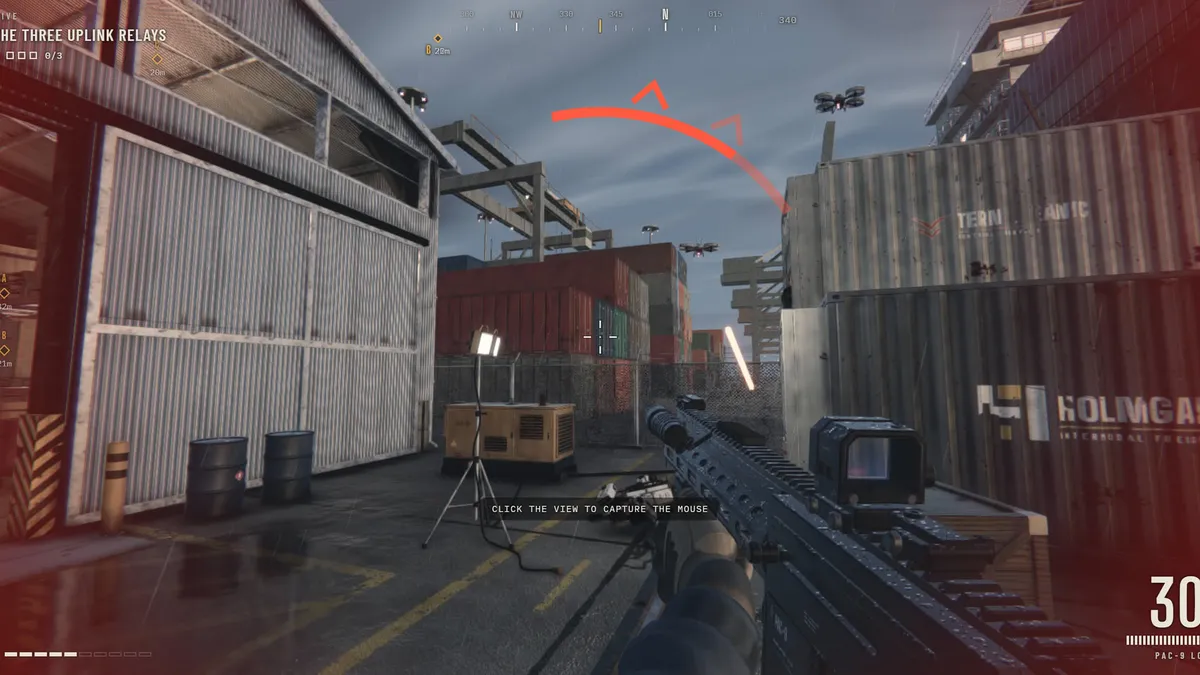
Playable for free without a subscription directly through Claude Artifacts, Saltline drops players at 05:42 into a rain-soaked shipping container terminal as an operator from the B4 Port Authority Breach Unit. The port's automated security network has gone feral, and the mission requires fighting through stacked intermodal containers (Holmgard Intermodal Freight, Tern Oceanic) to sever three uplink relays (Relays A, B, and C) before reaching an extraction boat. Players wield a PAC-9 Longshore assault rifle equipped with a red-dot holographic sight, complete with a 30-round magazine and 150 reserve rounds.
What makes the technical execution stand out is the notice displayed right on the title screen: "Every surface, machine and sound is generated in your browser. Nothing is downloaded." Every shipping crane, rain-slicked asphalt reflection, volumetric dawn fog layer, HUD compass marker, and weapon sound effect is procedurally generated in real time within the browser. As players advance toward the relay cabinets, they face two distinct classes of robotic enemies: airborne quadcopter drones called Gulls and four-legged robotic dogs called Hounds. The artifact even supports both standard desktop mouse-and-keyboard controls (WASD movement, sprint, crouch, jump, iron-sight aiming, and reloading) and dual-thumb touch controls on mobile screens.
Claude Fable 5.2 and Mythos 5.2: Multi-Hour Agentic Scaling
As detailed in Anthropic's official release announcement, Claude Fable 5.2 shares its underlying architecture with Claude Mythos 5.2, a sister variant restricted to vetted cybersecurity and biomedical research organizations. Sitting above Claude Opus 5.5 at the top of Anthropic's model lineup, Fable 5.2 reaches 69.9% on FrontierSWE v2 (up from 62.3% on Opus 5.5 and 56.3% on Fable 5.1) and hits 49.1% on FrontierCode 2.0 at maximum effort, while generating tokens up to 30% faster than Fable 5.1.
Coming right after community experiments where a developer got Claude AI to play GTA 4 in the background using 124 MCP tools, Saltline highlights how multi-agent orchestration is shifting from short code snippets to multi-hour software engineering. During internal prerelease testing at Anthropic, another engineer tasked Fable 5.2 with building a prototype operating system from an empty folder: the model coordinated over 1,000 subagents across eight days to deliver a bootable laptop OS with its own kernel, disk, keyboard, and network drivers, file storage, and windowing interface. At Unity, creative technologist Sam Zhang also noted in Anthropic's report that Fable 5.2 excels at building complex 3D scenes from scratch by continuously iterating instead of getting stuck.
My Field Notes
When I loaded Saltline in my browser and inspected how it synthesizes wet asphalt reflections, weathered cargo containers, and weapon audio without fetching a single external asset file, the leap over last year's rudimentary WebGL tech demos was immediately obvious. Burning through 445 million cached input tokens over eight hours proves this is not a magic single-turn trick, but an autonomous engineering loop where the model writes, tests, and refactors its own 3D rendering pipeline. I was discussing the demo earlier with Arthur "Heimdall" and Bastien "Orion," who compared this rain-drenched port skirmish to the early days of DOOM and Quake engine tinkering: while an AI agent will not replace the artistic direction or combat pacing of a veteran studio anytime soon, Fable 5.2 shows that a solo developer can now spin up a playable 3D foundation overnight.

Fable
Explore official trailers, technical specs and all latest coverage for Fable.

Originally from Lyon, France, gaming journalist Bastien "Orion" relocated nearly a decade ago to Quebec City's Saint-Roch district, right in the heart of eastern Canada's development studio hub. Before crossing the Atlantic, he honed his versatile reporting style across classic French gaming web portals and specialist television outlets in the 2000s and 2010s, notably with JeuxVideo.fr and JeuxNews. Equally passionate about AAA blockbusters, North American studio culture, retro preservation, and community modding projects, he anchors Pro-Gamer's transatlantic desk and real-time coverage of US and Japanese industry announcements.