10 Lines of Unity Code and Under 0.1% of the Game: Why Big Walk Creators Apologized for Using AI to Fix a Shadow Bug
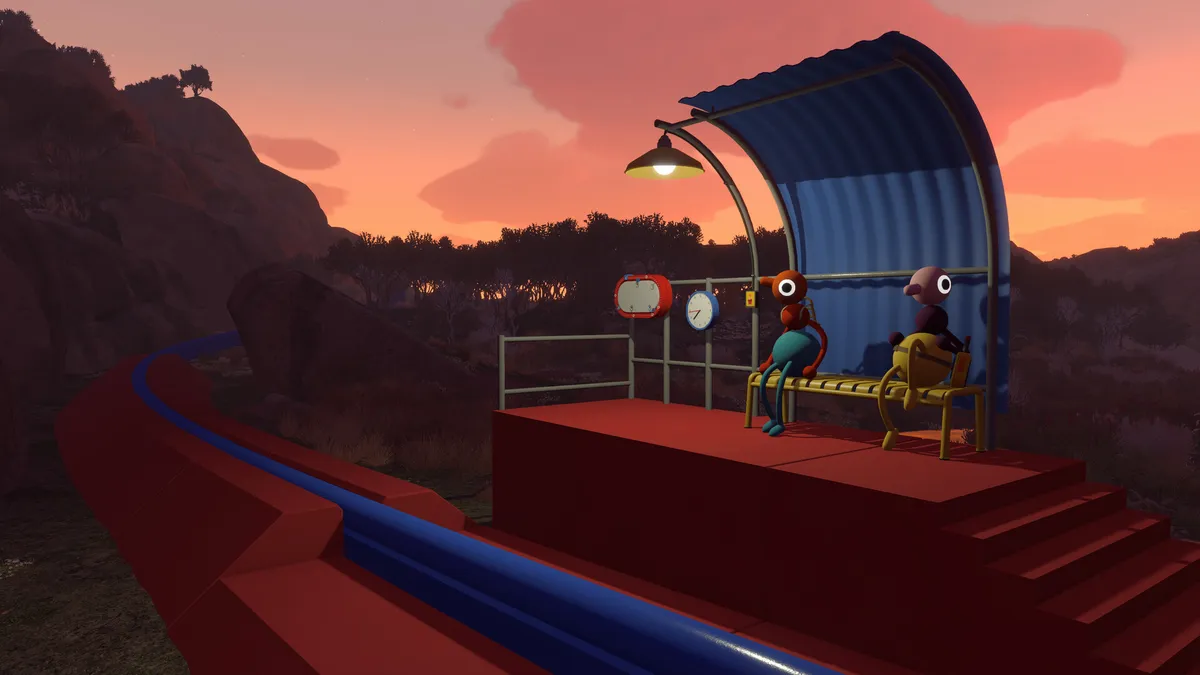
Ten lines of custom rendering code, a brutal sunset framerate drop, and an ethical debate now rattling the indie awards circuit. Months after launching Big Walk on August 4, 2026 for PC, macOS, and PS5, Australian developer House House (the studio behind Untitled Goose Game) and publisher Panic have issued a detailed public statement addressing their minimal use of artificial intelligence tools late in production. What began as a voluntary note for the 2027 Independent Games Festival (IGF) has quickly sparked a broader conversation over where the industry should draw the line on coding assistants.
A Voluntary IGF 2027 Disclosure Sparks an Indie Debate
The discussion surfaced after House House submitted Big Walk for consideration at the 2027 Independent Games Festival. Following a public declaration from a group of IGF jurors vowing not to vote for any title that utilized generative AI in any capacity, word spread that House House had voluntarily disclosed sparse Large Language Model (LLM) usage during the final stretch of the game's development.
To give players the full context, the Melbourne-based team published its complete disclosure on the official Big Walk FAQ page. In the statement, the developers estimate that well under 0.1% of Big Walk's total code had anything to do with LLM troubleshooting. Crucially, House House emphasized that generative AI was never used in any other context: zero AI-generated art, 3D assets, writing, music, or voice work. That distinction is also why no AI disclosure banner appears on the game's Steam storefront, as Valve does not require studios to report code-troubleshooting chatbots.
The Unity URP Shadow Bug That Cut Performance by 50% at Sunset
Rather than speaking in vague generalities, House House walked players through the exact technical roadblock that led its programmers to query a chatbot. The culprit was a deep rendering limitation inside Unity URP (Universal Render Pipeline) involving how shadow casters were culled across the game's expansive open-world island.
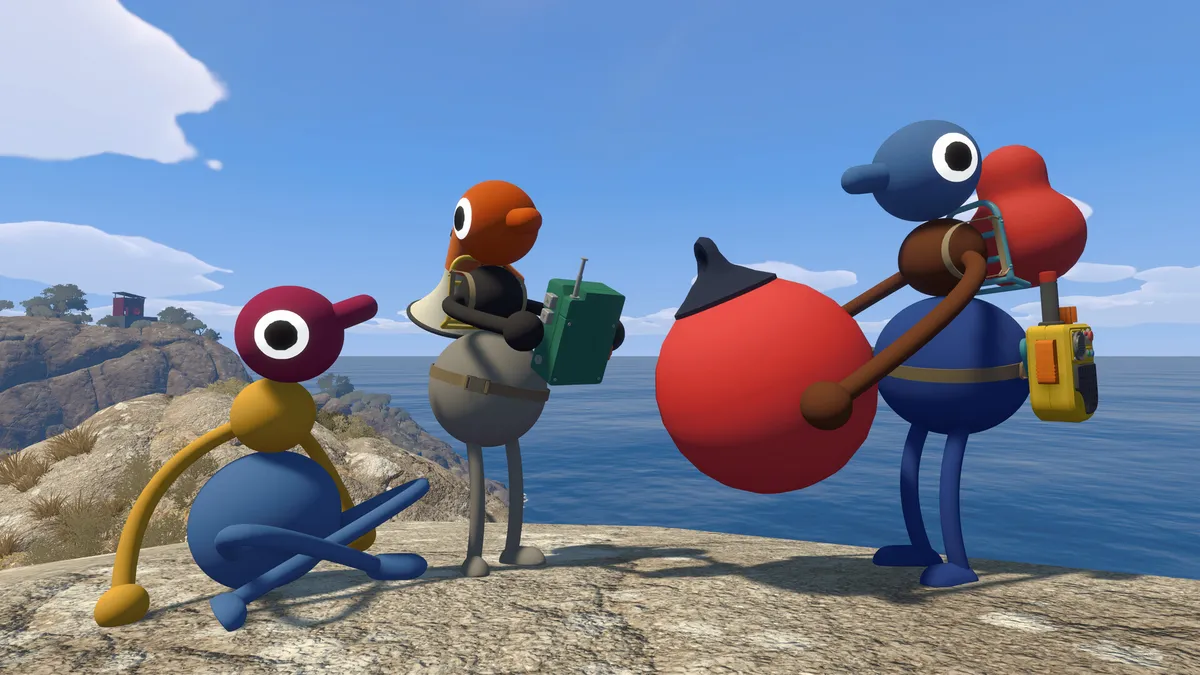
To keep performance stable in Big Walk, the team needed to cull shadow casters by distance from the camera. However, Unity URP natively only allows distance-based shadow culling in front of the camera. As a result, every shadow caster located behind the player was being rendered at an infinite distance. Whenever sunrise or sunset hit the island and shadows stretched across the horizon, the game ran 50% slower for roughly 20 seconds.
After digging through the URP source code themselves and coming up empty, the developers spoke directly with a Unity engineer, who consulted colleagues internally and ultimately concluded that what House House wanted simply wasn't possible. As a last resort, the team posed the problem to an LLM chatbot. After a few dead ends, it suggested a workaround that the programmers heavily rewrote and adapted into roughly 10 lines of code inside URP, permanently fixing the sunrise and sunset lag spike.
An Internal Policy "Failure" and an Apology to Critics
Known for taking firm ethical stances, including the studio's publicized decision when the Untitled Goose Game creators refused to release Big Walk on Xbox, House House made it clear that its transparency should not be misread as support for AI in game development. "This is not an endorsement of, or argument for, the use of AI tools, however minimal," the studio wrote, adding that it worries voluntary disclosures like this might inadvertently help normalize the technology or frame it as inevitable.
House House stated that it supports those working to limit the harm generative AI is causing to video games and the wider world, apologizing if Big Walk's troubleshooting usage falls short of their standards. Finally, the team noted that the game was built without a formal internal AI policy in place, calling that omission a "failure" that they intend to rectify with a comprehensive policy moving forward.
My Perspective
When I look at both deep learning architectures and the daily reality of independent studios, I think this controversy shows just how badly the current AI debate lacks technical nuance. Treating a studio that replaces illustrators, writers, or voice actors with generative models the exact same way as a programmer who queries a chatbot to bypass a documented Unity URP shadow-culling flaw makes zero engineering sense. No creative discipline was displaced here: even a Unity engineer told House House their fix couldn't be done natively, and adapting a 10-line C# workaround saved players from losing half their framerate every time the sun went down. While House House's self-reflection shows how deeply the team cares about creative ethics, punishing radical honesty over 0.1% of low-level engine debugging won't protect artists, and it risks teaching developers to stay quiet on future festival submissions.

Based on the outskirts of New York City, Chaya 'Chayane' spent five years studying software engineering in Montreal before returning to her home state. A Full-Stack developer and Deep Learning AI architecture researcher, she explores neural networks and algorithmic optimization while engineering data pipelines for Retrocharting and Gamescharting alongside Grimtag. A gamer for over 20 years and an avid collector of Nintendo history and The Legend of Zelda, she explored World of Warcraft's Azeroth before bringing her deep technical background to video game analysis.