Anthropic Quietly Orders Claude Code to Stop Remaking Video Games With an Unblockable Server Rule
The era of feeding a classic title's codebase or gameplay trailer into a terminal to spin up a playable clone is hitting an unexpected wall. Without publishing a changelog entry or updating its public usage policy, Anthropic has remotely deployed a server-side instruction inside its coding assistant Claude Code that explicitly forbids the model from recreating specific existing video games, even under a disguised name.
A Server-Side Directive Injected Every 60 Seconds Into Claude Code
First spotted on October 30, 2026 by developer Chasm and corroborated across leaked Claude Opus 5.5 system prompts, the restriction is tracked internally under the feature flag tengu_heron_brook. Quietly pushed around October 27, the directive injects a blunt two-sentence rule directly into the assistant's runtime instructions: "Do build original games, games in a genre, and games from the user's own designs and assets. Don't build a recreation of a specific existing game, even if it is renamed or called original."
What makes the restriction particularly disruptive is how it reaches a developer's machine. Since version 2.1.150 of Claude Code, the client fetches a remote prompt section at startup and refreshes feature flags roughly every 60 seconds in the background, caching the resulting instructions to local disk. There is no command-line flag, configuration setting, or version pin to disable it. The shift marks a sharp contrast from just a few weeks ago, when Dragon Quest creator Yuji Horii recreated the spirit of Portopia in 30 minutes using Claude during a widely celebrated industry showcase.
From ReVamp to Valve: Indie Studios Push Back Against Automated AI Cloning
The clampdown arrives amid mounting anxiety across the independent development scene over rapid, AI-generated copycats built from public demos. On October 29, 2026, Spanish studio Digital Sun, best known for the Moonlighter franchise, abruptly canceled the public Steam playtest for its upcoming cooperative action-builder ReVamp.
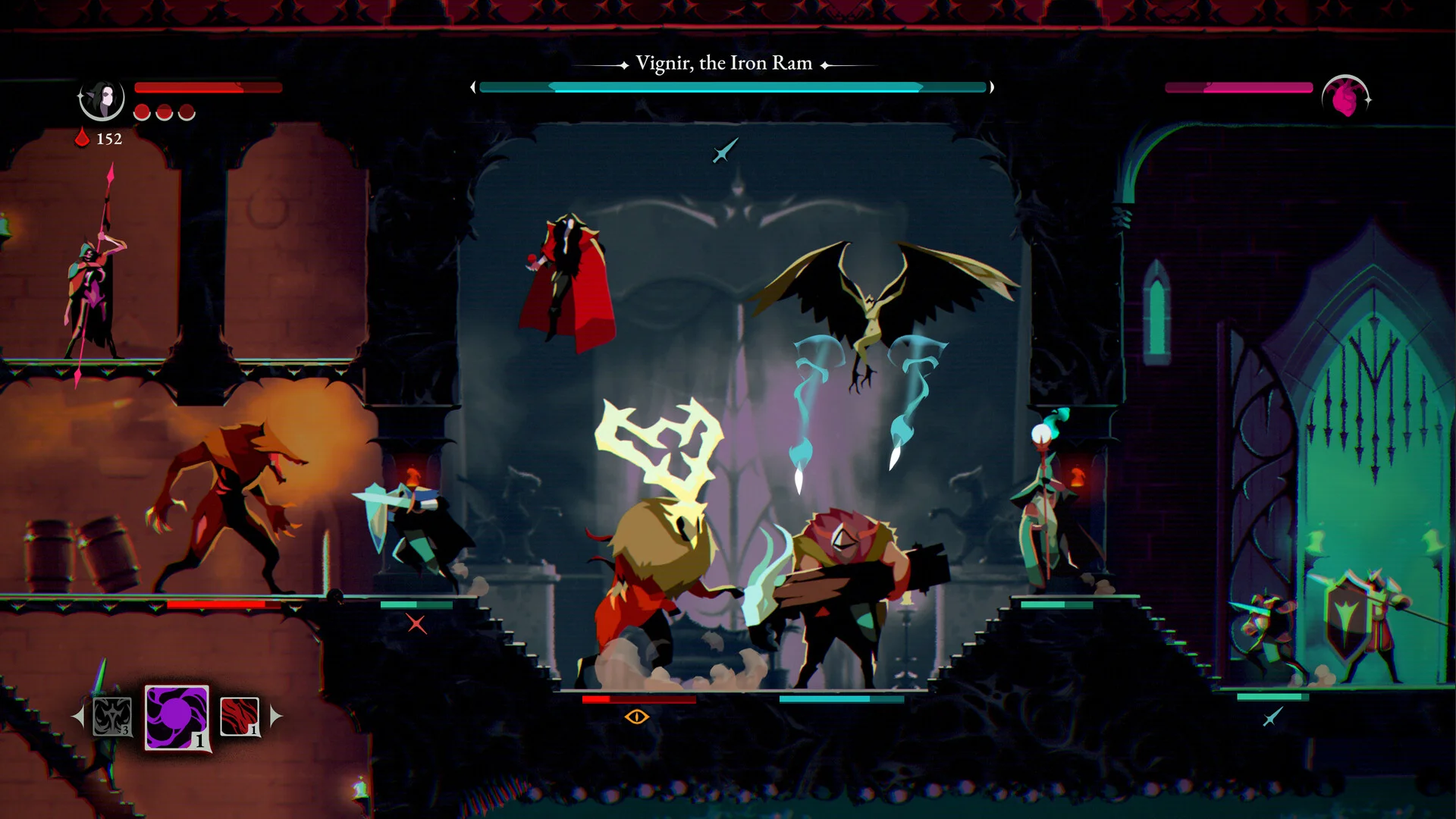
Instead of an open demo, the studio retreated to a closed Discord test, citing direct concerns that bad actors could feed the prototype's presentation and gameplay loop into AI coding agents to ship a knockoff before the game's official March 25, 2027 release date. Earlier this week in South Korea, developers similarly pressed Valve to explain how Steam plans to keep low-effort AI clones from burying original releases.
While fans wait for the studio's next project to arrive next spring, players looking to experience Digital Sun's signature blend of shopkeeping and dungeon crawling can check out the best verified deals on its flagship action-RPG series below:
For Anthropic, the legal incentive to pre-empt copyright battles is equally tangible. Following final federal court approval in July 2026 of a record $1.5 billion settlement over pirated books used in model training, the company has every reason to distance its flagship coding agent from automated intellectual property theft targeting major publishers like Nintendo or Sony.
The Natural-Language Trap: Licensed Wargames Blocked and Retro Decompilation on Alert
The catch with enforcing copyright policy through a single sentence of prose is that the model judges how a project is framed in conversation rather than whether the underlying work is lawful. On October 30, the founder of Conflict Simulations LLC filed an urgent report on Claude Code's public issue tracker after the assistant suddenly refused to continue building digital modules of tabletop wargames commissioned under paid license from the original rights holders.
Crucially, the developer noted that his sessions had kept running without issue for three days after the October 27 rule went live. The refusals only began after he read about the directive online and honestly asked Claude to check whether the new rule applied to his licensed repositories. Once prompted to audit itself, the model locked down and persisted that refusal across every session tied to the project, while customer support confirmed that no commercial verification or exemption path currently exists.
That fragile vendor dependency is also sending ripples through the retro preservation and reverse-engineering community. According to a community tracker monitoring AI-assisted decompilation and static recompilation, 226 out of 273 active projects as of October 30, 2026 rely on Claude, propelled by Claude Opus 5.5 achieving a 98.4% mean byte match across five benchmark Nintendo 64 targets (compared to just 5 projects using local open-weight models, such as recent tests on Fable II). Even as major publishers deepen their reliance on the technology, as seen with Electronic Arts pushing Claude AI across its internal workflows, independent contractors and preservationists are learning firsthand that an unversioned server flag can halt legitimate work overnight.
My Take
On principle, I have zero sympathy for opportunistic cloners who scrape an indie studio's public Steam demo to flood the store with a cheap knockoff forty-eight hours later. When a talented team like Digital Sun has to pull its public playtest just to protect an unreleased game from automated asset theft, the industry clearly has a problem. However, Anthropic's execution exposes the core flaw of prompt-level guardrails: by quietly injecting a prose instruction every sixty seconds with no appeal mechanism, the tool punishes honest contractors working under paid license who openly name their source material, while actual copycats will simply rephrase their prompts around generic gameplay mechanics without naming the target game. Until Anthropic introduces a proper verification path for licensed studios and documents runtime rule changes in a public changelog, this looks far more like a $1.5 billion legal shield than a genuine defense of game creators.

SEO consultant for over 20 years and digital entrepreneur, Charles 'Grimtag' Ronchain is the founder of Pro-Gamer.gg, Retrocharting.com, and Gamescharting.com. A competitive gamer, streamer, and retro game collector, he has worked in the video game industry for over 15 years, notably as a consultant for leading game price comparison platforms. Passionate about real-time performance data and gaming technology, he analyzes competitive esports, gaming hardware benchmarks, and creator workflows on Pro-Gamer.gg with an authentic player perspective.