“A Deer in the Headlights”: Inside Jensen Huang’s August Clash With Colette Kress Over NVIDIA’s Circular AI GPU Financing
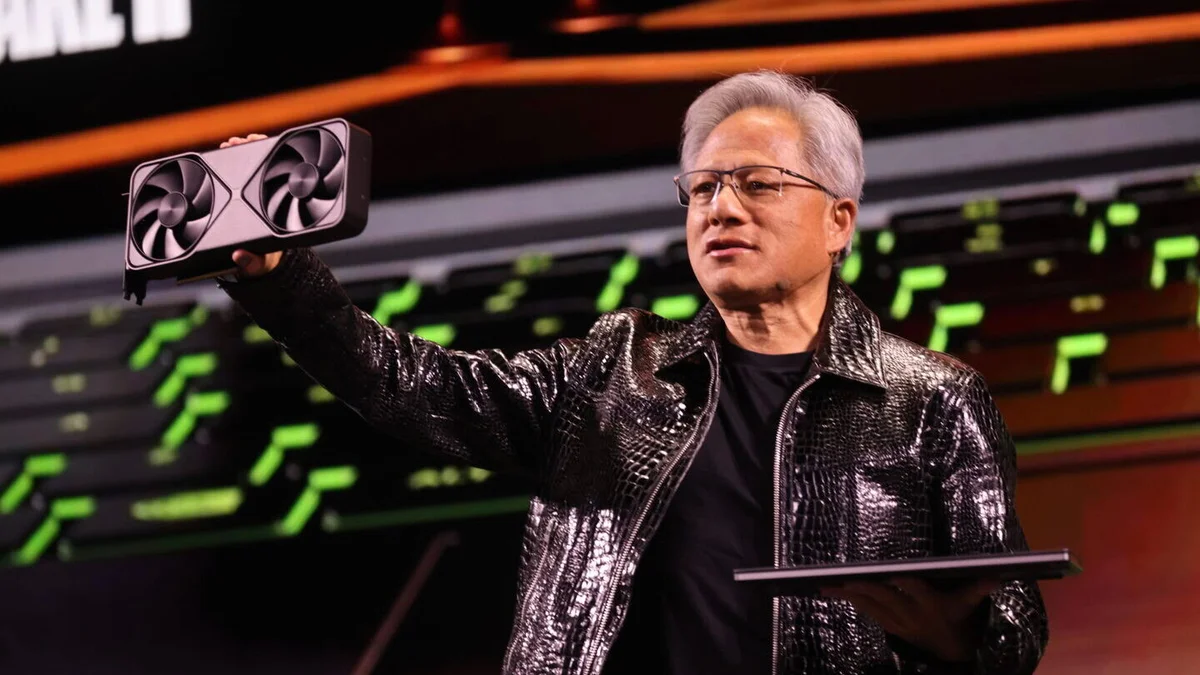
Behind the relentless graphics card shortages and skyrocketing memory prices squeezing PC builders throughout 2026 lies a high-stakes financial tug-of-war inside Santa Clara. A new investigation by the Wall Street Journal reveals how NVIDIA and its former CEO Jensen Huang relied on multibillion-dollar “circular financing” deals to prop up AI chip demand and absorb excess foundry supply, triggering a fierce internal clash in August 2026 with longtime Chief Financial Officer Colette Kress.
An “Avalanche” of TSMC Wafers Absorbed Through Neocloud Credit Backstops
The roots of the controversy trace back to NVIDIA’s massive forward-buying commitments with Taiwanese semiconductor foundry TSMC. To lock in uncontested dominance over the AI hardware boom, NVIDIA reserved vast allocations of silicon wafers and high-speed memory components years in advance. However, as major cloud hyperscalers accelerated transitions toward their own custom internal silicon in 2026, NVIDIA executives faced what internal discussions described as an impending “avalanche” of chips and memory arriving from TSMC without enough immediate upfront buyers.
Rather than scaling back wafer orders or shifting foundry capacity back toward consumer gaming graphics cards, Huang’s leadership team aggressively expanded circular financing arrangements. Under this model, NVIDIA used its massive cash reserves to invest in, lend money to, or provide multibillion-dollar credit guarantees for smaller, specialized AI cloud startups (known as neoclouds) and data center operators that could not afford hardware upfront. Those startups then immediately used the NVIDIA-backed capital to purchase NVIDIA GPUs, with several transactions reportedly championed internally by Huang’s son-in-law, Nico Caprez.
The August 2026 Showdown: “A Deer in the Headlights” Over OpenAI’s $250 Billion Backstop
As the volume of vendor-backed financing ballooned, Colette Kress, who has served as NVIDIA’s CFO since 2013, began raising red flags over the mounting credit exposure on the company’s balance sheet. Questioning how NVIDIA valued these massive credit backstops, calculated their true returns, and vetted cash-strapped customers, Kress pushed for tighter financial guardrails. Under her financial oversight, NVIDIA cut a proposed $250 billion credit arrangement tied to OpenAI’s massive Ohio data center buildout roughly in half, bringing the commitment down to the $105 billion to $120 billion range.
Tensions boiled over during an internal finance team meeting called by Jensen Huang in August 2026. While Kress was presenting her concerns regarding credit-based deals for customers unable to pay for chips upfront, Huang interrupted her in front of the finance staff. According to people familiar with the meeting cited by the Wall Street Journal, Huang dismissed Kress as a mere “reporting CFO” who was unequipped to shape corporate strategy or major business decisions, telling colleagues she looked like “a deer in the headlights.”
Facing growing scrutiny from Wall Street analysts over circular revenue optics, NVIDIA eventually pivoted in late summer 2026 by partnering with major institutional financiers, including Blackstone, BlackRock, Apollo Global Management, and Brookfield, to establish external financing vehicles capable of funding AI infrastructure off NVIDIA’s direct balance sheet, alongside regular disclosures on the official NVIDIA Investor Relations portal.

Colette Kress’s Quiet Vindication and the Fallout for GeForce RTX 50 Gamers
Corporate history rarely delivers a sharper twist of irony. Just three months after Huang publicly belittled her caution in that August finance meeting, his sudden departure left Colette Kress sitting in the Chief Executive’s chair as Interim CEO while the board evaluates long-term candidates, including its recent approach to Arm CEO Rene Haas to succeed Jensen Huang permanently. The executive who fought to rein in a $250 billion credit backstop is now steering the entire company.
For PC gamers, the investigation explains why building or upgrading a high-end rig has become so punishingly expensive in late 2026. By funneling TSMC wafer capacity and global memory supply into credit-fueled neocloud startups to keep data center shipments artificially maxed out, NVIDIA left consumer GPU supply starved. That exact supply squeeze helped drive a threefold surge in GDDR7 memory chip costs that forced NVIDIA to cancel the GeForce RTX 5080 24GB and keep the 16GB model on life support, while pushing retail GeForce RTX 5090 and RTX 5080 prices far above MSRP.
My Field Notes
Watching the curtain get pulled back on Santa Clara’s balance sheet is a sobering moment for anyone who builds PCs. While Heimdall and I spent the past few months tracking factory price hikes on the GeForce RTX 5080 and watching GDDR7 memory modules triple in cost, NVIDIA was extending billions in credit backstops to cash-strapped AI cloud startups just to absorb its own TSMC wafer avalanche. Back in August, Jensen Huang called Colette Kress “a deer in the headlights” because she balked at a $250 billion financial guarantee for OpenAI’s data centers. Today, Huang is gone and Kress is running NVIDIA as Interim CEO. If her return to financial discipline finally cools down the artificial foundry squeeze and brings sanity back to GeForce retail shelves, PC gamers everywhere will gladly take the win.

Originally from Lyon, France, gaming journalist Bastien "Orion" relocated nearly a decade ago to Quebec City's Saint-Roch district, right in the heart of eastern Canada's development studio hub. Before crossing the Atlantic, he honed his versatile reporting style across classic French gaming web portals and specialist television outlets in the 2000s and 2010s, notably with JeuxVideo.fr and JeuxNews. Equally passionate about AAA blockbusters, North American studio culture, retro preservation, and community modding projects, he anchors Pro-Gamer's transatlantic desk and real-time coverage of US and Japanese industry announcements.