GTA 6 at 90 FPS With DLSS 5 via PS5: What Really Happens Inside This Custom GeForce RTX 4080 Capture Pipeline
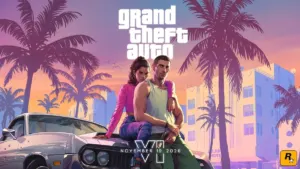
With Grand Theft Auto VI locked in for its November 19, 2026 console launch exclusively on PlayStation 5 and Xbox Series X|S, the lack of an official PC release window is already driving hardware enthusiasts toward extreme workarounds. On the r/GTA6unmoderated subreddit, user RevolutionaryBus8208 showcased an external capture-and-render pipeline designed to take a 30 FPS console feed and push it to 90 FPS in real time on a 4K 144 Hz television, running the signal through NVIDIA DLSS 5-style neural rendering and 3x Multi-Frame Generation on a GeForce RTX 4080.
While Take-Two CEO Strauss Zelnick highlights the publisher's broader catalog ahead of launch month, PC builders with high-end graphics cards are actively experimenting with ways to bypass the 30 FPS ceiling typical of heavy open-world console modes.
From PS5 to GeForce RTX 4080: Inside the Veyra 2.1.1 and MFG Unlock Capture Loop
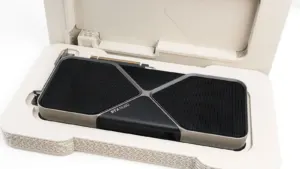
To apply PC-grade neural post-processing to a closed console signal, RevolutionaryBus8208 chained together a four-stage hardware and software loop. In a live gaming scenario, the setup routes the PlayStation 5 video output through a 4K HDR capture card (or a high-bitrate Remote Play feed) into a desktop PC powered by an NVIDIA GeForce RTX 4080, which processes each frame before sending the final signal out to a 4K 144 Hz TV.
The software backbone relies on Veyra 2.1.1, an open-source Windows utility capable of intercepting live video streams to apply AI super-resolution, DLSS 5-style neural enhancement, and real-time frame interpolation. Because NVIDIA officially locks 3x and 4x Multi-Frame Generation to newer architectures, the tinkerer paired Veyra 2.1.1 with the third-party open-source MFG Unlock module created on GitHub by matiasLombo. Tested live on Rockstar Games' native 30 FPS GTA VI Extended Look footage, the RTX 4080 generates two intermediate frames between every real frame to output a continuous 90 FPS stream.
Why Flat HDMI Capture Cannot Replicate Native RAGE 9 Motion Vectors
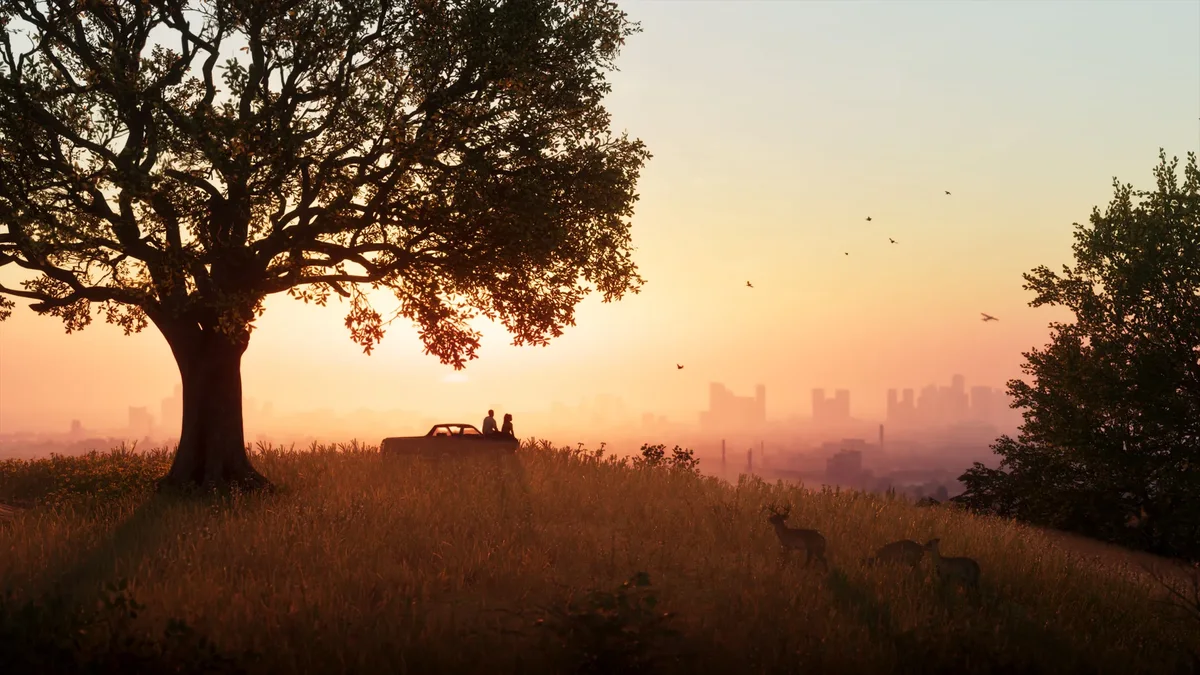
While the experiment highlights what open-source neural video pipelines can achieve on desktop GPUs, a frame-by-frame inspection quickly exposes the gap between external video filtering and true engine-level DLSS 5 integration. Across wide architectural shots of Vice City and the wetlands of Leonida seen in Rockstar's 39 new 4K GTA 6 Launch Gallery screenshots, Veyra's neural pass noticeably tightens distant building edges and specular highlights.
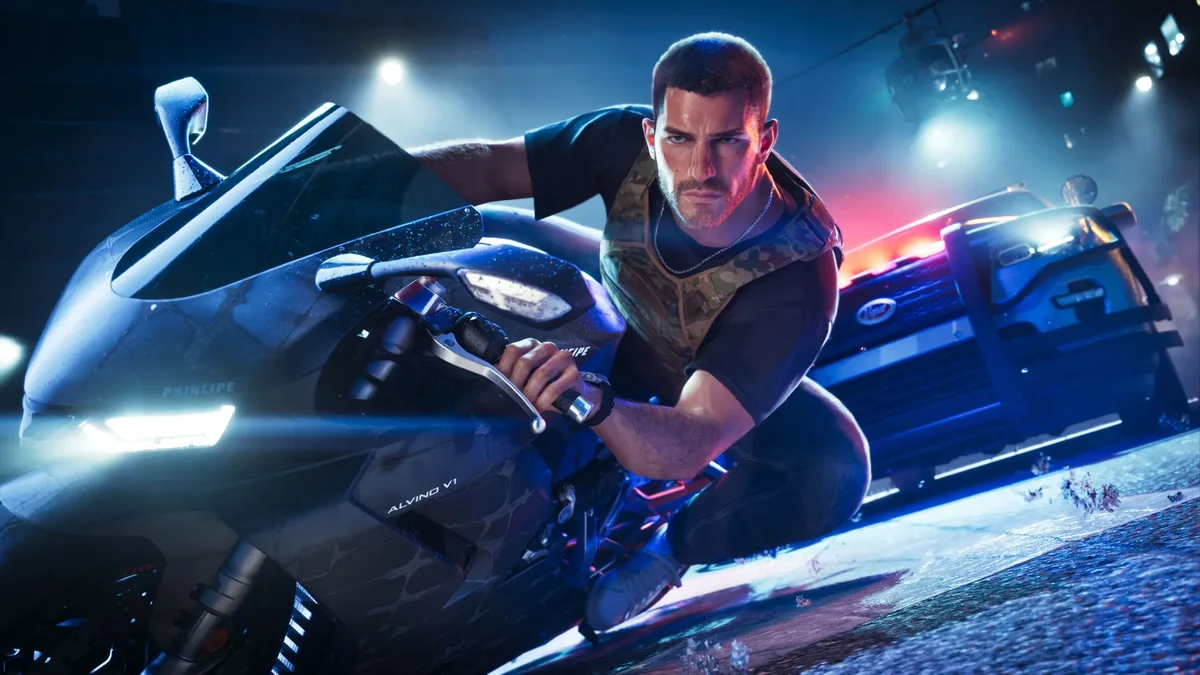
However, as soon as the camera focuses on protagonists Jason Duval and Lucia Caminos or pans rapidly across traffic, three major technical bottlenecks surface:
- Missing Motion Vectors and Depth Buffers: Native DLSS 5 and Multi-Frame Generation tap directly into Rockstar's RAGE 9 rendering pipeline to read per-pixel motion vectors, depth buffers, wireframe mesh data, and lighting passes. An HDMI capture card only receives a flattened, compressed 2D image, forcing the AI model to guess pixel trajectories through optical flow alone.
- Over-Filtered, Wax-Like Character Faces: Without subsurface scattering masks or geometry separation, the external neural pass aggressively smooths skin textures and fine facial shadows, giving Jason and Lucia an unnatural plastic sheen.
- Ghosting Artifacts and Controller Latency: Synthesizing two fake frames between real frames spaced 33.3 ms apart (30 FPS) produces visible haloing around fast-moving limbs and warps static HUD elements. More importantly, combining HDMI capture decoding, frame pacing buffers, and roughly 11 ms of extra GPU inference time introduces a noticeable input delay that hurts aiming and driving responsiveness with a DualSense controller.

My Take on the Spec Sheet
Turning a GeForce RTX 4080 into an external neural video processor via Veyra 2.1.1 and MFG Unlock is a clever bit of software tinkering, but nobody should mistake it for a practical way to play GTA 6 on launch day. As long as the AI model operates blind on a flattened HDMI video stream without direct access to RAGE 9 motion vectors and depth buffers, you end up trading native responsiveness for soap-opera smoothing, waxy facial textures, and compounded capture latency. For actual hands-on console play on November 19, plugging your PS5 or PS5 Pro straight into an HDMI 2.1 VRR display will deliver a vastly cleaner experience until Rockstar builds a native PC port. We have not yet tested this specific capture hardware configuration in-house; if the manufacturer would like to send over a review unit to put it through our full hardware protocol, our lab doors are wide open.

PC hardware enthusiast and competitive gamer, Arthur 'Heimdall' splits his time between France and the UK working in enterprise B2B software solutions. A business school graduate passionate about component benchmarking, he has been building, modding, and tuning PCs since childhood, optimizing every thermal degree and millisecond of display latency. An avid gamer across Assassin's Creed and sandbox titles, he forged his alliance with Grimtag and Chaya during late-night World of Warcraft raids before joining Pro-Gamer.