Memory Shortage Until 2030: How SK hynix's AI Warning Keeps Console and PC Prices Under Pressure
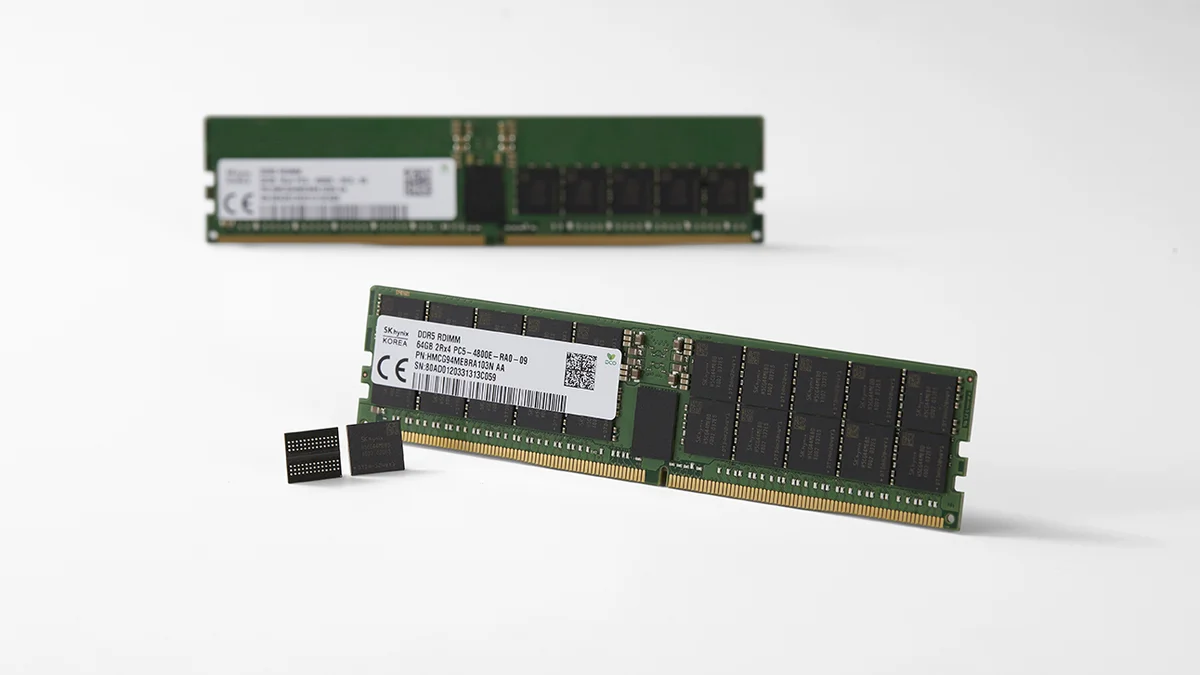
Anyone holding out for a mid-generation console price cut or a sudden return to bargain-bin PC memory kits is in for a long wait. While presenting its third-quarter 2026 financial results in Seoul on October 28, South Korean semiconductor powerhouse SK hynix issued a sobering long-term forecast: the structural supply shortage across the global memory market is projected to persist right through 2030.
104.6 Trillion Won in Q3 Revenue and an 80% Operating Margin Fueled by AI Servers
The financial numbers shared by CEO Kwak Noh-Jung illustrate just how dramatically semiconductor priorities have shifted. In the third quarter of 2026 alone, SK hynix generated an all-time high of 104.6155 trillion won (roughly $78 billion) in revenue, crossing the 100-trillion-won quarterly threshold for the first time in company history with a 32% quarter-over-quarter jump and a 328% surge year-over-year. Even more striking, operating profit reached 83.3338 trillion won (around $62 billion), delivering an unprecedented 80% operating margin.
That windfall is driven almost entirely by enterprise artificial intelligence infrastructure: full-scale shipments of next-generation HBM4 memory alongside soaring demand for server-grade DDR5 and 321-layer TLC enterprise SSDs (eSSDs). Backed by 114.5 trillion won in cash and cash equivalents, SK hynix officially called off its review of a potential IPO for its Solidigm storage subsidiary while committing to a massive 100-trillion-won shareholder return package for fiscal 2026.
Over 50% of 2027 and 2028 Capacity Already Locked Into Long-Term Cloud Contracts
Why does a record quarter for a memory maker spell trouble for gamers and PC builders? According to SK hynix's market analysis, AI infrastructure spending is no longer restricted to a handful of hyperscale cloud providers. Demand has broadened to general enterprise deployment, national sovereign AI initiatives, and upcoming physical AI sectors such as robotics and autonomous vehicles. On the manufacturing side, the extreme technical difficulty of leading-edge nodes and the multi-year lead times required to build and qualify new cleanrooms mean supply simply cannot catch up before 2030.
The most telling metric lies in the company's order book: SK hynix revealed it has signed long-term agreements (LTAs), which typically span five years, with 14 major global customers including leading cloud service providers. Those contracts have already locked up more than 50% of SK hynix's total production capacity for 2027 and 2028. By the end of 2026, the company will ramp its Cheongju M15X fab to maximum capacity so HBM4 can overtake HBM3E in both volume and revenue during the fourth quarter, while rapidly shifting DRAM lines to its 10nm-class 6th-generation (1c) node for server DDR5 and LPDDR5 SOCAMM modules. Even as YMTC's push into 9,600 MT/s LPDDR5X mass production attempts to challenge the established memory triopoly, wafer allocation at the top three foundries remains overwhelmingly tilted toward enterprise clients.
PS5, Steam Deck OLED, Steam Machine, and GPUs: The Domino Effect on Gaming Hardware
When every silicon wafer allocated to AI data centers yields an 80% operating margin, consumer DRAM and NAND flash inevitably take a back seat. SK hynix projects overall bit demand growth to hit the mid-20% range for DRAM and the high-20% range for NAND next year, while transitioning more than half of its domestic NAND output to its 321-layer process in Q4 2026 to feed enterprise storage ahead of the Yongin Phase 1 fab opening in 2027.
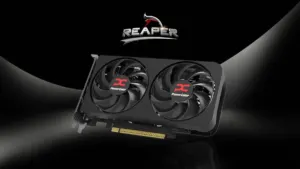
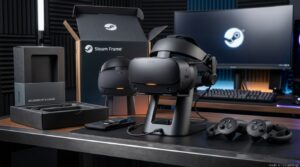
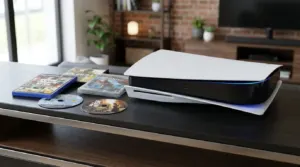
Across the gaming industry, this structural squeeze has upended the traditional hardware lifecycle where consoles and components become cheaper over time. Surging RAM and flash storage costs have already forced Sony to raise baseline prices on the PlayStation 5 in multiple regions, while pushing Valve to increase Steam Deck OLED pricing and launch its living-room Steam Machine at $1,049 (€1,039) rather than absorbing ballooning memory bills. On the desktop graphics front, cards equipped with large memory buffers face immediate retail pressure, as seen in the steep retail markup on the 32GB Intel Arc Pro B70 GPU across US listings.
My Test Bench: Four More Years of Sticker Shock for PC Builders
When I see a memory foundry pull in an 80% operating margin in a single quarter while confirming that over half its 2027 and 2028 output is already spoken for by cloud giants, any hope of cheap consumer hardware goes right out the window. For two decades, PC builders relied on boom-and-bust DRAM oversupply cycles to double our RAM and NVMe storage every couple of years for pennies on the dollar. That era is dead and buried: as long as an HBM4 stack or an enterprise SSD brings in exponentially higher margins than a gaming DDR5 kit or a console's unified memory pool, everyday players will keep footing the bill. If you need extra NVMe storage or a RAM upgrade for this year's heavy hitters, waiting around for a 2027 price crash is a losing bet.

PC hardware enthusiast and competitive gamer, Arthur 'Heimdall' splits his time between France and the UK working in enterprise B2B software solutions. A business school graduate passionate about component benchmarking, he has been building, modding, and tuning PCs since childhood, optimizing every thermal degree and millisecond of display latency. An avid gamer across Assassin's Creed and sandbox titles, he forged his alliance with Grimtag and Chaya during late-night World of Warcraft raids before joining Pro-Gamer.