Ray Reconstruction, Multi Frame Gen, and DLSS 5 on AMD Radeon: How Daniel Blanco's 0.8.0 Update Unlocks NVIDIA's Full Suite
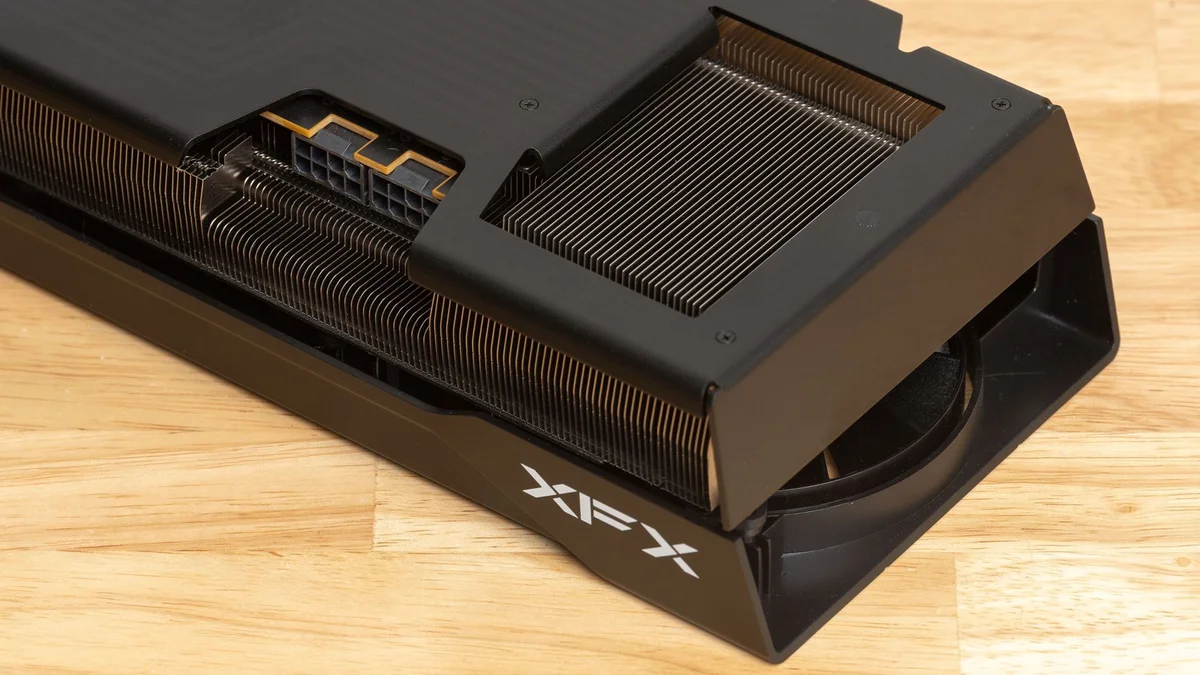
The software wall keeping NVIDIA's proprietary neural rendering suite locked exclusively to GeForce RTX hardware has completely fallen. Independent developer Daniel Blanco (known as danielblnc on GitHub) has released version 0.8.0 of his open-source DLSS-NR-on-AMD (Neural Rendering Supermod) project, unlocking DLSS Ray Reconstruction for the very first time alongside DLSS Super Resolution 4.5, up to 4x Multi Frame Generation (MFG), and DLSS 5 Neural Rendering on AMD Radeon graphics cards.
Model F, Models M/L, and Native HIP Kernels: Executing the Full DLSS Stack on Radeon
Originally launched on September 3, 2026, to bring DLSS 5 Neural Rendering to AMD's graphics architecture, the project reaches a major milestone with update 0.8.0. Rather than relying on a basic, high-overhead instruction translation layer, the mod reimplements the neural network runtime from the ground up by compiling custom AMD HIP (Heterogeneous-Compute Interface for Portability) compute kernels paired with tailored memory layouts under DirectX 12 on Windows 11.
This low-level architecture allows Radeon GPUs to directly execute NVIDIA's entire core lineup of AI models:
- DLSS Ray Reconstruction (Model F): Native execution of NVIDIA's neural denoiser, replacing traditional hand-tuned denoisers to stabilize reflections, global illumination, and shadows in heavy Ray Tracing and Path Tracing workloads.
- DLSS Super Resolution 4.5 (Models M and L): The latest AI upscaling model presets, complementing the efficiency gains introduced with NVIDIA's 2x faster and lower-VRAM DLSS 5 AI model architecture.
- DLSS Frame Generation and Multi Frame Generation (up to 4x): Multi-frame interpolation working alongside the complete DLSS 5 Neural Rendering pipeline.
Radeon RX 9070 XT, RX 7000, and RX 6000: Three RDNA Generations Managed via NeuralHub
Version 0.8.0 primarily targets AMD Radeon RX 9000 (RDNA 4) graphics cards, led by the Radeon RX 9070 XT, as well as Radeon RX 7000 (RDNA 3) GPUs, while extending experimental support to Radeon RX 6000 (RDNA 2) hardware across DirectX 12 titles equipped with an upscaling pipeline (DLSS, FSR, or XeSS).
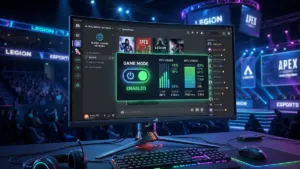
To streamline setup and eliminate manual file swapping, Daniel Blanco has bundled NeuralHub, a centralized manager utility featuring an in-game overlay toggled via the End key. NeuralHub handles automatic game detection, manages required DLL files, and lets players toggle or fine-tune individual DLSS features on the fly. The developer is now focused on optimizing the custom HIP kernels to match native NVIDIA GPU performance, delivering a timely upgrade for Radeon owners while AMD's next-generation RDNA 5 architecture remains slated for Computex 2027.
My Take
On my test bench, Ray Reconstruction has consistently been NVIDIA's biggest visual trump card whenever heavy Path Tracing is enabled: where conventional denoisers leave shimmering noise across metal grates and moving reflections, Model F cleans up the image almost instantly. Watching a single independent developer compile native HIP compute kernels to run that denoiser alongside Models M and L Super Resolution and 4x Multi Frame Generation on a Radeon RX 9070 XT is a remarkable feat of low-level engineering. With the addition of the in-game NeuralHub overlay, this open-source project proves that the walls separating modern neural rendering ecosystems are driven far more by vendor lock-in than by any fundamental limitation of RDNA silicon.

PC hardware enthusiast and competitive gamer, Arthur 'Heimdall' splits his time between France and the UK working in enterprise B2B software solutions. A business school graduate passionate about component benchmarking, he has been building, modding, and tuning PCs since childhood, optimizing every thermal degree and millisecond of display latency. An avid gamer across Assassin's Creed and sandbox titles, he forged his alliance with Grimtag and Chaya during late-night World of Warcraft raids before joining Pro-Gamer.