4.7 Million Copies and $291 Million in Revenue: How Physical Discs Turned Astro Bot Into a PS5 Cash Machine
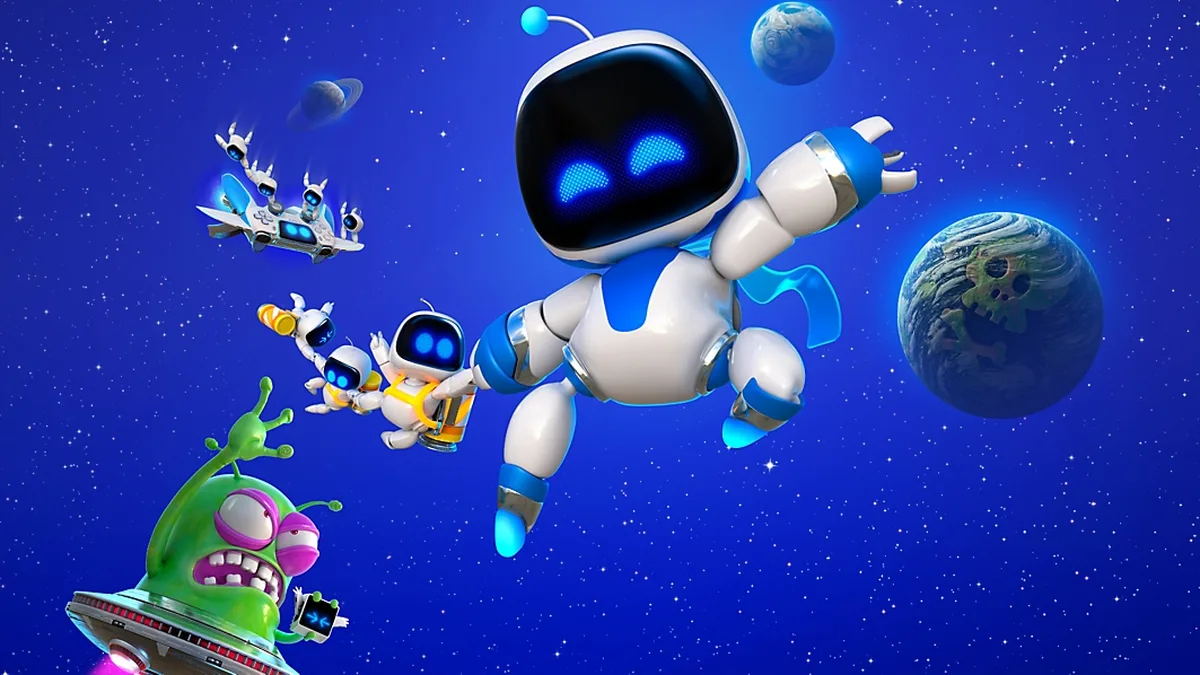
Crowned Game of the Year at The Game Awards 2024 following its September 2024 debut, Astro Bot has proven to be far more than a critical darling. According to the latest market data shared by Rhys Elliott, Head of Market Analysis at Alinea Analytics, the PS5 exclusive crafted in Tokyo by Team Asobi has now reached 4.7 million copies sold worldwide, generating an estimated $291 million in gross revenue.
Beyond the headline milestone, the financial breakdown highlights the immense profitability of smartly scoped first-party games for Sony Interactive Entertainment. Built by a tight-knit Japan-based core team of roughly 60 developers over a disciplined three-year production cycle, Astro Bot carried a total development and marketing budget estimated well under $100 million. At a time when ballooning $250 million AAA budgets struggle to break even, PlayStation's robotic mascot is delivering massive net profits.
46.6% Physical Sales: Why Boxed Discs Are Driving Astro Bot's Success on PS5
The most striking figure in Alinea Analytics' report lies in the format split: roughly 46.6% of Astro Bot's total sales have come from physical boxed copies. In a modern console landscape where digital downloads routinely account for 70% to 80% of full-game purchases, having nearly half of all buyers opt for a physical Blu-ray disc is an extraordinary outlier.
Two core dynamics explain why physical retail has been so vital to the platformer's trajectory:
- Family-Friendly Gifting: With its approachable controls and vibrant worlds, Astro Bot is a premier family title. Parents and relatives overwhelmingly prefer having a tangible PS5 game case to wrap for birthdays and holidays rather than handing over a digital voucher.
- Collector Appeal for PlayStation Veterans: Designed as a nostalgia-packed tribute to 30 years of PlayStation history featuring over 150 cameo bots, the game resonates deeply with longtime enthusiasts who value owning physical media on their shelves.
This retail triumph stands in sharp contrast to recent industry rhetoric dismissing boxed games, especially after PlayStation founder Ken Kutaragi called physical games not economically reasonable in the digital age.
Over 100,000 Copies Sold Per Month in 2026 and the Astro's Playroom Funnel
After selling 1.5 million units during its opening nine weeks in late 2024 and climbing to 4.3 million by mid-2026, Astro Bot has cemented itself as a true evergreen seller on PS5. In 2026 alone, the game has moved roughly 1 million additional copies (bringing in $60 million in revenue this year) while consistently clearing more than 100,000 copies every single month.
Monthly Active User (MAU) crossover tracking from Alinea Analytics reveals exactly how Sony sustains this long-tail momentum:
- The Astro's Playroom Conversion Funnel: Every single month this year, the #1 game played alongside Astro Bot is Astro's Playroom, the free pack-in title pre-installed on every PS5 console. Between 20% and 30% of active Astro Bot players also booted up Astro's Playroom in the same month, proving that the free DualSense showcase acts as a permanent conversion funnel into the full-price sequel.
- Bridging Generations: Right behind Astro's Playroom, the #2, #3, and #4 crossover titles played by Astro Bot users every month are consistently Minecraft, Fortnite, and Roblox. The platformer serves as a vital bridge introducing younger players to PlayStation's classic catalog, right as PlayStation taps the Sonic Mania team at Evening Star for an Ape Escape revival.
My Take
Seeing Astro Bot close in on 5 million copies and $300 million in revenue is the best possible signal for the future of PlayStation's first-party lineup. For years, conventional industry wisdom claimed that colorful 3D platformers couldn't thrive outside of Nintendo hardware, and that Sony needed to bet everything on $250 million cinematic blockbusters or live-service shooters. Team Asobi proved the exact opposite: with a sub-$100 million budget, a focused three-year development timeline, and free post-launch speedrun and challenge levels that respect players' wallets, you get runaway profitability. Above all, that 46.6% physical sales share is a wake-up call for publishers rushing toward an all-digital future: when a game has genuine heart, families and collectors still want a real box to wrap and keep on their shelves.

Based on the outskirts of New York City, Chaya 'Chayane' spent five years studying software engineering in Montreal before returning to her home state. A Full-Stack developer and Deep Learning AI architecture researcher, she explores neural networks and algorithmic optimization while engineering data pipelines for Retrocharting and Gamescharting alongside Grimtag. A gamer for over 20 years and an avid collector of Nintendo history and The Legend of Zelda, she explored World of Warcraft's Azeroth before bringing her deep technical background to video game analysis.