Digital Video Game Ownership: Lawmakers Push Initiative to Force Steam, PlayStation, and Xbox to Keep Games Playable After Server Shutdowns
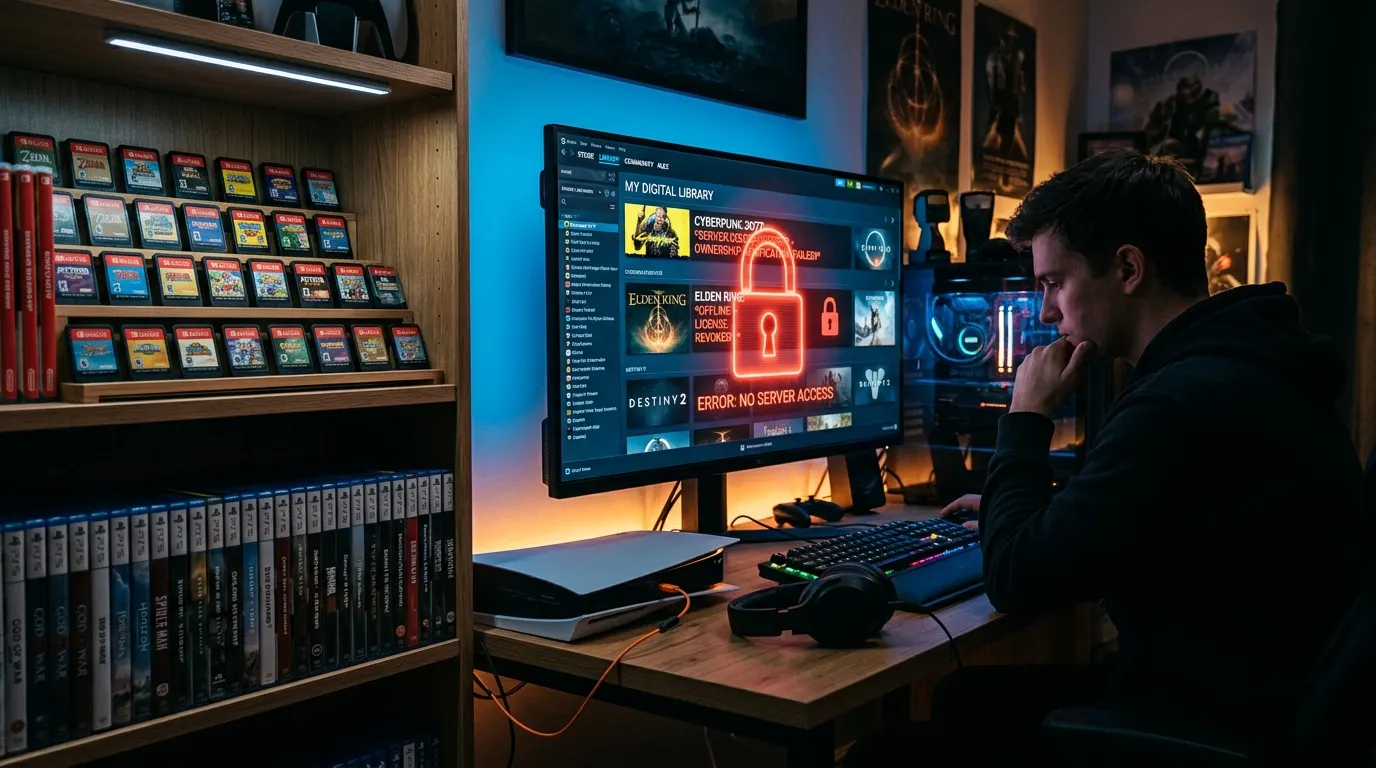
In Mexico, the fierce global battle over digital video game ownership has officially transitioned from grassroots petitions into concrete legislation. While the European Union faces growing momentum through the official European Citizens' Initiative "Stop Killing Games" alongside parliamentary debates on digital consumer rights and mandatory game preservation, Mexican lawmakers have moved decisively with a groundbreaking bill. The core problem strikes at the heart of modern storefronts: the 70-dollar "Buy" button on Steam, the PlayStation Store, or Xbox is fundamentally deceptive when access can be revoked overnight. Sparked by Ubisoft's controversial deletion of The Crew from customer libraries, this Mexican legislative offensive aims to shatter the illusion of digital ownership by mandating complete licensing transparency and legally requiring games to remain playable when servers go dark.
Exposing the Ownership Illusion: Strict Transparency at Checkout
Introduced by Senator Luis Donaldo Colosio Riojas, President of the Senate Digital Rights Commission, alongside Federal Deputy Irais Reyes, this legislative initiative seeks to amend federal consumer protection laws. The core mandate is straightforward: prohibit digital storefronts from misleading customers about what they actually purchase.
Under the proposed framework, platforms including Steam, Sony Interactive Entertainment, Microsoft, Nintendo, and Epic Games must explicitly inform buyers before any checkout whether they are purchasing authentic digital ownership or merely an indefinite rental license. If a company retains the unilateral power to revoke access or alter product availability, labeling the transaction as a "purchase" becomes unlawful. The era of burying critical ownership disclaimers inside endless terms of service is directly targeted.
Mandatory Functional Preservation: Offline Patches and Private Servers
While California made headlines with its AB 2426 statute, Mexico's legislative initiative pushes significantly deeper into the mechanics of digital preservation. California settled for a passive warning banner during checkout, notifying consumers that they are merely buying a license. In contrast, the Mexican proposal directly confronts digital obsolescence.
For any game sold under an indefinite license that relies on remote server authentication or matchmaking, publishers would be legally obligated to provide functional preservation mechanisms upon decommissioning official servers. When an operator pulls the plug, it must deliver technical solutions, offline patches, or allow community-hosted local servers so that buyers can keep playing the game they paid for. This proposal marks a major political breakthrough for the Stop Killing Games campaign and mirrors the growing player backlash against the demise of physical media across modern consoles.
Antitrust Scrutiny and Enforceable Local Accountability
This legislative push follows a broader regulatory battle. In July, both lawmakers filed an antitrust complaint with Mexico's Federal Economic Competition Commission against Sony, raising alarms over potential monopolistic practices should physical media disappear entirely by 2028, leaving the PlayStation Store as an uncontested gatekeeper.
To ensure real compliance, the draft bill mandates that foreign digital platforms establish a registered legal address within Mexico. International publishers will no longer be able to evade local consumer protection agencies like PROFECO when disputes over revoked content or broken promises reach enforcement stages.
Editorial Perspective: Why We Need a Community Public Domain for Abandoned Games
Barring digital storefronts from weaponizing the word "Buy" is undoubtedly a great initiative on paper. But let us be completely honest for a moment: in practice, this will likely only accelerate the normalization and dominance of all-you-can-eat subscription models like Xbox Game Pass or PlayStation Plus. Publishers will simply pivot to recurring subscriptions, openly telling gamers they own nothing because they are renting an evolving catalog, without solving the fundamental corporate abuses of the ecosystem.
In my view, if we truly want to protect gamers and safeguard our collective gaming heritage, legislation must go significantly further. The moment a publisher decides to stop maintaining a game and pulls the plug on its servers, that specific title should legally transition into a form of community public domain. The goal is not to strip the studio of its intellectual property or restrict future sequels, which would unfairly penalize creators. Rather, the binary files and networking code of the abandoned title on that platform should become public domain and maintainable by players.
Crafting this framework would require clear legislative boundaries, but the game would rightfully become the property of the gaming community. God knows there are millions of passionate players eager to volunteer their free time to fix bugs, reverse-engineer authentication servers, and keep multiplayer classics alive for decades. If I were drafting legislation for digital games tomorrow, this exact model of community empowerment is precisely what I would propose.
Major publishers transformed gaming into an unprecedented cash machine by substituting tangible game ownership with fragile cloud permissions. Seeing national lawmakers treat digital game preservation as a fundamental consumer right rather than an optional corporate favor signals a major shift. Should Mexico ratify this bill, the legal ripple effects will resonate across global storefronts and boardroom tables worldwide.

SEO consultant for over 20 years and digital entrepreneur, Charles 'Grimtag' Ronchain is the founder of Pro-Gamer.gg, Retrocharting.com, and Gamescharting.com. A competitive gamer, streamer, and retro game collector, he has worked in the video game industry for over 15 years, notably as a consultant for leading game price comparison platforms. Passionate about real-time performance data and gaming technology, he analyzes competitive esports, gaming hardware benchmarks, and creator workflows on Pro-Gamer.gg with an authentic player perspective.