INT8 Compute on 2020 Radeon RX 6000 GPUs, Xbox Series X|S, and Vulkan API: How AMD Brings FSR 4.1 to Older Hardware
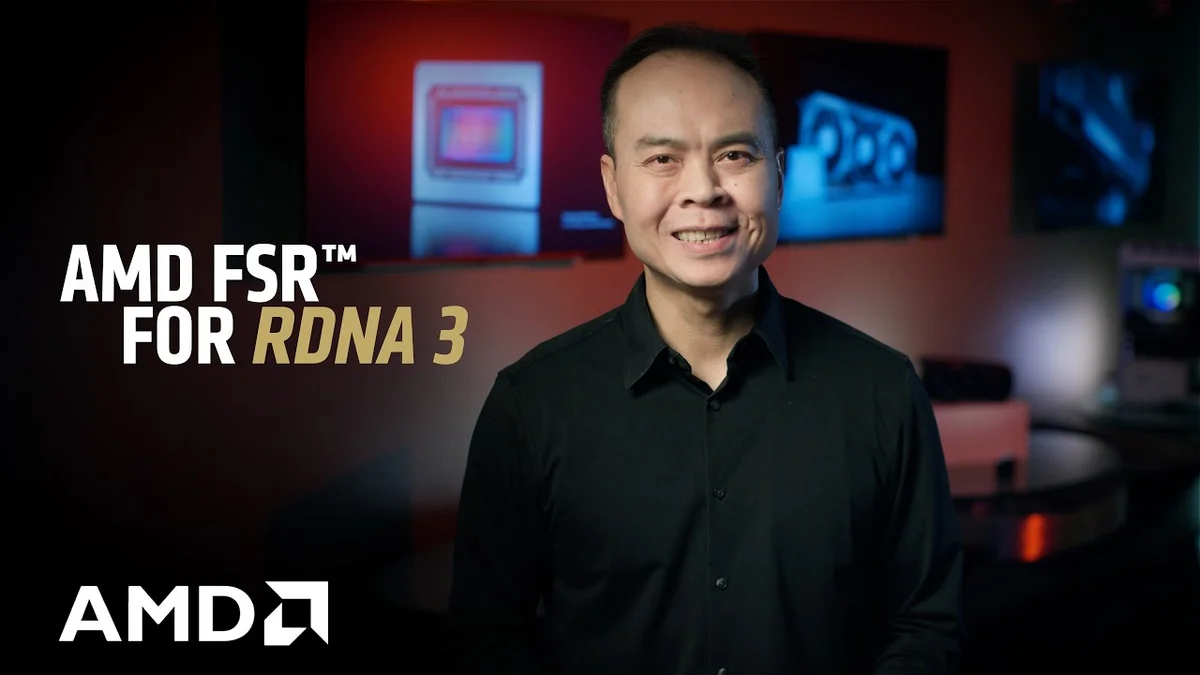
Originally penciled in for early 2027 on legacy architectures, the broad expansion of FidelityFX Super Resolution (FSR) 4.1 has arrived months ahead of schedule. Through the release of the AMD Software: Adrenalin Edition 26.10.1 driver and a joint presentation featuring Jack Huynh, Senior Vice President and General Manager of AMD's Computing and Graphics Group, alongside Xbox Chief Technology Officer Scott Van Vliet, AMD is rolling out its machine-learning upscaler to Radeon RX 6000 Series desktop graphics cards, Ryzen APUs, gaming handhelds, and Xbox Series X|S consoles.
From FP8 to INT8 Shaders: How AMD Solved the RDNA 2 Hardware Puzzle
Until now, AMD's neural network image reconstruction was largely restricted to newer architectures, starting with Radeon RX 9000 Series (RDNA 4) cards equipped with dedicated FP8 matrix acceleration hardware, followed by Radeon RX 7000 Series (RDNA 3) GPUs. Bringing that same pipeline back to the Radeon RX 6000 Series, which debuted in late 2020 on the RDNA 2 architecture, posed a major hardware hurdle, as those five-year-old chips lack dedicated FP8 tensor hardware entirely.
To bridge that gap without compromising visual fidelity, AMD's engineering teams retrained and tuned the FSR Upscaling 4.1 neural model to execute via INT8 instructions directly on existing RDNA 2 shader units. Coming right after Daniel Blanco's 0.8.0 update unlocked Ray Reconstruction on AMD Radeon GPUs, official driver-level support for FSR 4.1 is a massive win for owners of cards like the RX 6600, RX 6700 XT, RX 6800 XT, and RX 6900 XT. While running the INT8 model on shader cores carries a modest ~13% performance overhead compared to the older analytical FSR 3.1 algorithm, the leap in temporal stability, disocclusion cleanup, and fine detail preservation makes the trade-off immediately worthwhile.
Ryzen Handheld APUs, ROG Xbox Ally, and Xbox Series X|S Confirmation
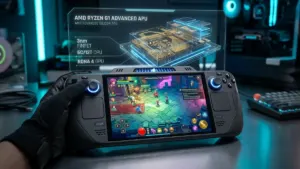
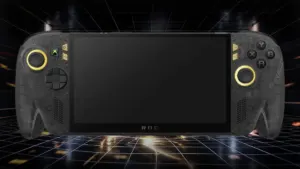
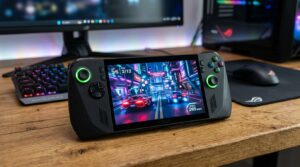
Mastering INT8 execution also unlocks FSR 4.1 across a wide range of integrated graphics processors and portable gaming systems. The Adrenalin 26.10.1 update enables support across Ryzen AI Max chips, Ryzen AI 9 (300 and 400 series) laptop processors, and Ryzen Z2 Series handheld APUs (including the Ryzen Z2 Extreme and Ryzen Z2 A). For power-constrained handhelds, AMD deploys a streamlined variant of the neural network tailored to strict mobile thermal envelopes. Owners of the ASUS ROG Xbox Ally and ROG Xbox Ally X will receive the update starting October 23, 2026 via Armoury Crate SE.
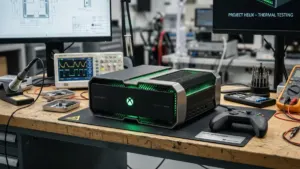
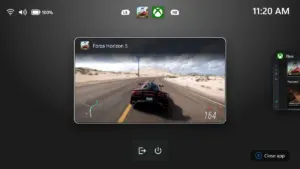
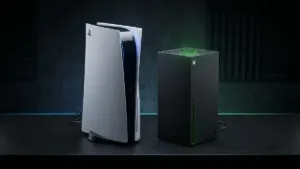
For living room console players, Scott Van Vliet officially confirmed that FSR Upscaling 4.1 is coming soon to Xbox Series X and Xbox Series S. Because both current-generation Xbox consoles are built on custom RDNA 2 silicon with hardware INT8 support, Microsoft and AMD are integrating the upscaler directly into the Xbox development kit, giving studios a machine-learning counter to the PlayStation 5 Pro's upscaling stack. Looking further ahead, at a time when surging component costs push Microsoft's next-gen Xbox Project Helix toward high-end PC pricing, Van Vliet and Huynh also teased that Project Helix will leverage AMD's next-generation FSR Diamond architecture for neural rendering and multi-frame generation.
Vulkan API Support Arrives With FSR SDK 2.4
Rounding out the announcement is a major milestone for software developers: FSR 4 is officially coming to the Vulkan API. Previously limited to DirectX 12 titles, Vulkan integration will roll out to studios in the coming weeks through the FSR SDK 2.4 release on GPUOpen. With the broader FSR 4 and Redstone ecosystem now spanning more than 400 supported games, adding native Vulkan compatibility opens the door for cross-platform engines, Linux gaming setups, and modern console emulators to tap directly into AMD's machine-learning upscaler.
My Test Bench: An RDNA 2 Engineering Feat That Extends GPU Lifespans
I have to give credit to AMD's driver and machine-learning teams for delivering official RDNA 2 support well ahead of their 2027 target. For years, the biggest Achilles' heel of Radeon RX 6000 graphics cards and the Xbox Series X|S was reliance on analytical FSR 2 and FSR 3.1 upscaling, which struggled with shimmering foliage and fizzling particle effects at 1080p and 1440p. By adapting the FSR 4.1 neural model to run cleanly on INT8 shader instructions without requiring dedicated FP8 tensor hardware, AMD has effectively breathed years of extra life into five-year-old GPUs. Even with a slight shader performance cost compared to older spatial upscalers, the jump in image stability and motion clarity makes this one of the most meaningful driver updates Radeon owners have received in years.

PC hardware enthusiast and competitive gamer, Arthur 'Heimdall' splits his time between France and the UK working in enterprise B2B software solutions. A business school graduate passionate about component benchmarking, he has been building, modding, and tuning PCs since childhood, optimizing every thermal degree and millisecond of display latency. An avid gamer across Assassin's Creed and sandbox titles, he forged his alliance with Grimtag and Chaya during late-night World of Warcraft raids before joining Pro-Gamer.