Steam Deck 2: Why Valve's Custom 15W Chip Could Outperform the AMD Z3 Extreme
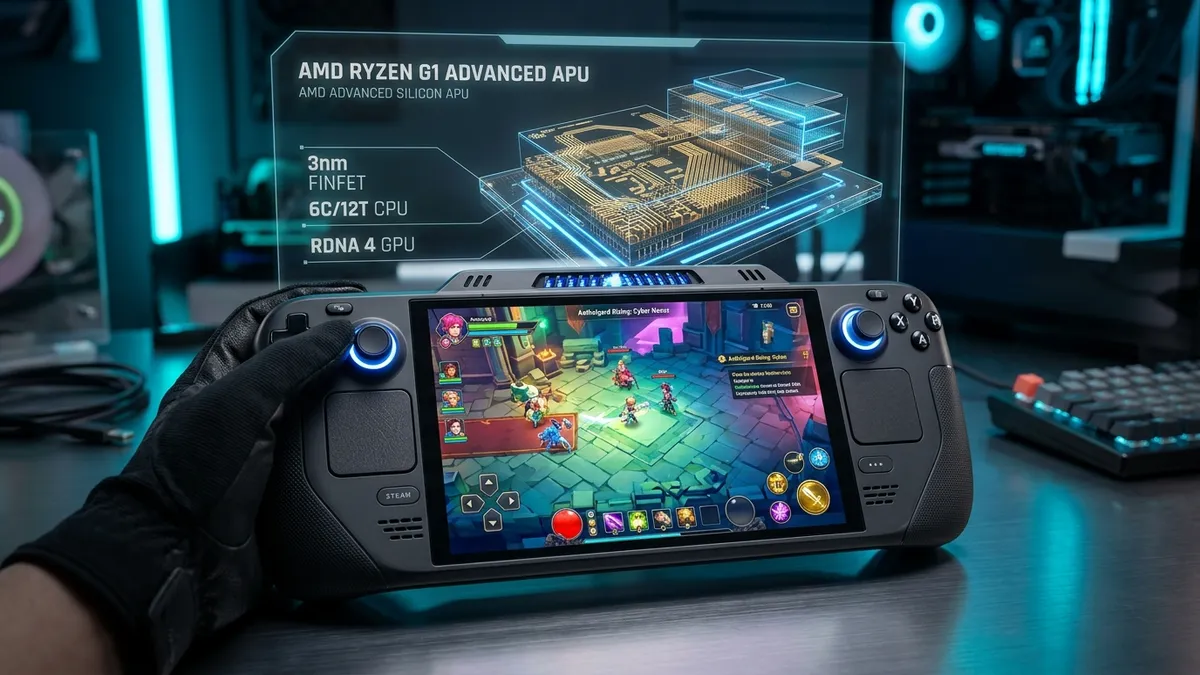
Early architectural leaks emerging from the semiconductor supply chain are shedding light on Valve's next-generation handheld ambitions. The custom-designed processor built in partnership with AMD demonstrates graphical and energy efficiency capable of surpassing AMD's upcoming Ryzen Z3 Extreme.
This edge is not built on unsustainable peak power draw, but on a precise hardware philosophy that directly challenges typical Windows handheld designs.
The 30-Watt Trap Versus True Handheld Engineering
Across the PC gaming handheld market, manufacturers have largely engaged in an escalating power race. Off-the-shelf mobile processors like the Ryzen Z1 Extreme, Z2 Extreme, and the upcoming Z3 Extreme frequently demand 25W to 35W or more to deliver top-tier performance.
That heavy power draw drains batteries in under an hour and forces noisy multi-fan cooling solutions. As soon as players unplug and switch to realistic portable wattage, clock speeds plummet and frametimes become erratic.
Valve has maintained a completely different engineering philosophy since launching the original hardware. Hardware designers in Bellevue refuse to exceed a strict 15W to 20W total thermal envelope during peak gaming workloads.
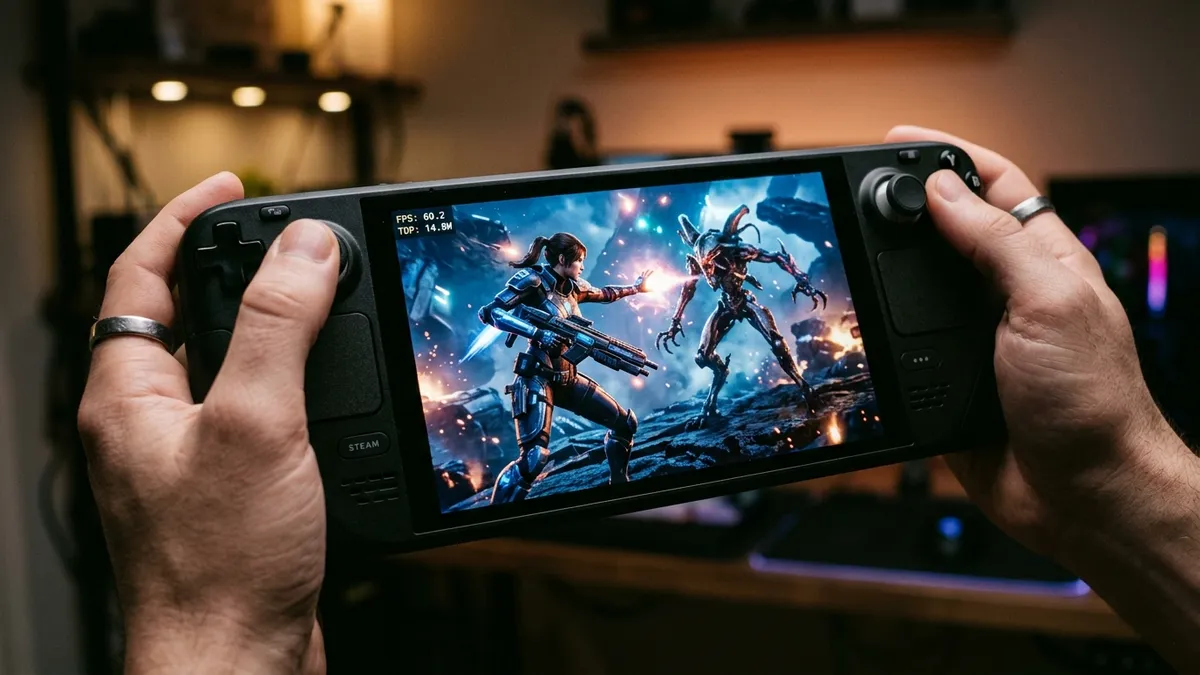
Within this sweet spot for handheld gameplay, early performance models indicate that Valve's custom APU maintains higher sustained framerates than a throttled Z3 Extreme running at matched power limits.
TSMC 3nm Silicon Tailored for Native 1080p at 60 FPS
Following the Aerith and Sephiroth APUs powering previous revisions, the initial discovery of the AMD Gainsborough APU highlighted Valve's commitment to custom silicon. This next-generation chip is built on TSMC's advanced 3-nanometer N3P fabrication process.
This manufacturing leap integrates next-generation Zen 6 CPU cores optimized for low-power operation alongside an RDNA 4m graphics engine. Early estimates project between 2.3x and 3.2x the raw raster performance of the original Steam Deck.
That technological leap directly addresses what PC gamers expect from a true sequel. Modern demanding releases will be capable of rendering at native 1080p with a stable 60 frames per second without demolishing battery runtime.
This unwavering focus on power efficiency directly mirrors Valve's strategy when launching the Steam Deck OLED. In Valve's official overview, the engineering team reiterated their foundational philosophy: optimizing every milliwatt and extending battery life, refusing to ship a true sequel until a generational leap in performance-per-watt is ready.
Hardware FSR 4 and the Unmatched SteamOS Advantage
The defining technological breakthrough over standard laptop APUs comes down to dedicated machine learning silicon. The upcoming GPU architecture features hardware matrix units designed specifically to accelerate FidelityFX Super Resolution 4 (FSR 4).
Unlike previous software-based spatial or temporal upscalers, this neural-driven reconstruction eliminates visual shimmering while cutting rendering overhead in half. Game developers will achieve pristine image clarity without wasting a single milliwatt of power.
Software optimization multiplies this hardware advantage. By retaining full control over the operating system through ongoing SteamOS handheld architecture updates, the console avoids dozens of background Windows 11 services that steal compute cycles.
Every single clock cycle remains dedicated to the running game. This complete cohesion between custom silicon and a dedicated gaming OS is precisely what positions Steam Deck 2 to reset the benchmark for portable PC gaming.

SEO consultant for over 20 years and digital entrepreneur, Charles 'Grimtag' Ronchain is the founder of Pro-Gamer.gg, Retrocharting.com, and Gamescharting.com. A competitive gamer, streamer, and retro game collector, he has worked in the video game industry for over 15 years, notably as a consultant for leading game price comparison platforms. Passionate about real-time performance data and gaming technology, he analyzes competitive esports, gaming hardware benchmarks, and creator workflows on Pro-Gamer.gg with an authentic player perspective.