360Hz in QHD, 420Hz in 1080p, and 640Hz in HD: How the ASUS ROG Strix XG27ACMSR Packs Three Monitors Into One
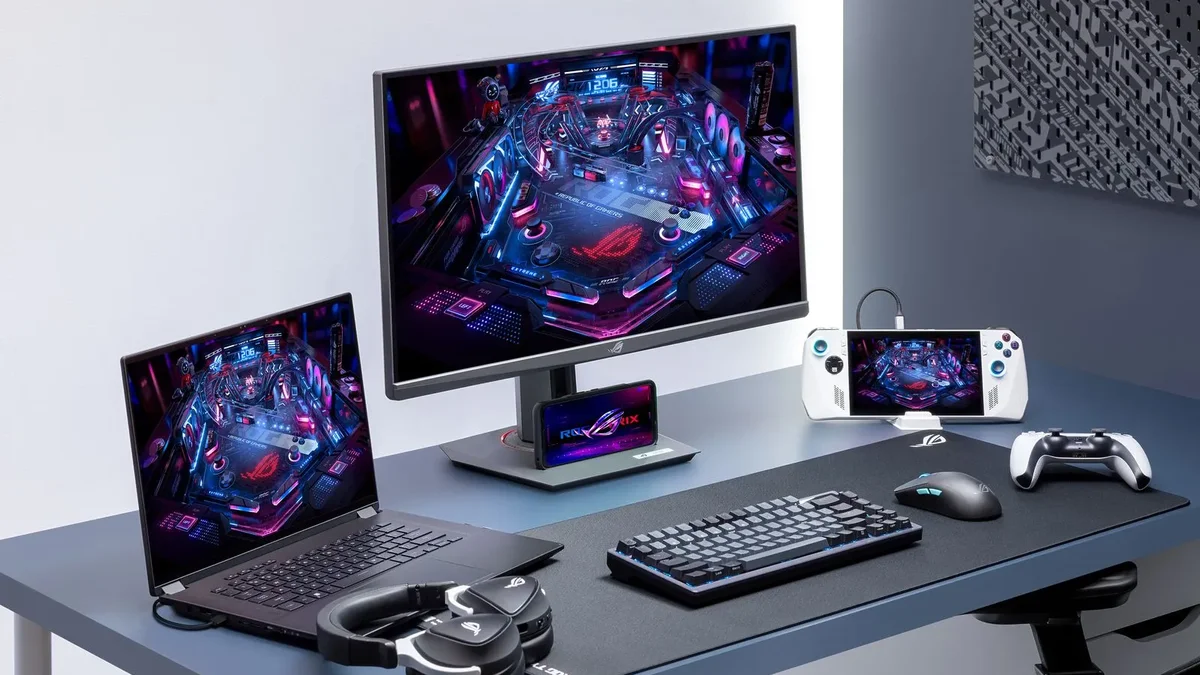
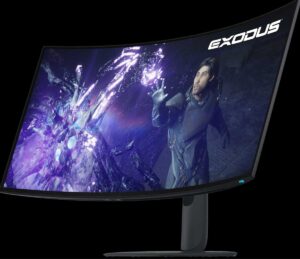
Choosing between the crisp clarity of a 1440p panel for single-player blockbusters and the raw speed of an ultra-high-refresh esports screen usually forces PC builders into an expensive desk compromise. With the official listing of the ROG Strix XG27ACMSR on the ASUS Republic of Gamers product catalog, the Taiwanese hardware giant is moving past traditional dual-mode displays by introducing a 27-inch Fast IPS monitor with three distinct resolution and refresh rate tiers reaching up to 640Hz.
Three Resolution and Refresh Rate Profiles Triggered by a Single Hotkey
Until now, multi-mode gaming monitors typically alternated between two presets, most commonly dropping from 4K at 160Hz or 240Hz down to 1080p at double the refresh rate. The ROG Strix XG27ACMSR expands that concept with a Triple Mode architecture that players can toggle on the fly via a dedicated OSD hotkey or directly with a mouse in Windows using the ASUS DisplayWidget Center utility.
Specifically, the 27-inch Fast IPS panel (596.74 x 335.66 mm active viewing area, 0.233 mm pixel pitch) allows users to switch between three tailored operating modes:
- Native QHD Mode (2560 x 1440): Up to 360Hz (OC), designed for visually demanding AAA titles and sharp daily desktop work.
- Full HD Mode (1920 x 1080): Up to 420Hz, built for fast-paced Battle Royale shooters where mid-range motion tracking is critical.
- HD Mode (1280 x 720): Up to 640Hz, engineered for competitive esports titles like Counter-Strike 2 and Valorant where every millisecond of input latency matters.
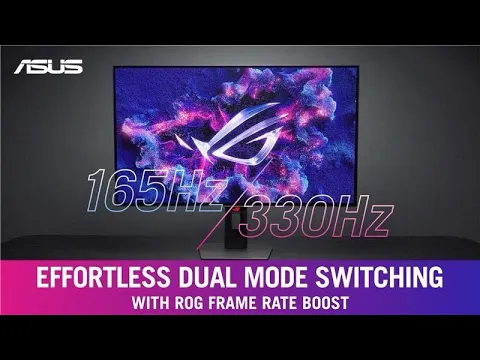
A key detail confirmed in the official ASUS specification sheet is that all three maximum refresh rate tiers (360Hz in QHD, 420Hz in FHD, and 640Hz in HD) are fully supported across every digital video input on the monitor, with no bandwidth penalties between HDMI, DisplayPort, or USB-C. While TCL is preparing 700Hz OLED gaming monitors for 2028, ASUS is delivering a Fast IPS contender today that pushes refresh rates past the 600Hz threshold without waiting for next-generation organic panels.
Smart Pixel Upscaling, 0.3ms Response Time, and ELMB Sync
Running 1080p or 720p on a physical 2560 x 1440 pixel grid naturally raises concerns about scaling softness, especially when stepping away from native resolution on a 27-inch screen. To counter interpolation blur, ASUS integrates its hardware-level Smart Pixel Technology, an upscaling algorithm that sharpens edges and preserves distant target clarity when operating in the 420Hz FHD or 640Hz HD modes.
On the motion performance front, the Fast IPS panel delivers a 1ms (GTG) typical response time and scales down to a 0.3ms minimum. It carries NVIDIA G-SYNC Compatible and AMD FreeSync Premium support alongside VESA AdaptiveSync Display 360Hz and 420Hz certifications.
Check Availability for ASUS ROG Strix XG27 on Amazon→
ASUS pairs variable refresh rate support with ELMB Sync (Extreme Low Motion Blur Sync), enabling backlight strobing and VRR simultaneously to eliminate ghosting and screen tearing during high-framerate firefights. Meanwhile, ASUS Variable Overdrive 2.0 dynamically tunes pixel overdrive settings as frame rates fluctuate.
For color accuracy, the 10-bit panel (1.07 billion colors) covers 95% of the DCI-P3 color space and 120% of sRGB, arriving factory pre-calibrated with a digital calibration report accessible inside DisplayWidget Center. Peak brightness reaches 400 cd/m² (1100:1 typical contrast ratio) with VESA DisplayHDR 400 certification, complemented by the ROG Gaming A.I. suite (AI Visual, color-adapting Dynamic Crosshair, and selective dark-area brightening via Dynamic Shadow Boost).
Full 48Gbps HDMI 2.1, USB-C Connectivity, and Desk-Ready Ergonomics
Built around the compact footprint of the latest ROG Strix XG chassis, the XG27ACMSR includes a built-in front phone slot on the base and a standard 1/4-inch tripod socket atop the stand column for mounting a camera or desk light. The ergonomic stand offers 110mm of height adjustment, -5° to +20° tilt, ±45° swivel, ±90° pivot for portrait orientation, and 100 x 100 mm VESA mount compatibility, while keeping typical power consumption down to just 20W.
Rear connectivity features one full-bandwidth HDMI 2.1 (FRL 48Gbps) port, one DisplayPort 1.4 (HBR3) input, a USB Type-C port supporting DisplayPort Alt Mode with 15W Power Delivery, and a 3.5mm headphone jack. While ASUS has yet to publish official retail pricing on its storefront, this spec sheet makes it a standout contender alongside the picks in our best gaming monitors in 2026 comparison guide.
My Take: 360Hz QHD Is the Real Anchor, While 640Hz 720p Has One Clever Trick
Let's be realistic: running 1280 x 720 across a 27-inch diagonal in 2026 is an extreme niche reserved for die-hard Counter-Strike 2 grinders who sit inches from the bezel. However, beyond the Smart Pixel sharpening filter and the fact that many tactical shooter pros already play on stretched low resolutions, 720p actually holds a mathematical advantage over 1080p on this panel: 1280 x 720 is an exact 2:1 integer division of native 2560 x 1440, allowing four physical pixels to form a clean 2x2 square per logical pixel without uneven fractional scaling.
Even so, the real everyday value of the ROG Strix XG27ACMSR lies in its baseline versatility. Having a Fast IPS display that delivers native 360Hz in QHD, offers a 420Hz 1080p middle ground, and includes full 48Gbps HDMI 2.1 plus USB-C makes it a formidable all-rounder. If ASUS prices it competitively below 480Hz OLED panels, this monitor will be an easy recommendation for players who refuse to choose between sharp 1440p daily use and tournament-grade speed.

SEO consultant for over 20 years and digital entrepreneur, Charles 'Grimtag' Ronchain is the founder of Pro-Gamer.gg, Retrocharting.com, and Gamescharting.com. A competitive gamer, streamer, and retro game collector, he has worked in the video game industry for over 15 years, notably as a consultant for leading game price comparison platforms. Passionate about real-time performance data and gaming technology, he analyzes competitive esports, gaming hardware benchmarks, and creator workflows on Pro-Gamer.gg with an authentic player perspective.