Beyond Burn-In, the Silent Border Decay: Why 14 of 16 Older WOLED TVs Lost Edge Pixels After 18,000 Hours at RTINGS
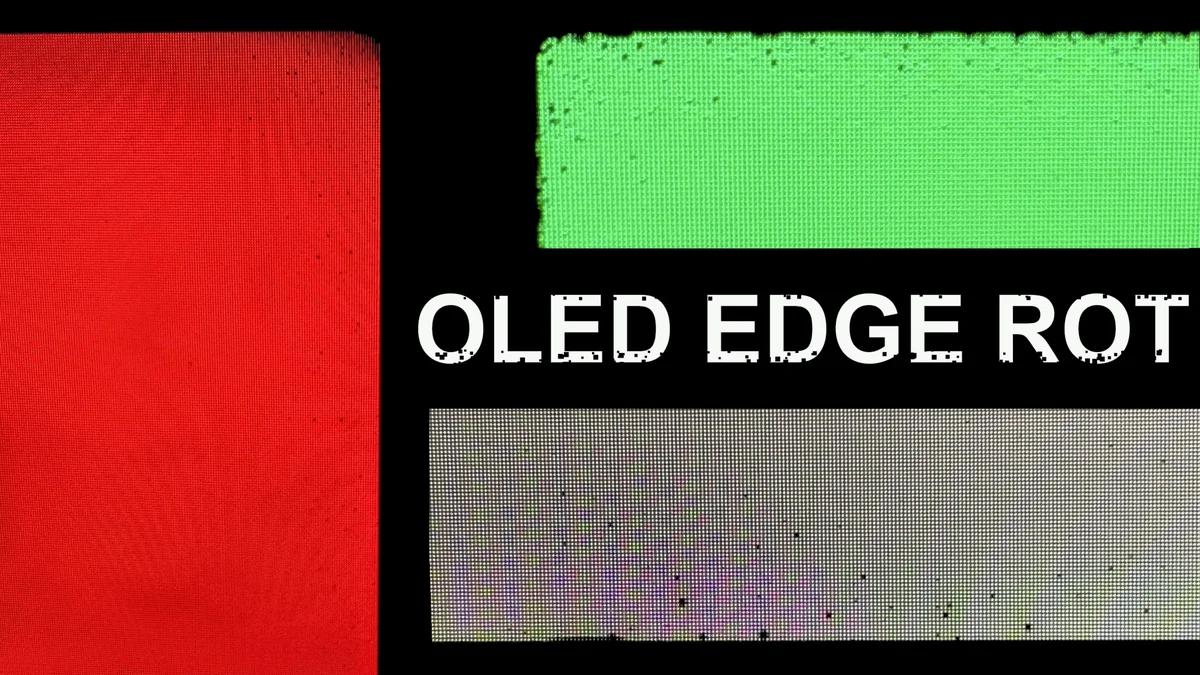
Whenever PC builders and home theater enthusiasts debate OLED durability, permanent image retention from static HUDs and news tickers steals almost all the spotlight. Yet the latest deep-dive from independent display laboratory RTINGS after 18,000 hours of accelerated longevity testing exposes a completely different physical vulnerability: clusters of dead pixels and delamination creeping inward along the outer perimeter of older White OLED (WOLED) panels.
Dubbed edge rot by the test engineers due to its resemblance to moisture creeping along a wall, this border degradation affected 14 out of the 16 WOLED TVs (87.5%) released between 2020 and 2023 in the test pool. Even more importantly for owners, unlike traditional burn-in, edge rot has nothing to do with static images or viewing habits, and varying your content cannot prevent it.
18,000 Hours on the Torture Bench: WBC vs. WBE WOLED and QD-OLED
To simulate roughly ten years of typical household viewing, the lab ran its fleet of televisions through 18,000 cumulative operating hours under controlled conditions. When engineers inspected the outer edges of every panel with macro photography, a stark divide emerged across panel generations and manufacturing architectures.
- Earlier-Generation WBC WOLED Panels (2020 to 2022): 9 out of 10 units (90%) suffered from edge rot. Five televisions were graded as severe (LG BX, Vizio OLED 2020, LG A1, LG C1, and Sony A80J), three showed significant degradation (LG CX, Sony A8H, and LG B1), and one exhibited mild top-row pixel loss (LG B2). Only a single WBC unit, the 2022 LG A2 OLED, emerged completely clean.
- Newer-Generation Deuterium WBE WOLED Panels (2021 to 2023): Despite incorporating deuterium in the emissive layer to resist thermal wear and burn-in, 5 out of 6 units still developed dead pixels around their borders. The Sony A90J (2021) was rated severe, the LG G1 (2021) and LG G2 (2022) showed significant edge clusters, while the LG C2 (2022) and Sony A90K (2022) had only mild, barely noticeable pixel failures. Crucially, the newest model in the group, the 2023 LG G3 OLED flagship, finished all 18,000 hours with zero edge rot and zero dead pixels.
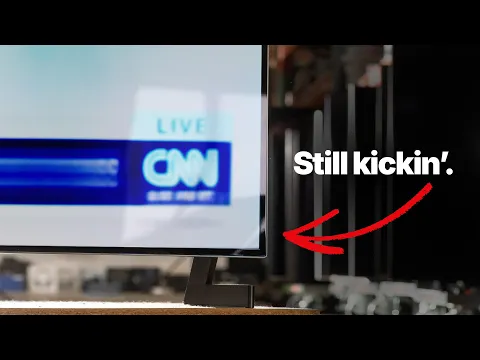
- Samsung Display QD-OLED TVs (2022 to 2023): While the three QD-OLED televisions in the test (Samsung S95B, Sony A95K, and Samsung S95C) experienced standard burn-in from running static CNN broadcasts, 0 out of 3 developed a single dead pixel or any sign of edge rot.
- OLED Gaming Monitors: Across the three OLED PC monitors evaluated in the same longevity cohort (Alienware AW3423DWF QD-OLED, Samsung Odyssey OLED G85SB QD-OLED, and LG 27GR95QE-B WOLED), none showed any border degradation.
| Panel Architecture | Model Years Tested | Affected Units | Severity Breakdown | Clean / Unaffected Models |
|---|---|---|---|---|
| WBC WOLED (LG Display) | 2020 - 2022 | 9 of 10 (90%) | 5 Severe, 3 Significant, 1 Mild | LG A2 (2022) |
| WBE Deuterium WOLED (LG Display) | 2021 - 2023 | 5 of 6 (83%) | 1 Severe, 2 Significant, 2 Mild | LG G3 (2023) |
| QD-OLED (Samsung Display) | 2022 - 2023 | 0 of 3 (0%) | No edge defects or dead pixels | Samsung S95B, S95C, Sony A95K |
Encapsulation Delamination and Moisture Ingress: What Causes Edge Rot?
Why do these dead pixel clusters form specifically along the outer bezel of the screen? The answer lies in the chemistry of organic light-emitting diodes. Organic emissive layers are highly sensitive to oxygen and moisture: if microscopic amounts of air or humidity breach the perimeter seal, the organic compounds oxidize and the affected sub-pixels permanently die.
According to the lab's failure analysis on panels manufactured up to 2022, two mechanisms appear to work in tandem:
- Calendar Age and Edge Delamination: As years pass from the manufacturing date, microscopic delamination of the moisture-barrier encapsulation layer along the glass border allows air and humidity to slowly seep inward. Confirming that this isn't just an artifact of extreme lab stress, two RTINGS staff members documented identical edge rot on their personal household TVs (a 2020 LG GX and a 2021 LG C1).
- Operating Hours and Manufacturing Contaminants: On newer WBE panels that showed isolated dead edge pixels without visible delamination, microscopic impurities trapped near the borders during fabrication can cause individual pixels to fail as cumulative operating hours climb.
LG's Official Statement vs. Samsung Display's Thin Film Encapsulation
Contacted prior to publication, both Korean panel giants provided official technical statements addressing the findings. LG Electronics and LG Display stated that they are aware of the phenomenon, noting that it may occur in a very small fraction of OLED products subjected to prolonged high temperatures, high humidity, or harsh environmental conditions, and is not expected under normal everyday viewing. LG emphasized that it continuously upgrades panel design and manufacturing tolerances to strengthen long-term durability.
Meanwhile, Samsung Display credited the flawless border integrity of its QD-OLED panels to its proprietary Thin Film Encapsulation (TFE) architecture. Refined over decades of mass-producing small and medium AMOLED displays, TFE seals the perimeter against moisture ingress right at the edge of the substrate,a structural advantage that now carries over to the latest 5-layer 4K QD-OLED gaming monitors.
What This Means for 2024 to 2026 Panels and the Longevity 3.0 Test
Should prospective buyers avoid modern WOLED displays? Not at all. In fact, RTINGS stresses that outside of burn-in, OLED TVs still suffer fewer complete hardware failures than LCD televisions, whose LED backlights and power boards fail far more frequently over an 18,000-hour lifespan.
More importantly, the spotless performance of the 2023 LG G3 and structural manufacturing upgrades introduced from 2024 onward suggest that LG Display has reinforced edge sealing on recent lineups (LG OLED evo C4, G4, C5, G5) as well as its latest RGB Tandem WOLED stack powering new 280Hz Tandem WOLED gaming monitors. While RTINGS introduced a precautionary Panel Reliability Risk Factors metric in Test Bench 2.3.1, the lab has already launched its Longevity 3.0 torture test tracking modern 2025 and 2026 sets,including the LG C5 (42" and 65"), LG G5, LG C6, and LG G6 (RGB Tandem) alongside the Samsung S90F, S95F, and S95H (QD-OLED EL 3.0).
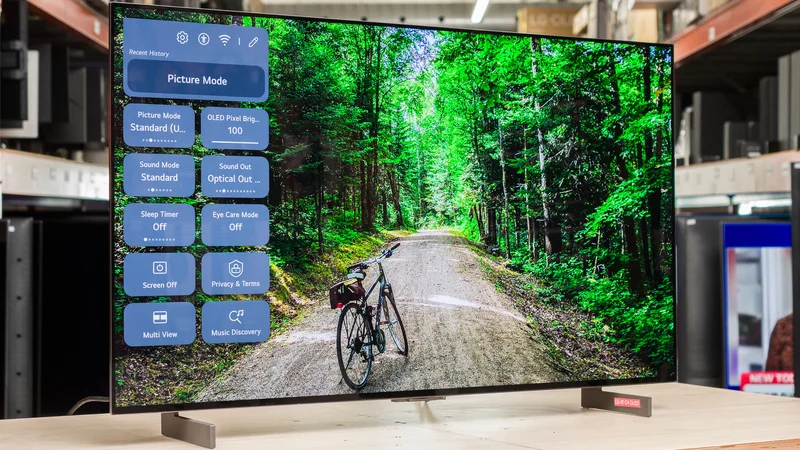
LG OLED evo C4 42-Inch (4K, 144Hz, HDMI 2.1, G-Sync)
- Post-2024 WBE panel with updated perimeter encapsulation
- Ideal 42-inch footprint for desktop PC and console gaming
- Four full-bandwidth HDMI 2.1 ports at 4K 144Hz with G-Sync and FreeSync
My Take on the Spec Sheet
Having spent years inspecting sub-pixel layouts and panel coatings on the test bench, I find this 18,000-hour dataset far more valuable than any glossy launch brochure. For years, owners of 2020 and 2021 CX, C1, and B1 sets have posted photos on enthusiast forums showing black, mold-like pixel clusters creeping in from the outer bezel after three to five years, often being told they simply lost the panel lottery. Seeing hard lab proof that 90% of tested 2020-2022 WBC panels developed edge rot validates those user reports: this is an encapsulation and moisture-seal aging issue, not something a screen saver or pixel refresher could ever prevent. We have not yet had a physical unit on our desk,if the manufacturer's team would like to send over a review sample so we can put it through our full real-world testing protocol, our lab doors are wide open.
At the same time, buyers shopping in 2026 need to separate legacy 2020-2022 panels from modern production runs. The fact that the 2023 LG G3 and the LG 27GR95QE-B monitor survived all 18,000 hours without a single dead edge pixel is a strong indicator that LG Display tightened its perimeter sealing from 2023 onward. If you still run an older 2020-2022 WOLED TV in your setup, keep your room humidity in check and avoid heat traps around the bezel; if you are buying new today, stick strictly to 2024-and-newer WOLED generations (C4, C5, G4, G5, or RGB Tandem) or Samsung Display's TFE-sealed QD-OLED panels.

PC hardware enthusiast and competitive gamer, Arthur 'Heimdall' splits his time between France and the UK working in enterprise B2B software solutions. A business school graduate passionate about component benchmarking, he has been building, modding, and tuning PCs since childhood, optimizing every thermal degree and millisecond of display latency. An avid gamer across Assassin's Creed and sandbox titles, he forged his alliance with Grimtag and Chaya during late-night World of Warcraft raids before joining Pro-Gamer.