Resident Evil Outbreak File #1 and #2 Are Now Free to Play in Your Browser: Inside the WebGPU Port and the AI 'Vibe Coding' Debate
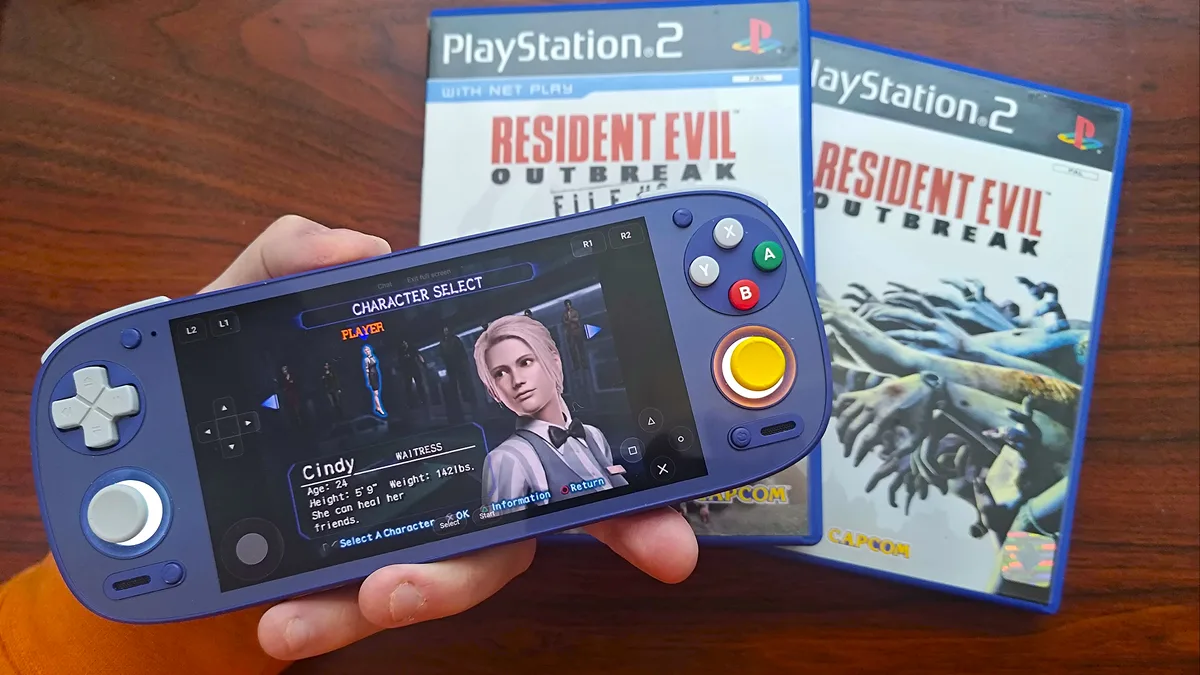
Never re-released on modern consoles or Steam since their original PlayStation 2 launches between 2003 and 2005, Resident Evil Outbreak and its sequel Resident Evil Outbreak File #2 have resurfaced in an unexpected place: directly inside a standard web browser. Playable for free with zero local installation through the unofficial preservation portal Outbreak·Web, the project lets players jump straight into all ten Raccoon City scenarios either solo or in four-player online co-op. Behind the effortless accessibility, however, the lack of public source code and allegations of AI-assisted development are sparking intense debate across the retro preservation community.
Ten Playable Scenarios Up to 1920×1536 Resolution Powered by WebGPU and PS2Recomp
For over two decades, experiencing Capcom's pioneering online survival horror spin-offs meant either tracking down an original PlayStation 2 with a Network Adapter or manually configuring the PCSX2 emulator with custom DNS settings and fan-run servers. Now, anyone running a modern WebGPU-capable browser (such as current builds of Chrome, Edge, or Safari) can boot both North American releases in seconds: File #1 (serial SLUS-20765 featuring the five original scenarios) and File #2 (serial SLUS-20984 featuring five additional campaigns).
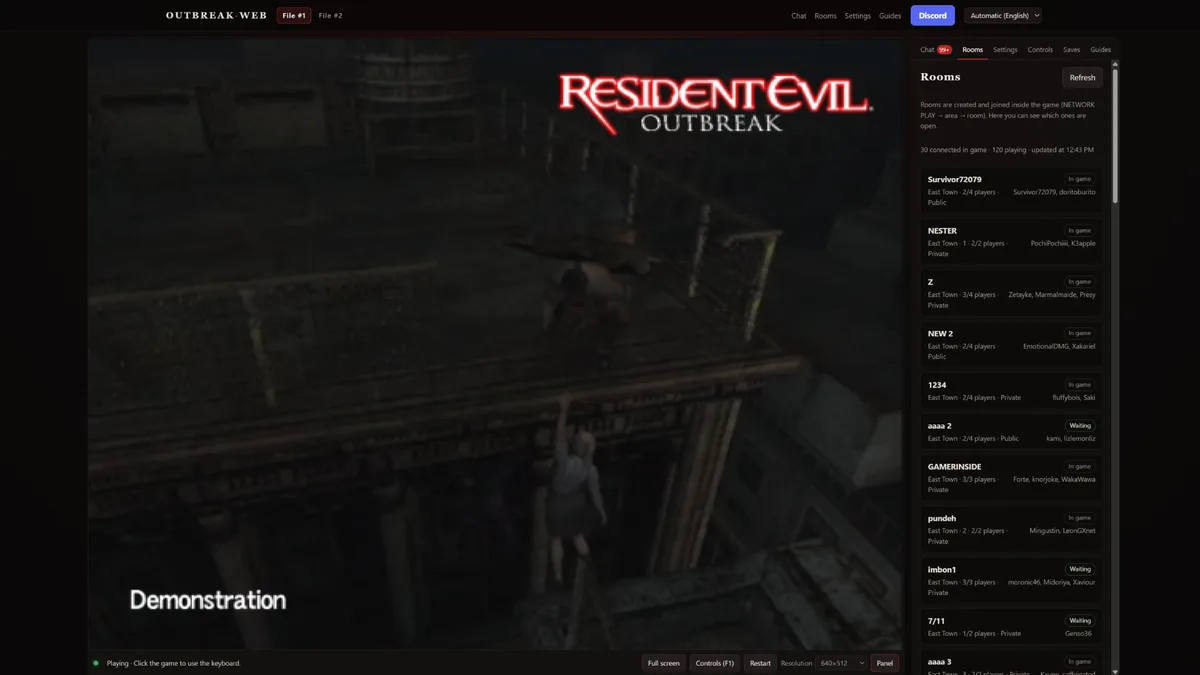
An inspection of the portal's underlying architecture reveals a 27.7 MB WebAssembly engine (ps2web.wasm) built on top of the open-source PS2Recomp and ps2-web-recomp toolchains (licensed under MIT). Instead of relying solely on heavy legacy software emulation, the browser client leverages static recompilation techniques paired with hardware-accelerated WebGPU rendering, alongside a fallback frame-copy safe mode designed for Linux browsers prone to flickering.
The integrated side panel includes a full suite of quality-of-life features directly inside the browser tab:
- Three Internal Resolution Tiers: Players can switch rendering resolution from native
640×512up to1280×1024(2x scale) or1920×1536(3x scale), complete with an integer scaling mode (exact multiples of640×480) for razor-sharp pixel output. - Virtual 8 MB PS2 Memory Card: Game progress is saved to an in-browser virtual memory card that supports one-click export and import in standard
.ps2format, making it easy to back up saves locally or transfer them to desktop emulators. - Remappable Controls and Mobile Touch Overlay: Alongside customizable keyboard bindings, the web client automatically detects up to two standard gamepads and provides an on-screen touch controller layout for smartphones and Android handhelds running WebGPU browsers.
Four-Player Online Co-Op via Built-In Bioserver Gateways
What made Resident Evil Outbreak ahead of its time was its cooperative structure, casting players as eight ordinary Raccoon City citizens (including waitress Cindy Lennox, RPD officer Kevin Ryman, and investigative reporter Alyssa Ashcroft), each equipped with unique skills and starting items as they race to escape before their viral infection gauge hits 100%.
To restore online multiplayer without tedious port forwarding, Outbreak·Web integrates a room server built on Bioserver1/2 (licensed under AGPL-3.0) connected via a virtual WebSocket Ethernet gateway. After registering a nickname in the side panel, players simply select NETWORK PLAY from the in-game title screen, enter a shared lobby area such as Free Area or Area 01, and host or join four-player rooms while coordinating through the built-in community and room chat channels.
While Capcom has yet to announce an official modern remaster of the Outbreak duology, survival horror fans looking to revisit Raccoon City on modern hardware can check out the latest mainline entries and remakes below:
Why 'Vibe Coding' Concerns and Missing Source Code Are Raising Red Flags
Despite the excitement surrounding instant browser co-op, the project, credited to developer Lucas Gonzalez Falcon, has drawn scrutiny from retro engineering veterans. While the footer credits on Outbreak·Web acknowledge ps2-web-recomp (MIT) and Bioserver1/2 (AGPL-3.0), the link for the server and integration repository simply reads "source code: coming soon," with no public GitHub repository available for inspection.
That lack of transparency has fueled discussion that the browser wrapper and backend glue were assembled through AI-assisted "vibe coding" without releasing the required AGPL-3.0 modifications. The controversy echoes the exact friction that recently forced retro engineering hub decomp.dev to shut down its public leaderboard following a wave of hostile AI forks and rushed PC ports. Players testing the browser build have also noted occasional host-dependent lag spikes and touchy analog movement compared to standalone emulators.
My Take
Booting up Resident Evil Outbreak File #1 and File #2 at 1920×1536 inside a browser tab and jumping into a four-player lobby in under thirty seconds feels almost magical if you remember struggling with the PS2 Network Adapter back in 2004. At the same time, it is hard to see this portal surviving for long in its current form. Unlike clean-room recompilation projects that require users to supply their own legally dumped PS2 ISO files, Outbreak·Web automatically streams the game disc data in the background. Between the unreleased AGPL server code and direct distribution of Capcom's copyrighted assets, a takedown notice feels inevitable. If you decide to jump into Raccoon City with friends this weekend, make sure to use the built-in memory card tool to export your .ps2 save file before the curtain falls.

SEO consultant for over 20 years and digital entrepreneur, Charles 'Grimtag' Ronchain is the founder of Pro-Gamer.gg, Retrocharting.com, and Gamescharting.com. A competitive gamer, streamer, and retro game collector, he has worked in the video game industry for over 15 years, notably as a consultant for leading game price comparison platforms. Passionate about real-time performance data and gaming technology, he analyzes competitive esports, gaming hardware benchmarks, and creator workflows on Pro-Gamer.gg with an authentic player perspective.