101.6 Million Wii Consoles vs. 999.4 Million PS3 Games: 20 Years After November 2006, Each Won a Different War
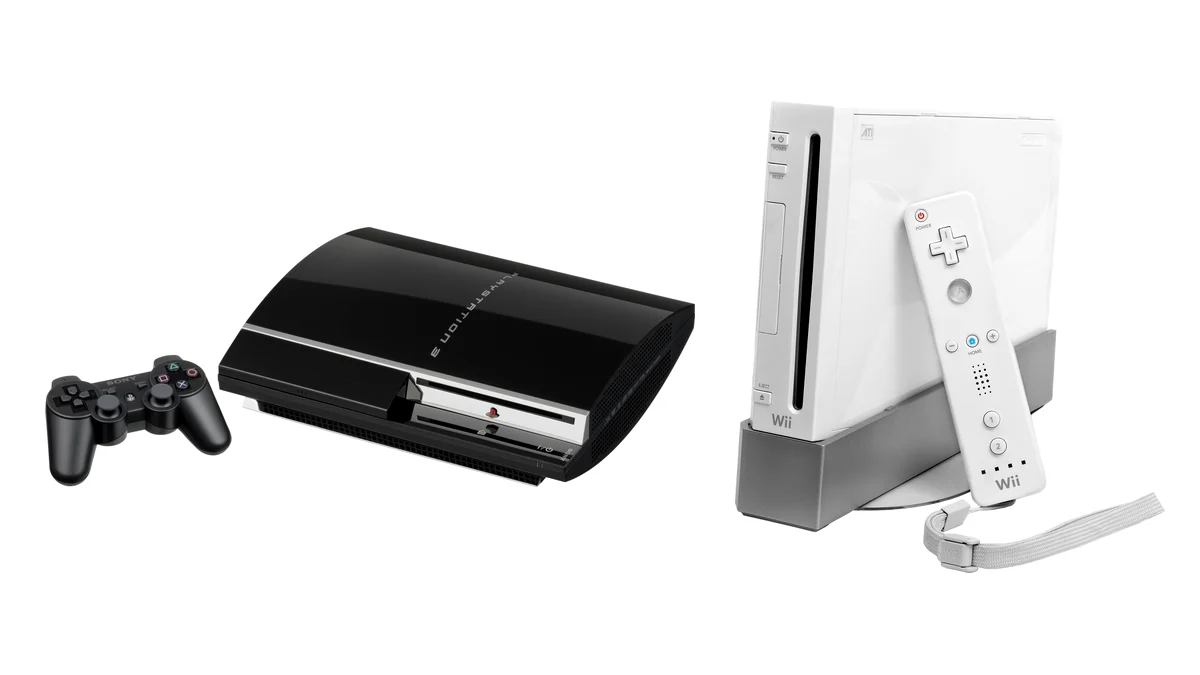
Just eight days separated their debuts in November 2006. After launching in Japan on November 11, 2006, and in North America on November 17, Sony's PlayStation 3 went head-to-head in store aisles with the Nintendo Wii on November 19, 2006.
Twenty years later, in November 2026, both seventh-generation icons are officially two decades old. Looking back at the final audited ledger from Kyoto and Tokyo reveals a fascinating split verdict: while the Wii decisively won the hardware sales race, the PS3 staged a multi-year comeback to capture the software crown.
November 2006: Sony's $599 Cell Supercomputer vs. Nintendo's $249 Blue Ocean
In the fall of 2006, the two Japanese giants took diametrically opposed paths. Coming off the 160-million-unit triumph of the PlayStation 2, Ken Kutaragi engineered the PS3 as a living-room supercomputer built around the 3.2 GHz Cell Broadband Engine, Nvidia's RSX GPU, and a built-in Blu-ray disc drive.
That hardware ambition came with an infamous sticker shock: $499 for the 20 GB model and $599 for the 60 GB model. Because each unit cost roughly $805 to $840 to manufacture at launch, Sony lost over $240 on every console sold and racked up $3.2 billion in operating losses across its game division between 2006 and 2008.
By contrast, Satoru Iwata and Nintendo rejected the high-definition arms race in favor of their "Blue Ocean" strategy. Built on a frugal 480p evolution of the GameCube architecture (the 729 MHz PowerPC Broadway CPU and ATI Hollywood GPU), the Wii launched profitably on day one at $249.99 with a motion-sensing Wii Remote and Wii Sports packed inside the box in Western markets.

101.63 Million Consoles: How the Wii Captured the Hardware Crown
On the hardware front, Nintendo's bet turned into a global cultural phenomenon. By turning a television remote into a tennis racket and a bowling ball, the Wii brought families, grandparents, and non-gamers into the market at an unprecedented pace.
According to Nintendo's official historical sales data, the Wii finished its lifecycle at 101.63 million consoles sold worldwide. Driven by its Western hardware bundle, Wii Sports on Wii (which currently trades around $9.99 complete-in-box on the collector market) reached 82.90 million copies, followed by Mario Kart Wii (37.38 million) and New Super Mario Bros. Wii (30.32 million).
However, momentum cooled sharply after 2010. Locked at 480p resolution just as 1080p HDTVs became standard, the Wii missed out on the multiplatform blockbusters that defined the second half of the generation.
999.4 Million Games Sold: The PlayStation 3 Comeback
Written off by critics during its rocky first two years against Microsoft's Xbox 360, the PlayStation 3 executed one of the greatest turnarounds in gaming history. The inflection point arrived in September 2009 with the launch of the 45nm PS3 Slim (CECH-2000) at $299.
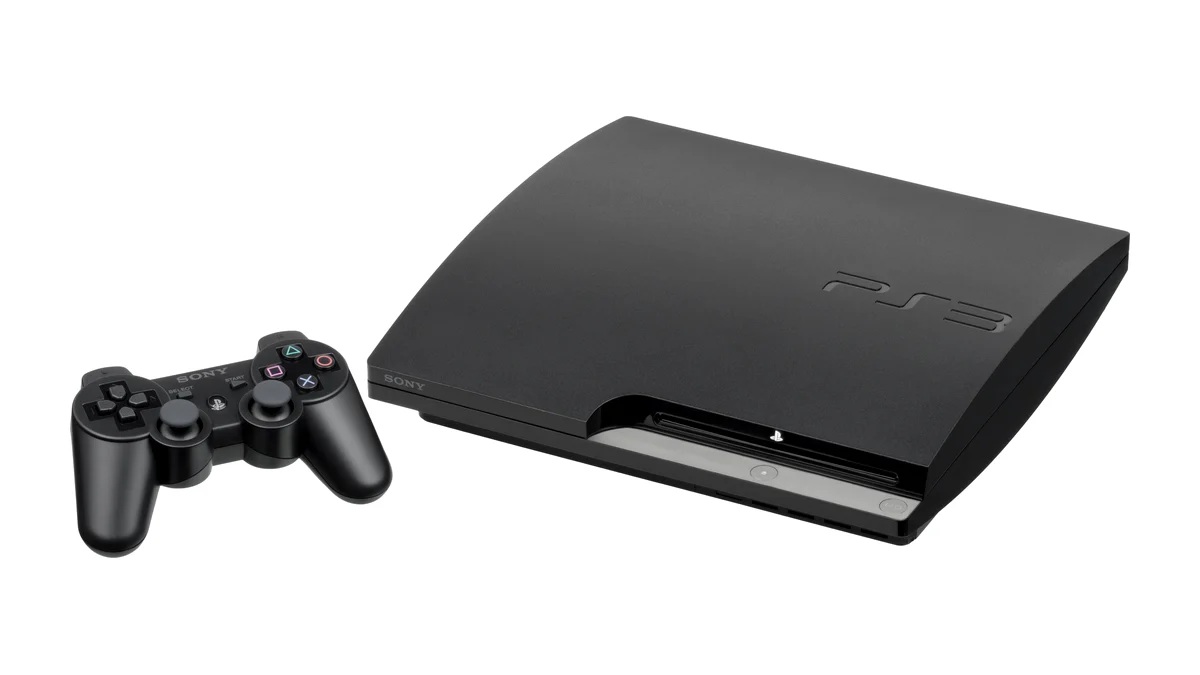
Backed by free online multiplayer on the PlayStation Network and a relentless slate of first-party exclusives including Metal Gear Solid 4: Guns of the Patriots, Uncharted 2: Among Thieves, God of War III, Gran Turismo 5 (11.95 million), and 2013 swan songs like The Last of Us and Grand Theft Auto V, Sony steadily closed the gap.
According to Sony Interactive Entertainment's official business data, the PS3 reached 87.4 million consoles sold, edging past the Xbox 360 (~84 million) at the finish line. Even more remarkably, the PS3 shipped 999.4 million software units, surpassing the Wii's 921.85 million games.
| Official Lifecycle Metric | Nintendo Wii | Sony PlayStation 3 |
|---|---|---|
| Original Launch (November 2006) | Nov 19, 2006 (NA) / Dec 2, 2006 (JP) | Nov 11, 2006 (JP) / Nov 17, 2006 (NA) |
| Launch Price (US) | $249.99 (bundled with Wii Sports) | $499 (20 GB) / $599 (60 GB) |
| Hardware Units Sold | 101.63 million (1st place) | 87.4 million (2nd place ahead of 360) |
| Total Software Units Sold | 921.85 million (incl. 82.9M Wii Sports) | 999.4 million (1st place) |
| Software Tie-Ratio (Games per Console) | 9.07 games / console (8.25 excl. bundle) | 11.43 games / console |
With an attach rate of 11.43 games per console (compared to 8.25 on the Wii when excluding packed-in copies of Wii Sports), PS3 owners bought significantly more software over the system's lifespan. Two decades later, Sony's Exotic silicon still inspires hardware modders, as seen in a recent custom "PS3 Pro" mod that pushed the Cell processor to 5.1 GHz.
On the secondary market in 2026, launch-window 60 GB PlayStation 3 (CECHA01) units featuring hardware PlayStation 2 backward compatibility remain the most sought-after models among collectors.
Check Backwards Compatible PlayStation 3 60GB Listings on eBay→
My Take
November 2006 remains the greatest lesson in humility the console business has ever seen. Fresh off the 160-million-unit dominance of the PS2, Sony executives genuinely believed players would work overtime to pay $599 for a machine without a single must-have launch exclusive. It took a $3.2 billion financial bloodbath to force Tokyo to pivot with the $299 PS3 Slim and deliver five straight years of landmark first-party games.
Across the desk, Chayane always points out the sheer brilliance of Satoru Iwata's gamble: moving 101.63 million Wii systems at a profit from day one using overclocked GameCube silicon and a white plastic wand was an industrial masterclass. Yet as Heimdall reminded us while looking at the Cell processor's die, Sony's over-engineered beast had the legs to carry developers all the way to The Last of Us in 2013 and nearly one billion games sold. Nintendo won the living-room sprint, but Sony won the software marathon.

SEO consultant for over 20 years and digital entrepreneur, Charles "Grimtag" is the founder of Pro-Gamer.gg, Retrocharting.com, and Gamescharting.com. A competitive gamer, streamer, and retro game collector, he has worked in the video game industry for over 15 years, notably as a consultant for leading game price comparison platforms. Passionate about real-time performance data and gaming technology, he analyzes competitive esports, gaming hardware benchmarks, and creator workflows on Pro-Gamer.gg with an authentic player perspective.