Programmed to Self-Delete After 12 Hours: The Rarest Lost Pokémon Nintendo DS Game Resurfaces 20 Years Later Inside a PSA Slab
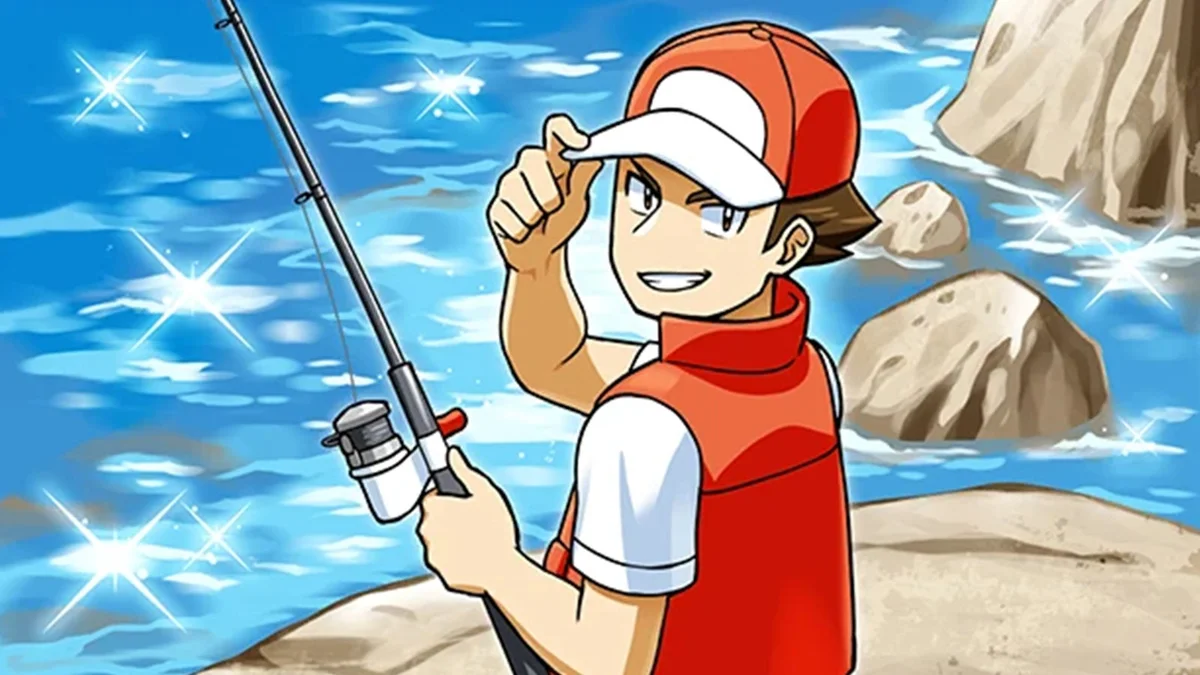
One of the most elusive ghosts in Nintendo handheld history has just stepped back into the light more than two decades after vanishing. During the summer of 2005, visitors to the temporary PokéPark theme park in Nagoya, Japan, could wirelessly download an exclusive mini-game onto their dual-screen handhelds titled PokéPark: Tsuri Taikai DS (known internationally as PokéPark: Fishing Rally DS). Engineered to wipe itself from the console's memory after a few hours, this long-lost piece of Pokémon history has resurfaced in the hands of collector Daniel Quadri, who holds the only known complete and fully playable physical distribution cartridge in existence.
A RAM-Only Pokémon Experience Coded to Self-Delete After 12 Hours
Between May and September 2005, Nagoya's PokéPark (along with select Japanese Pokémon Centers and the Pokémon Festa event) invited attendees who brought their own Nintendo DS systems to take part in a park-wide fishing competition. Rather than selling or handing out physical game cards, The Pokémon Company and Nintendo used local wireless kiosks powered by DS Download Play to beam the software directly into each handheld's volatile system memory (RAM).
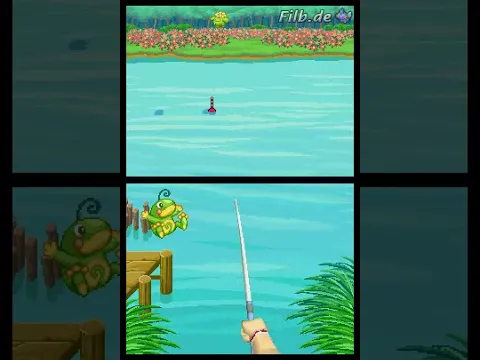
Once the download finished, players explored different water zones to hook 3D Water-type Pokémon ranging from Magikarp, Carvanha, Feebas, and Chinchou all the way up to Gyarados, as documented in the archival entry on Bulbapedia's PokéPark: Fishing Rally DS page. Live leaderboards inside the park tracked top catches, while a special Summer Vacation Challenge rewarded the first 200 players to reel in a daily target Pokémon with an exclusive Nintendo DS screen scratch guard.
However, the software carried a strict built-in expiration timer: it was programmed to automatically erase itself after 12 hours, or immediately as soon as the Nintendo DS was powered off. Because any reboot destroyed the game code in RAM, traditional shiny-hunting tactics like soft-resetting were completely impossible, making a documented Shiny Magikarp catch at the 2005 park a genuine one-in-a-million miracle. When the event closed its gates in 2005, PokéPark: Fishing Rally DS vanished from every visitor's handheld, while modern fan preservation efforts such as Pokémon Fulldex running seven classic DS Pokémon games in 16:9 at 60 FPS focused on retail cartridge releases.
Daniel Quadri's Discovery: A Master Cartridge That Broadcasts the Full Game
In July 2026, a development cartridge tied to the attraction briefly appeared on eBay in Europe with an asking price between $9,000 and $11,000, but that unit only contained the static leaderboard software displaying past attendees' scores. The real breakthrough came from Pokémon collector Daniel Quadri (known online as @nostalgicdza), who demonstrated that he owns the lone surviving master distribution cartridge capable of both running PokéPark: Fishing Rally DS and broadcasting it wirelessly to other Nintendo DS consoles.
Physically, the artifact is an official black Nintendo DS development flash card labeled DSフラッシュカードSPS12M (E220256500) E4, equipped with a hardware dip switch on the back to toggle between two memory banks (ROM ID Pattern A / Pattern B). Slotted into any standard Nintendo DS, the cartridge effectively turns the handheld into a portable 2005 PokéPark distribution station.
"After years of fans wondering if it would ever be playable again, it felt surreal to turn on my DS and spend a quiet moment fishing, then feel that rush when I reeled in a Gyarados. For a moment, I got to feel what it must have been like to play it at PokéPark in 2005. What stands out most is that visitors at PokéPark could download the game wirelessly to their own Nintendo DS back in 2005. With this cartridge in my DS, I can recreate that experience today. I can send the full game directly to someone else's DS through Download Play, without needing a download station."
Daniel Quadri, Pokémon collector and owner of the master distribution cartridge
Locked Inside a PSA Slab: Why Archival Advocates Are Sounding the Alarm
While confirmation that the 21-year-old code still works sparked immediate excitement, Quadri's next move ignited a heated debate across the video game preservation community. To authenticate the discovery, Quadri submitted the development card to PSA Video Games (Professional Sports Authenticator).
Catalogued under certification number 616803-001 with an AU (Authentic) - Nintendo DS Event Distribution Cartridge designation, the flash card was permanently sonic-sealed inside a rigid acrylic PSA slab. Claire Shelton, Head of PSA Video Games, called it "an honor and a privilege to experience this game first-hand," adding that encapsulating the cartridge allows the artifact "to continue existing and potentially transact with full confidence to any collector."
That exact encapsulation is what troubles game historians and digital archivists. Once sealed inside a graded plastic case, the cartridge can no longer be inserted into a Nintendo DS slot or connected to a ROM dumper. Although Quadri has stated that preserving the game means a great deal to him, no digital ROM dump has been publicly released online. Mid-2000s development flash chips like the SPS12M remain vulnerable to gradual electrical charge decay (bit rot) over decades, creating a stark contrast with grassroots hardware preservation efforts like the DualStation project turning a 2004 Nintendo DS motherboard into an HDMI home console.
| Specification | Verified Details |
|---|---|
| Official Title | PokéPark: Tsuri Taikai DS (PokéPark: Fishing Rally DS) |
| Original Availability | May to September 2005 - PokéPark Nagoya (Japan) and select Pokémon Centers |
| Distribution Method | Wireless DS Download Play into system RAM (auto-deletes after 12 hours or power off) |
| Hardware Artifact | Nintendo DS development flash card SPS12M (E220256500) E4 with ROM ID A/B switch |
| Current Status | Owned by Daniel Quadri (@nostalgicdza), encased in PSA slab #616803-001 (ROM not publicly dumped) |
My Field Notes
Finding a 2005 Nagoya theme park program that was literally coded to self-destruct after twelve hours survive intact into 2026 feels like pure archaeological magic. Yet there is a bitter irony in celebrating how this SPS12M cartridge can beam the game wirelessly to any nearby Nintendo DS, only to immediately entomb it inside a sonic-welded PSA acrylic slab. Until those bytes are dumped and backed up online, a grading case only protects a five-figure resale valuation, not video game history against flash memory bit rot. I was talking about this earlier tonight with Arthur ("Heimdall") right after he finished breaking down Kouzex's DualStation hardware mod: on one side of the scene, engineers are building custom FPGA boards to keep 2004 Nintendo DS motherboards alive over 60Hz HDMI, while on the other, speculative collecting locks the lone playable copy of a lost Pokémon game behind unplayable plastic.

Originally from Lyon, France, gaming journalist Bastien "Orion" relocated nearly a decade ago to Quebec City's Saint-Roch district, right in the heart of eastern Canada's development studio hub. Before crossing the Atlantic, he honed his versatile reporting style across classic French gaming web portals and specialist television outlets in the 2000s and 2010s, notably with JeuxVideo.fr and JeuxNews. Equally passionate about AAA blockbusters, North American studio culture, retro preservation, and community modding projects, he anchors Pro-Gamer's transatlantic desk and real-time coverage of US and Japanese industry announcements.