Nintendo DS Motherboard, 60Hz HDMI Monitor Output, and Wacom Tablet Support: How Kouzex Turns the 2004 Handheld Into the DualStation Home Console
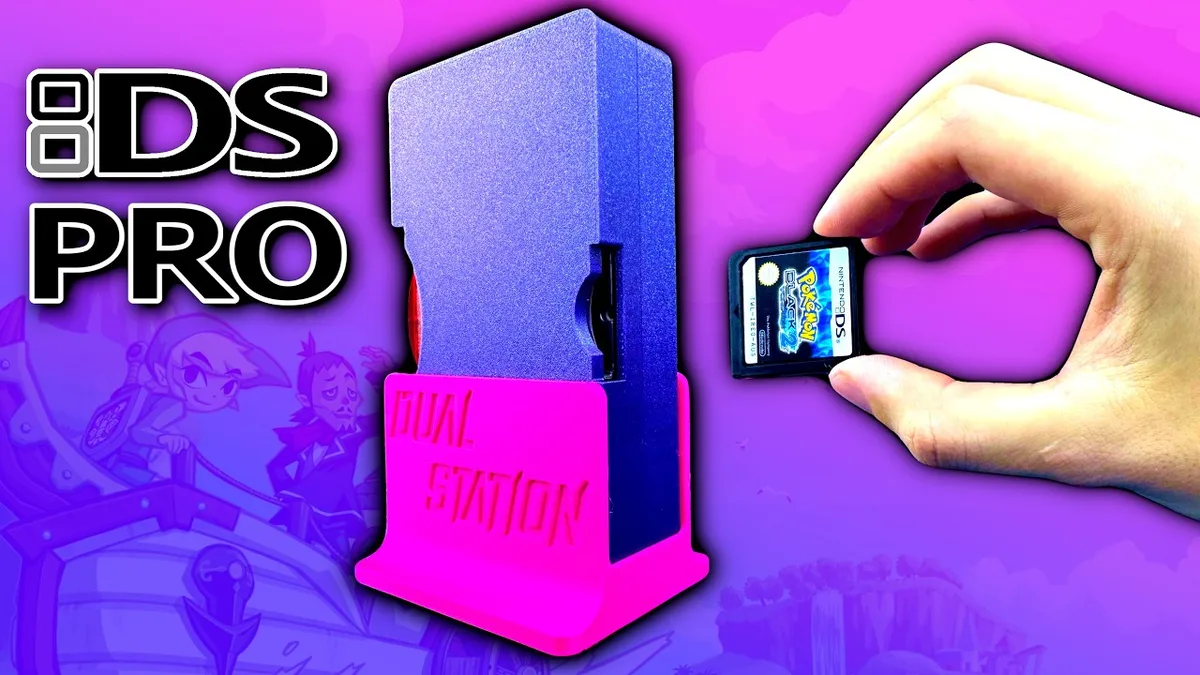
Back in 2004, only development studios equipped with Intelligent Systems' bulky IS-NITRO-EMULATOR and IS-NITRO-CAPTURE hardware boxes could output both Nintendo DS screens onto a television, relying on a GameCube power brick and soft composite AV cables. More than two decades after Nintendo's dual-screen handheld launched, Australian hardware modder Kouzex has engineered the ultimate modern alternative with the DualStation: the first-ever Nintendo DS "Consolizer" kit capable of transforming an original retail DS motherboard into a 60Hz HDMI home console with zero software emulation.
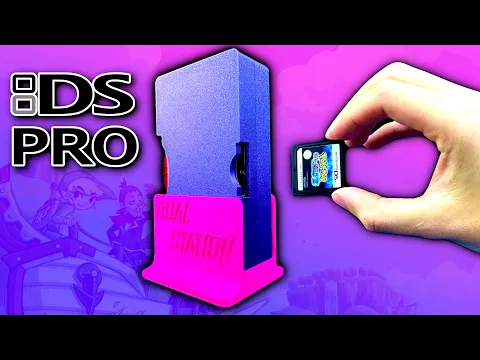
Two 330-Ohm Resistors and Three Custom Flex PCBs to Rescue Brittle 2004 "Phat" Nintendo DS Units
Rather than gutting pristine handhelds, the build showcased on Kouzex's official YouTube channel specifically targets the aging 2004 original Nintendo DS model (NTR-001, widely known as the "Phat" DS), whose plastic shells and screw posts have become notoriously brittle over the past twenty years. As long as the donor motherboard still boots and reads cartridges, cracked hinges, dead LCD screens, and worn-out buttons are completely bypassed.
While homebrew coders have recently pushed the handheld's original silicon to its limits with a custom C++ port of GTA San Andreas running in 3D within the 4MB RAM of an original Nintendo DS, Kouzex re-engineers the physical board layout itself. Because an unmodified DS refuses to boot when its LCDs are unplugged, the installation starts by soldering two 330-ohm SMD resistors across the top and bottom backlight pads to trick the motherboard into detecting both screens.
From there, the conversion relies on a modular architecture detailed on the official DualStation project page:
- The main DualStation PCB featuring USB-C power delivery, Bluetooth wireless connectivity, an onboard microphone, and a side-mounted USB-A port.
- A dedicated HDMI output daughterboard soldered onto header pins aligned beside the USB-C power input.
- Three custom flex PCBs soldered directly onto the DS motherboard after scraping the green solder mask off 8 bare copper test points and severing the lower traces of the factory touchscreen IC under a microscope.
- A custom 3D-printed console enclosure with an internal insulating mid-frame and vertical stand, preserving direct front-facing access to both the Nintendo DS Slot-1 and Game Boy Advance Slot-2 cartridge bays.
- The original coaxial Wi-Fi antenna salvaged from the upper DS housing, ensuring local wireless multiplayer, PictoChat, and DS Download Play remain 100% functional.
Switch 2 Joy-Con Mouse Mode, DualSense Touchpad, and Wacom Tablet: Five Ways to Replace the Stylus
Translating resistive touchscreen gameplay to a living-room television has always been the biggest hurdle for dual-screen hardware. Whereas software-side romhacks like the Pokémon Fulldex project adapting seven classic Nintendo DS titles into 16:9 widescreen can tailor UI layouts for specific games, a hardware consolizer must handle every retail cartridge from Pokémon SoulSilver to Rhythm Heaven.
To solve this, Kouzex programmed the DualStation PCB to inject touch inputs through five distinct control schemes:
- Nintendo Switch 2 Joy-Con Mouse Mode: Players can glide a Switch 2 Joy-Con across a desk or armrest like an optical mouse to move the on-screen stylus cursor and pull the trigger button to tap, making loop-drawing in Pokémon Ranger effortless.
- Wacom Intuos Small (CTL-4100) Drawing Tablet: Plugged into the side USB port, the graphics tablet delivers true 1:1 pen input for stylus-driven games such as The Legend of Zelda: Spirit Tracks, Phantom Hourglass, Ninja Gaiden: Dragon Sword, and Art Academy, and works simultaneously alongside a wireless controller.
- PS4 DualShock 4, PS5 DualSense, and Steam Controller Touchpads: Allows players to tap, swipe, and draw directly from the couch using the controller's built-in trackpad.
- Standard Wired USB Mouse connected directly to the side USB port.
- Six Thumbstick Touch Modes, Gyro Pointer, and Coordinate Macros: Lets players steer analog-style games like Super Monkey Ball: Touch & Roll with a left stick, map the right stick to touch-camera rotation in Kingdom Hearts 358/2 Days, or bind a physical gamepad button to tap a fixed screen coordinate (such as an on-screen reload or jump icon).
720p 60Hz Scaling Filters, Vertical "Tate" Rotation, and a Dedicated Mic-Blow Button
On the display side, the DualStation outputs a rock-solid 720p signal at 60Hz over HDMI. Pressing the controller's Home button (with support for PS4, PS5, Xbox One, Xbox Series X|S, and Switch 1 and 2 Pro Controllers) brings up an on-screen configuration menu featuring 10 customizable profile save slots. Three scaling algorithms are available: Integer for razor-sharp pixel accuracy, Sharp (bilinear with added pixels to fill the frame), and Smooth for a softer image on large living-room screens.
Users can switch on the fly between stacked Top/Bottom, Side-by-Side, and full-frame Single Screen layouts (including a full-screen toggle for Game Boy Advance cartridges), while fine-tuning the virtual gap between both DS displays so cross-screen cutscenes line up properly. A 90-degree screen and touch rotation mode also supports vertical "Tate" monitors as well as book-style sideways DS games like Brain Age and Ninja Gaiden: Dragon Sword.
Even the quirky hardware sensors of Nintendo's 2004 handheld are preserved: voice recognition in games like Nintendogs works through either the PS5 DualSense controller's built-in mic, USB headsets, or the microphone integrated onto the DualStation PCB. Better yet, a dedicated "Mic Blow" option injects synthetic wind noise at the press of a button for flute segments in Zelda, while clamshell sleep mode (required for specific puzzles like pressing the sea chart in Phantom Hourglass) can be mapped directly to a trigger such as L2. Kouzex is currently taking email sign-ups on his website for both the intermediate-level Self-Solder Kit and a limited initial batch of pre-built DualStation consoles.
My Take on the Spec Sheet
Having inspected countless 3D-printed console mods that simply hide a single-board emulator inside a nostalgic shell, I find Kouzex's DualStation in a league of its own. Tapping directly into a 2004 Nintendo DS motherboard's native video lines for lag-free 720p 60Hz output while hijacking the touchscreen IC to support a Wacom CTL-4100 pen tablet and Switch 2 Joy-Con mouse mode is a masterclass in hardware reverse-engineering. Small quality-of-life touches, such as the 330-ohm backlight bypass resistors, the synthetic Mic Blow trigger, and mappable clamshell sleep, show that this kit was built by someone who actually plays the DS library rather than just chasing a viral prototype. If you have a crumbling "Phat" DS with snapped hinges sitting in a parts bin, there is no better way to bring that original silicon back to life on a modern TV. We have not yet had a physical unit on our desk,if the manufacturer's team would like to send over a review sample so we can put it through our full real-world testing protocol, our lab doors are wide open.

PC hardware enthusiast and competitive gamer, Arthur 'Heimdall' splits his time between France and the UK working in enterprise B2B software solutions. A business school graduate passionate about component benchmarking, he has been building, modding, and tuning PCs since childhood, optimizing every thermal degree and millisecond of display latency. An avid gamer across Assassin's Creed and sandbox titles, he forged his alliance with Grimtag and Chaya during late-night World of Warcraft raids before joining Pro-Gamer.