RTX 3090 Founders Edition Cooler and a Sawed-Off PCB: Inside the $50 Marketplace GPU Hiding a 2014 Radeon R9 280
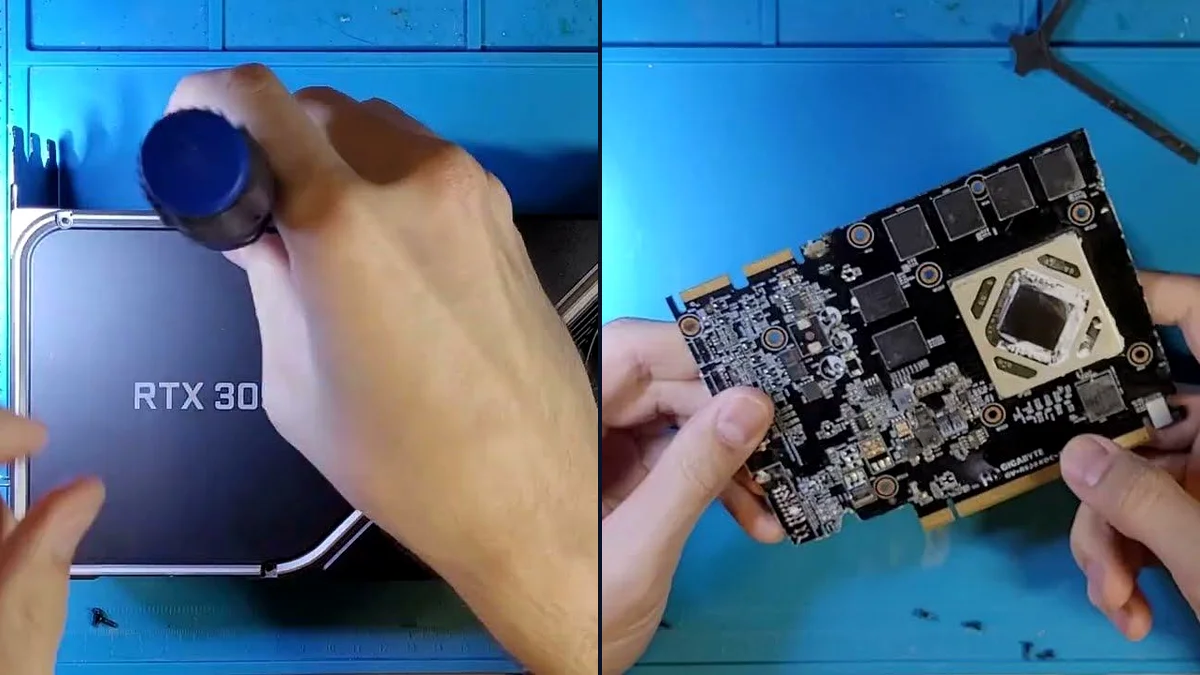
Buying a "for parts or not working" graphics card on the secondhand market always carries a degree of risk, yet some discoveries defy basic logic. After picking up what was listed on Facebook Marketplace as a broken NVIDIA GeForce RTX 3090 Founders Edition for $50, hardware repair creator Blighted Agent expected to salvage an official NVIDIA cooling assembly and a bare circuit board stripped of its GPU core. Upon unscrewing the heavy Founders Edition shroud, he instead uncovered a bizarre hardware mashup: the printed circuit board of a decade-old Gigabyte Radeon R9 280, physically sawed in half to wedge inside the NVIDIA frame.
A $50 "For Parts" Listing and Immediate Exterior Red Flags
In the board-level repair community, buying dead flagship graphics cards for donor components is routine. Over the past few years, specialized workshops have bought up thousands of GeForce RTX 3090 and RTX 4090 units to desolder their GPU dies (the GA102 core on the 3090) and 24 GB of GDDR6X memory, transplanting them onto blower-style AI server boards. The leftover husks , consisting of the original heatsink and the bare, V-shaped NVIDIA PG136 PCB , are typically sold off for around $50 to $100 so technicians can harvest MOSFETs, VRM controllers, and connectors.
That was the exact scenario Blighted Agent anticipated when paying $50 for a listing that disclosed the GPU and VRAM chips were likely missing. However, the moment the card hit his workbench, several glaring red flags appeared before a single screw was turned:
- A glued-shut NVLink cover: Along the top edge of the die-cast aluminum frame, the removable NVLink finger cover had been glued in place to prevent anyone from peeking underneath.
- Hollowed-out display and power bays: Looking through the perforated PCIe I/O bracket and the 12-pin power cutout revealed empty space , not a single HDMI 2.1 port, DisplayPort 1.4a connector, or power header was attached Inside.
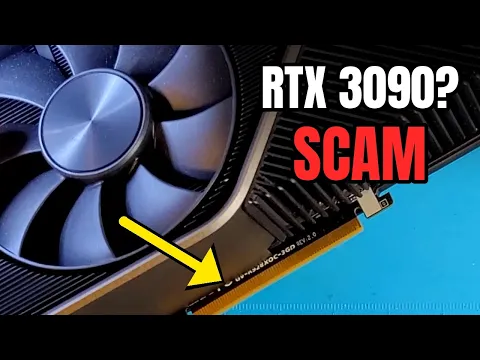
- The silkscreen giveaway: Right above the golden PCIe x16 edge fingers, the PCB solder mask had a glossy finish rather than NVIDIA's signature matte black coat, complete with bold white lettering reading GIGABYTE GV-R928XOC-3GD REV: 2.0.
This kind of physical component swapping echoes other brazen hardware counterfeits spotted recently, including the brazen Ryzen 9 9950X3D2 return scam that grafted an AMD heatspreader onto an old Intel processor.
Sawing a 2014 Radeon R9 280 Board to Fit NVIDIA's V-Shaped Cooler
Once the backplate and cooler shroud were lifted away, the full scale of the chop job became clear. Instead of NVIDIA's compact, irregular V-shaped PG136 circuit board , specifically engineered so the rear flow-through fan can push air unimpeded through the heatsink fins , the shell housed the mutilated remains of a Gigabyte Radeon R9 280 / R9 280X WindForce 3GB, an AMD Graphics Core Next (GCN) card built around the 28nm Tahiti GPU from 2013-2014.
Because a standard full-length rectangular Radeon R9 280 board could never clear the internal standoffs and V-shaped heatsink walls of an RTX 3090 Founders Edition, the scammer took a cutting blade to the fiberglass board and physically sawed the PCB down to size:
- Sheared right-hand VRM section: The entire right side of the board , which originally held the multi-phase VRM power delivery and PCIe power connectors , was sawed straight off right up against the memory pads and the retention bracket, slicing through part of the PCIe x16 connector in the process.
- Trimmed top edge with CrossFire fingers intact: The upper border of the PCB was hacked away so it wouldn't protrude past the NVIDIA shroud, though the two legacy AMD CrossFire bridge fingers on the top left were left untouched.
- Partially stripped silicon: Remarkably, the angled 45-degree AMD Tahiti GPU die (surrounded by its metal shim) was still soldered in the center of the board, while 5 of its 12 GDDR5 memory chips had been desoldered and all rear display outputs had been sheared off.
| Inspected Feature | Expected (RTX 3090 FE Donor Shell) | Actual Teardown Discovery |
|---|---|---|
| PCB Model Number | NVIDIA PG136 (native V-shaped cutout) | Gigabyte GV-R928XOC-3GD Rev 2.0 (Radeon R9 280/280X) |
| Era & Architecture | 2020 (NVIDIA Ampere GA102, 8nm) | 2013/2014 (AMD GCN Tahiti, 28nm) |
| Board Condition | Intact donor PCB missing GPU/GDDR6X | Right flank and top edge sawed off, 5 GDDR5 chips removed |
| External Interfaces | NVLink, 12-pin power, HDMI 2.1 / DP 1.4a | Glued NVLink cap, sheared display ports, dual CrossFire fingers |
2026 GPU Market Pressures: 4 Checks Before Buying a Used Graphics Card
The surge in harvested and disguised graphics cards on peer-to-peer marketplaces is directly tied to the state of the hardware market in November 2026. With soaring GDDR7 memory contract costs driving steep retail price hikes across GeForce RTX 5080 and RTX 5070 Ti lineups, more PC builders are hunting for secondhand 90-class cards (RTX 3090, RTX 4090, and RTX 5090).
Before handing over cash for a pre-owned GPU, four quick physical and software checks will immediately expose a gutted or swapped board:
- Check the silkscreen above the PCIe x16 fingers: Every authentic Founders Edition and AIB partner board carries a model code just above the gold PCIe contacts. Spotting a third-party prefix like
GV-R9...under an NVIDIA Founders Edition shroud is an instant dealbreaker. - Shine a flashlight into the I/O bracket and power header: Verify that the DisplayPort/HDMI housings and the 12VHPWR or 12V-2x6 power receptacle are physically present and soldered to an internal board rather than staring into an empty heatsink cavity.
- Inspect the rear GPU capacitor array: When the backplate cutout exposes the rear of the GPU core, the layout of the MLCC and SP-Cap filtering capacitors immediately confirms whether the proper architecture , and the silicon itself , is still mounted.
- Insist on a live GPU-Z stress test or buyer protection: For any card sold as working, never pay cash in person without seeing it run a 3D load while verifying the shader count, ROPs, and VRAM capacity in GPU-Z.
For builders who prefer to skip the secondhand lottery altogether and secure a factory-sealed Blackwell card backed by a full manufacturer warranty, 16 GB GDDR7 partner models remain the safest sweet spot for high-refresh 1440p and 4K gaming:
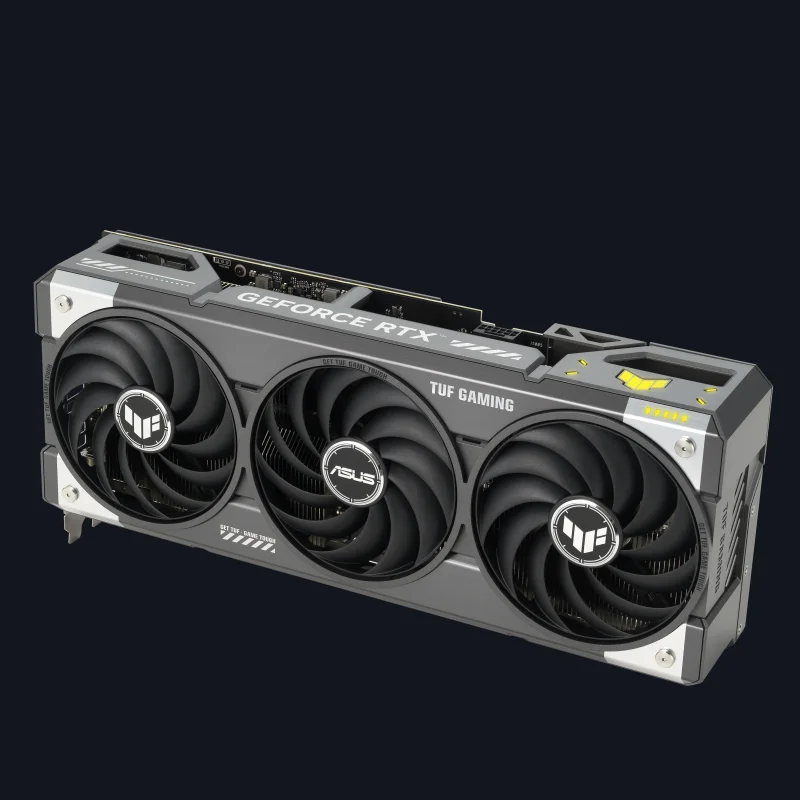
ASUS TUF Gaming GeForce RTX 5070 Ti OC Edition (16 GB GDDR7)
- NVIDIA Blackwell architecture with full DLSS 4 and Multi Frame Generation support
- 16 GB GDDR7 VRAM across a 256-bit memory interface
- Triple Axial-tech fan cooling assembly with military-grade TUF capacitors
- Factory-sealed retail unit with official warranty (zero risk of harvested cores or swapped PCBs)
My Take on the Spec Sheet
We have seen plenty of RTX 3090 and RTX 4090 husks come back from AI harvesting workshops with missing GA102 or AD102 cores, but taking a hacksaw to a 2014 Gigabyte Radeon R9 280 just to force a rectangular PCB into NVIDIA's V-shaped Founders Edition cooler is on another level. What makes this teardown almost comical is the sheer amount of effort wasted: someone inhaled fiberglass dust sawing through multi-layer copper traces and glued the NVLink cap shut just so a strip of dark board would show at the PCIe slot , while leaving the white GV-R928XOC-3GD model stamp sitting in plain sight right above the gold pins. We have not yet had a physical unit on our desk,if the manufacturer's team would like to send over a review sample so we can put it through our full real-world testing protocol, our lab doors are wide open.
The silver lining for Blighted Agent is that at $50, he actually came out ahead. On the spare parts market, a clean, intact NVIDIA GeForce RTX 3090 Founders Edition cooler and backplate assembly easily sells for $80 to $120 to owners looking to replace a dead fan or scratched shroud. Still, for anyone browsing local listings for a supposedly "untested" flagship GPU without buyer protection, it is a textbook reminder: spending five seconds with a flashlight checking the PCIe edge stamp and the display ports will save you from buying a sawed-up relic from the GCN era.

PC hardware enthusiast and competitive gamer, Arthur 'Heimdall' splits his time between France and the UK working in enterprise B2B software solutions. A business school graduate passionate about component benchmarking, he has been building, modding, and tuning PCs since childhood, optimizing every thermal degree and millisecond of display latency. An avid gamer across Assassin's Creed and sandbox titles, he forged his alliance with Grimtag and Chaya during late-night World of Warcraft raids before joining Pro-Gamer.