Built-In Internal Storage and Memory Added for "Future Functionality": Sony Rebrands the PlayStation Portal Player Without Saying What It's For
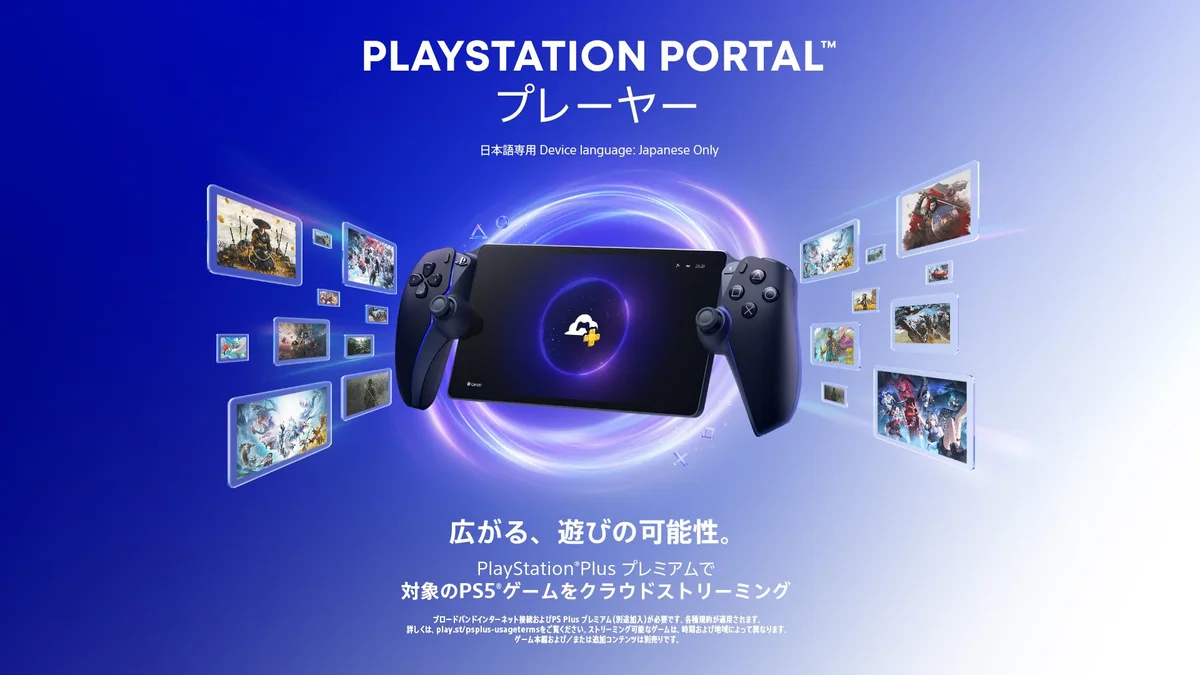
A single line tucked inside a hardware announcement just changed the trajectory of Sony's handheld strategy. On Monday, November 9, 2026, Sony Interactive Entertainment officially unveiled a revised model of its streaming handheld on the official PlayStation.Blog, dropping the "Remote Player" label to rebrand the device simply as the PlayStation Portal Player. Most notably, the new revision introduces built-in internal storage and onboard memory for the first time, even though Sony refuses to explain what it will actually do.
Internal Storage Added With "Future Functionality" in Mind
When the original PlayStation Portal handheld launched in November 2023, it shipped with zero user-accessible storage beyond the tiny system partition required for its operating firmware. Because the unit was engineered strictly to decode a real-time video feed beamed over Wi-Fi from a home PlayStation 5 console, onboard gigabytes were completely unnecessary.
With this new Midnight Black hardware revision, Sony has quietly altered the internal board layout. In its official announcement, the company states: "With future functionality in mind, internal storage has been newly added to the new model. Details regarding these upcoming features will be announced as soon as they are finalized." Curiously, Sony has not disclosed the exact gigabyte capacity on the spec sheet.
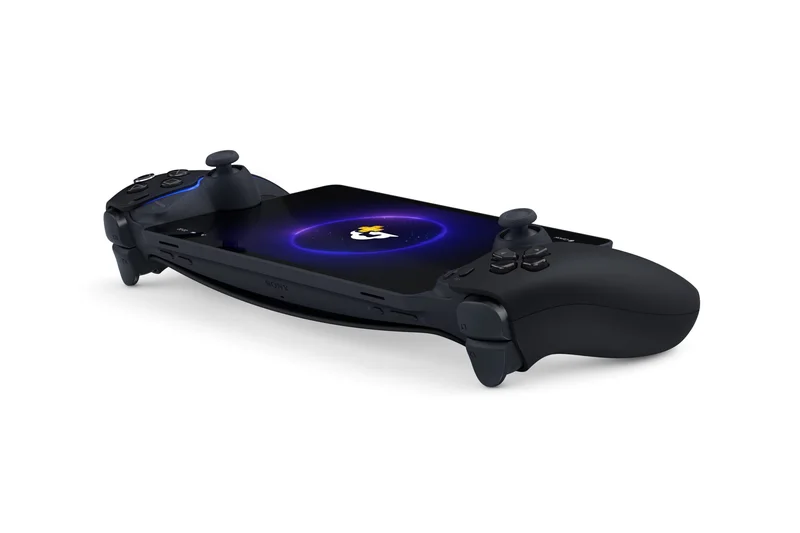
PlayStation Portal Midnight Black (PS5)
- 8-inch 1080p 60fps LCD display
- DualSense haptic feedback and adaptive triggers
- PS5 Remote Play and PS Plus Premium Cloud Streaming
- New hardware revision adds built-in storage (Dec 10 in Japan)
Dropping "Remote Player" as Cloud Streaming Takes Center Stage
The hardware tweak goes hand in hand with a deliberate branding shift. By stripping "Remote" from the name to become the PlayStation Portal Player, Sony is highlighting how the device has evolved since adding direct cloud streaming support through PlayStation Plus Premium. Players no longer need to own a PS5 console to use the handheld; subscribers can stream thousands of compatible PS5 games directly from Sony's cloud servers over Wi-Fi, a pillar that aligns closely with Sony's recent GPU AI patent designed to cut cloud gaming latency.

However, hardware enthusiasts hoping that this holiday update would deliver the rumored Wi-Fi Alliance certified PlayStation Portal OLED upgrade will need to wait a bit longer. Sony confirmed that this December 2026 model retains the standard 8-inch 1080p LCD screen running at 60fps, alongside full DualSense wireless controller features including haptic feedback, adaptive triggers, and 3D Audio support over a broadband Wi-Fi connection (minimum 5 Mbps required, 15 Mbps recommended).
Three Technical Possibilities for the Mystery Onboard Storage
Why would hardware engineers spend bill-of-materials budget adding NAND flash memory to a cloud streaming handheld before the software is even ready to use it? From a systems architecture standpoint, three realistic use cases stand out:
- Advanced Cloud Buffering and Local Media Capture: Storing pre-compiled UI assets, system caches, screenshots, and 1080p gameplay clips locally on the device without relying on a paired PS5 console, while smoothing out brief Wi-Fi packet drops.
- Native Media and Streaming Apps: The original Portal lacked any way to install standalone entertainment apps like Sony Pictures Core, Crunchyroll, YouTube, or Netflix, preventing users from caching episodes for flights or commutes.
- Offline Caching for Lightweight Classic Games: The PlayStation Plus Premium Classics Catalog includes PS1 and PSP titles that weigh between a few hundred megabytes and under 2 GB. Local storage could theoretically allow the Portal's Snapdragon chip to cache or run lightweight retro titles without tying up a cloud server blade.
Release Date, Pricing, and Japan Account Restrictions
Initially, Sony is rolling out the PlayStation Portal Player Midnight Black (Japanese-Language Edition) using the same region-locked playbook as its domestic PS5 Digital Edition. The handheld launches in Japan on Thursday, December 10, 2026, priced at 39,980 yen (around $260 USD including tax), and bundles a one-month voucher for PlayStation Plus Premium. Pre-orders open across Japanese retailers on Friday, November 13 at 10:00 AM JST.
Importers should tread carefully: Sony explicitly notes that this model's system language is locked to Japanese and only functions with a PlayStation Network account registered to the Japan region. While Sony has yet to announce when this storage-equipped board revision will replace Western retail stock (currently priced at $199.99), manufacturing economics suggest this updated motherboard will become the global baseline in 2027.
My Take on the Spec Sheet
From a hardware engineering perspective, console makers never revise a mainboard and solder extra flash storage onto the PCB without a concrete firmware roadmap waiting in the wings. As I was discussing with Chayane earlier today regarding the evolution of the PlayStation Plus catalog, dropping "Remote" from the box while adding local storage feels like a stepping stone toward Sony's rumored standalone portable ecosystem. Even if this memory is initially reserved for local media captures, streaming app caches, or lightweight PS1 and PSP classics, it addresses the Portal's biggest design bottleneck: turning into an unusable paperweight the moment your Wi-Fi drops. We have not yet had a physical unit on our desk, so if the manufacturer's team would like to send over a review sample so we can put it through our full real-world testing protocol, our lab doors are wide open.

PC hardware enthusiast and competitive gamer, Arthur 'Heimdall' splits his time between France and the UK working in enterprise B2B software solutions. A business school graduate passionate about component benchmarking, he has been building, modding, and tuning PCs since childhood, optimizing every thermal degree and millisecond of display latency. An avid gamer across Assassin's Creed and sandbox titles, he forged his alliance with Grimtag and Chaya during late-night World of Warcraft raids before joining Pro-Gamer.