PlayStation 1 Classic Digimon World Is Getting a Free Fan Remake in Godot With 260 Digimon and Mega Evolutions
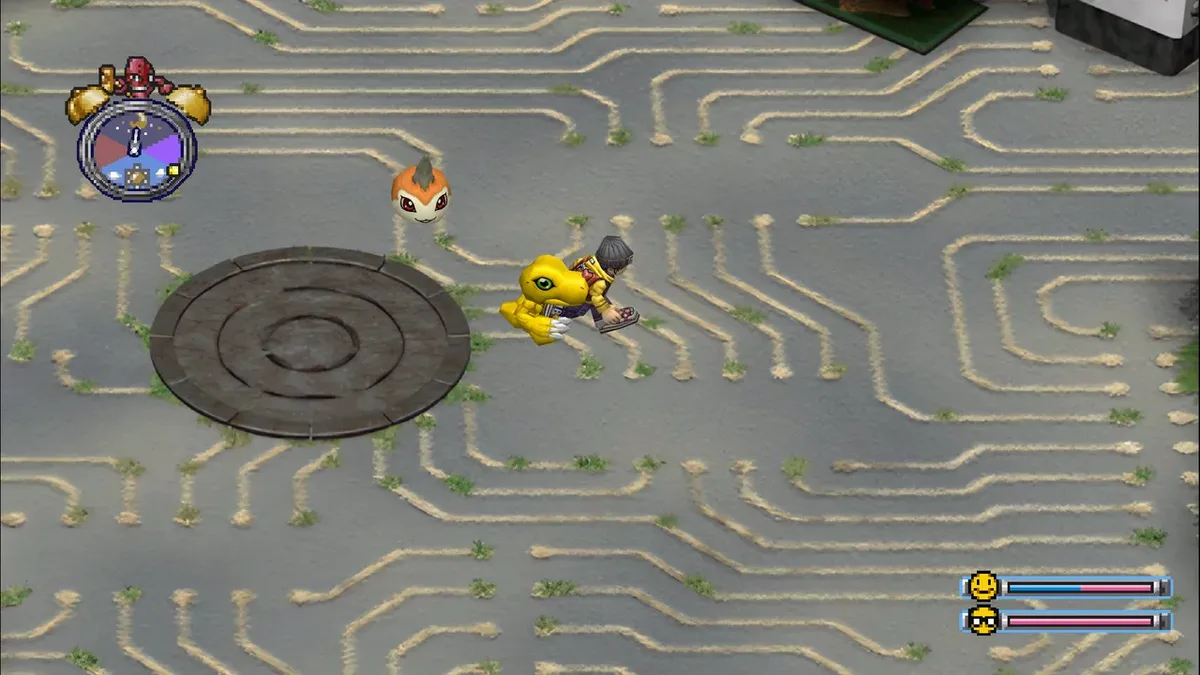
Released in 1999 for the original PlayStation, Digimon World defined an entire generation of monster-taming fans with its demanding virtual pet mechanics, open-ended exploration across File Island, and city-building progression in File City. Now, an ambitious community project called Digimon World Forge is rebuilding the 32-bit cult classic from start to finish for PC (Windows) in a modern engine while shattering the hardware limitations of the original disc.

From PlayStation Reverse-Engineering to the Godot Engine: 100% Free and Legal
Developed solo in his spare time by creator Martín Muñoz, Digimon World Forge stands on the shoulders of years of reverse-engineering and decompilation work by the Digimon World modding community, including foundational projects by SydMontague (DW1-SydPatches), Vicen04 (the Vice overhaul), and jype (dw_decomp). After starting work directly on the original PlayStation code in June 2026 and hitting strict memory ceilings, Muñoz made the call on July 26 to migrate the entire project to the open-source Godot engine.
Much like recent preservation breakthroughs that allowed Forza Horizon 2 to finally run natively on PC in 4K at 60 FPS without heavy emulation, Digimon World Forge takes a clean, copyright-safe approach. The download is completely free, non-profit, and contains zero proprietary Bandai Namco assets: upon launch, the software reads the player's own copy of the PlayStation 1 game (US version) to extract all 241 maps, 3D models, music tracks, and data tables on the fly.
260 Raisable Digimon, Mega and Armor Stages, and Transparent Evolution Rules
Right from the start menu, players can choose between two distinct modes. Vanilla mode preserves the 1999 release rule for rule and bug for bug, while Forge mode unlocks a massive content expansion alongside fixes for ten notorious bugs from the original game (plus menu saving, autosave, and fast-travel shortcuts).
The centerpiece of Forge mode is its dramatically expanded roster. While the 1999 PlayStation release capped out at 64 playable creatures and ended at the Ultimate stage, Digimon World Forge brings the roster to 260 raisable Digimon:
- All 64 original Digimon from the 1999 release;
- 46 unobtainable species from the Digimon World 1 disc that previously only appeared as NPCs or wild enemies;
- 150 additional Digimon brought over from other PlayStation-era entries (Digimon World 2, Digimon World 3, and Digimon Digital Card Battle), with their 3D meshes, animations, and signature finishers fitted by hand onto the DW1 skeleton;
- 34 Mega-level (Level 6) Digimon, allowing all nine iconic partner lines from the Digimon Adventure anime to reach their true final forms (including WarGreymon, MetalGarurumon, Seraphimon, Rosemon, Omnimon, and Gallantmon), plus 13 Armor evolutions from Adventure 02 (from Flamedramon to Magnamon);
- 28 alternate evolutions triggered by environment, care, or items: raising an Agumon in the freezing cold of Freezeland can turn it into SnowAgumon, while Ogremon can branch into Hyogamon or Fugamon.
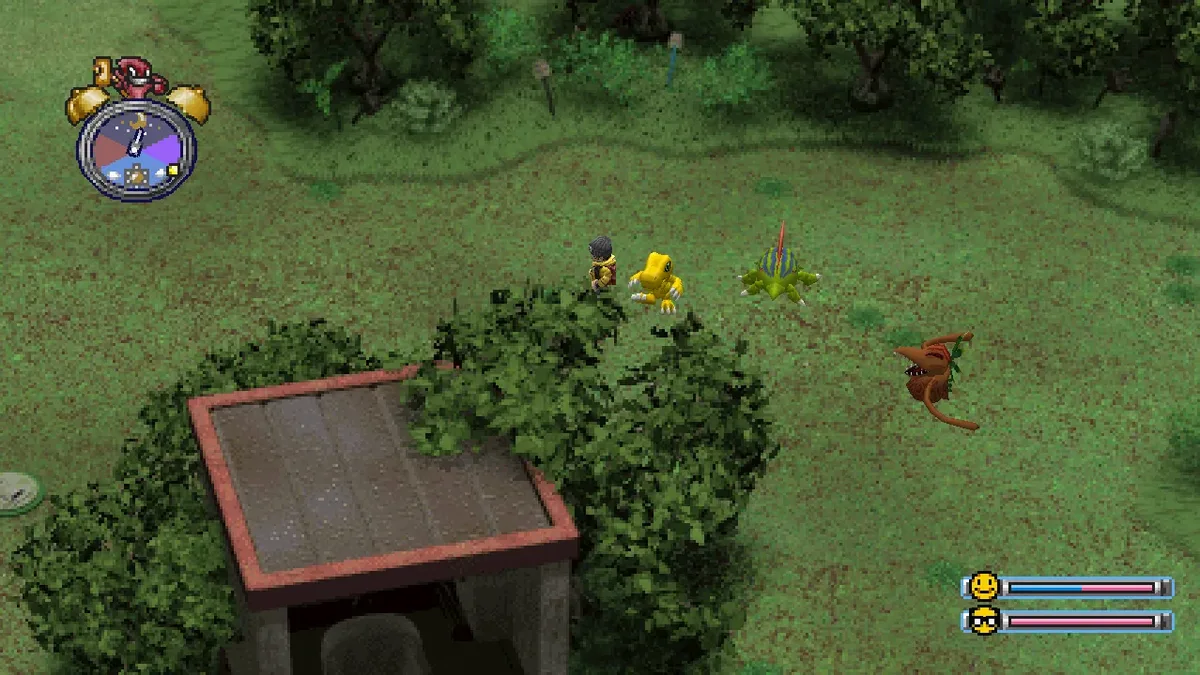
True 16:9 Widescreen, Live Anime Evolution Scenes, and Offline "DigiEgo" Memory
Visually, the remake moves beyond the cramped 4:3 320×240 frame to deliver true 16:9 widescreen across 222 of the island's 241 maps, rendering 3D models at native monitor resolution. A built-in option called Forge HD uses the player's GPU to upscale the pre-rendered backgrounds, character portraits, and UI elements directly from their game disc in the background while playing (at a pace of two to three maps per minute), complete with a grain toggle that restores the classic PlayStation dithering effect. Players can also switch between three evolution cutscenes: the classic 1999 spinning chamber, a live 3D recreation of the Digimon Adventure anime evolution sequence (complete with the Digivice and code tunnel), and a special golden sequence when reaching Mega.
For players who still have nightmares about accidentally raising a Sukamon or Numemon, an optional Extended Info tab can be toggled on at any time from the Options menu. Switched off by default to preserve the classic mystery, this screen reveals care mistakes, battles, happiness, discipline, remaining lifespan, sleeping and feeding hours, and the four exact criteria (care, weight, stats, and bonus) required for every possible evolution branch. Jijimon's house also adds 16 new unlockable Digitama eggs, customizable player avatars imported from Digimon World 2, four difficulty settings, a seeded Randomizer, and nine challenge modes including a permadeath Nuzlocke rule.
Outside of combat, a new five-heart Bond system rewards spending quality time with your partner and carries bonuses over to the next generation. It is paired with an optional, switched-off-by-default feature called DigiEgo: running entirely offline on the player's PC with zero internet connection required, it gives each species a distinct personality and memory so your partner recalls yesterday's tournament win, its favorite meal, or shivering in Freezeland.
A Thriving Era for Digimon Fans Across PC and Consoles
According to the project's official roadmap, Digimon World Forge reached its "Mega" development milestone in mid-October 2026: the entire base game is now playable from the opening cutscene all the way to the Machinedramon finale and end credits in both Vanilla and Forge modes. Muñoz is currently completing full end-to-end playthrough comparisons against the PS1 original before releasing the first public build (shipping in English, Spanish, Portuguese, and Simplified Chinese). A planned "Stage 2" post-launch update will expand File Island even further with post-Analogman story arcs, the Mega Cup, DNA Evolution, and the ability to raise two partners simultaneously.
In a week where classic PlayStation preservation has already made headlines with the surprise return of PS2 classic Fantavision 202X on PS5 and Steam, this community remake highlights the enduring passion surrounding the franchise alongside Bandai Namco's official lineup led by Digimon Story: Time Stranger and Digimon World: Next Order.
My Take: The Ultimate Love Letter to 1999's Most Misunderstood Classic
Anyone who put the black Digimon World disc into an original grey PlayStation back in 1999 remembers both the magic of exploring File Island and the sheer frustration of its cryptic evolution mechanics. What impresses me most about Martín Muñoz's work on Digimon World Forge is how thoughtfully every modern addition has been designed in Godot as an optional toggle. Being able to switch on the Extended Info tab to actually see your care mistakes and evolution requirements without keeping a spreadsheet open on a second monitor, while finally unlocking 34 Mega evolutions that the original game sorely lacked, turns a rough 32-bit gem into the definitive monster-raising RPG we dreamed about as kids. Requiring the player's own PS1 disc and running both its HD upscaler and optional DigiEgo memory completely offline on local hardware is the smartest way to preserve and celebrate a timeless classic.

SEO consultant for over 20 years and digital entrepreneur, Charles 'Grimtag' Ronchain is the founder of Pro-Gamer.gg, Retrocharting.com, and Gamescharting.com. A competitive gamer, streamer, and retro game collector, he has worked in the video game industry for over 15 years, notably as a consultant for leading game price comparison platforms. Passionate about real-time performance data and gaming technology, he analyzes competitive esports, gaming hardware benchmarks, and creator workflows on Pro-Gamer.gg with an authentic player perspective.