Overclocking Locked Non-K Intel Processors via BCLK: Ten Years After the Microcode Ban, a BIOS Mod Revives ASRock’s SkyOC on Z390
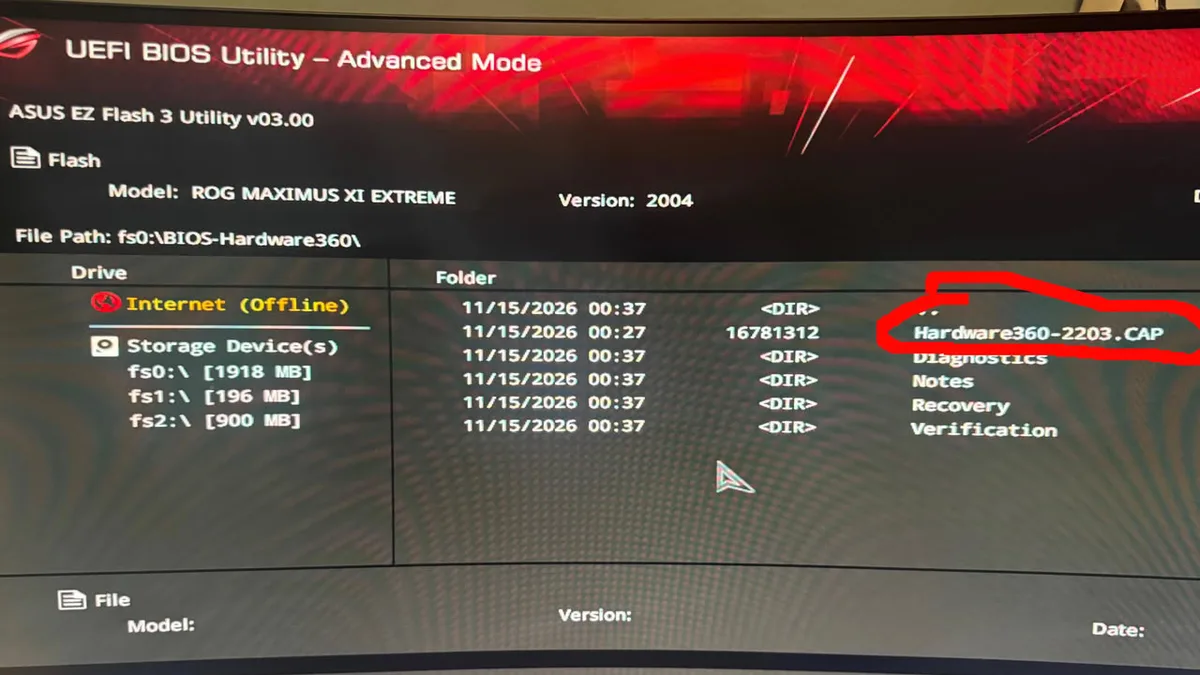
Ten years after Intel clamped down on sixth-generation motherboard workarounds, one of PC hardware's most famous firmware tricks is attempting an unofficial comeback. Spanish creator and hardware modder Hardware 360° (@360_Hardware) has extracted the legacy SkyOC routines from historical ASRock firmware and transplanted them into a modified UEFI BIOS for an ASUS ROG Maximus XI Extreme (Intel Z390) motherboard. The goal is to bypass the hard-coded restriction that prevents Base Clock (BCLK) overclocking on locked, non-K Intel processors.
Why Intel Shuts Down Locked Non-K Processors Above a 103 MHz BCLK
For over a decade, Intel has restricted multiplier-based overclocking to its pricier "K" and "KF" series processors paired with Z-series chipsets. Technically, locked non-K chips can still be pushed past their factory speeds by raising the motherboard's Base Clock (BCLK), which runs at 100 MHz by default.
On entry-level and mid-range motherboards, raising the BCLK scales the entire platform simultaneously, pushing the PCIe bus, DMI link, and system memory out of specification. High-end enthusiast boards, however, frequently include an independent external clock generator that isolates the CPU reference clock from the rest of the motherboard. To block users from exploiting this hardware capability on locked silicon, Intel enforced a strict microcode hard-limit: as soon as a non-K processor detects a BCLK exceeding 103 MHz, it triggers an immediate protection trip and shuts the system down.
ASRock SkyOC's 2015 Legacy: Spoofed Clock Reporting and Architectural Trade-Offs
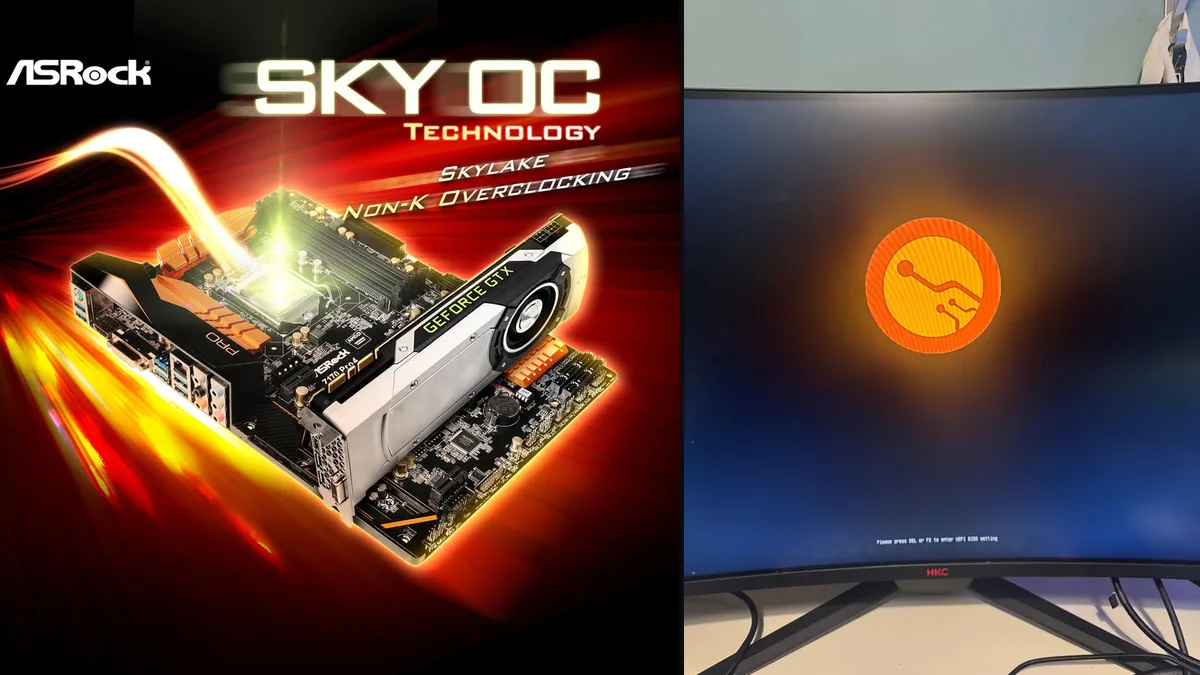
In late 2015, shortly after the launch of 6th-generation Intel Skylake processors on the LGA1151 socket, ASRock engineers devised a clever firmware workaround. Introduced as SkyOC across its Z170 motherboard lineup (such as the Z170 Pro4), the feature bypassed the 103 MHz barrier by feeding the processor a false BCLK frequency report. While the external clock generator drove the cores well past stock speeds, the CPU received a masked reading that remained within Intel's allowed threshold.
Bypassing internal power-management loops came with significant technical trade-offs documented at the time:
- Complete C-States Disablement: With low-power idle states disabled, the processor ran continuously at its maximum target frequency and voltage.
- Disabled Integrated Graphics (iGPU): Activating SkyOC completely turned off the processor's built-in graphics unit, requiring a dedicated graphics card to boot.
- Severe AVX Performance Penalty: Workloads relying on Advanced Vector Extensions instructions suffered major slowdowns due to disrupted microcode execution paths.
- Loss of Per-Core Temperature Polling: Software utilities could no longer read individual core temperatures, forcing users to monitor only the overall CPU Package thermal sensor.
By early 2016, Intel intervened with a mandatory microcode update, compelling ASRock to strip SkyOC out of subsequent BIOS releases across its entire motherboard catalog.
Decompiling Firmware with GPT Astra and Porting to the ASUS ROG Maximus XI Extreme (Z390)
That exact gap between two historical firmware revisions gave Hardware 360° a starting point. Using the AI analysis tool GPT Astra, the modder decompiled and compared two legacy ASRock Z170 BIOS files: the final release featuring SkyOC from late 2015 and the subsequent early 2016 update where the feature was removed. Differential analysis isolated the binary code responsible for spoofing the BCLK readout sent to the CPU.
Once isolated, Hardware 360° ported and recompiled those routines into a custom firmware image (named Hardware360-2203.CAP, weighing 16,781,312 bytes or 16 MB, built on top of BIOS version 2004) for his ASUS ROG Maximus XI Extreme. Built around the Intel Z390 chipset for 8th- and 9th-generation Coffee Lake processors, the flagship board features an independent clock generator suited for BCLK manipulation, reflecting the same spirit of hardware experimentation seen when enthusiasts and manufacturers repurpose PCIe 5.0 SSD pSLC caches to assist system DDR5 memory.
| Specification | Original ASRock SkyOC (2015) | Hardware 360° BIOS Mod (2026) |
|---|---|---|
| Target Platform | ASRock Z170 Motherboards (6th-Gen Skylake) | ASUS ROG Maximus XI Extreme Z390 (8th/9th-Gen Coffee Lake) |
| Unlock Mechanism | Spoofed BCLK reporting past the 103 MHz limit | Binary port via GPT Astra differential decompilation |
| Firmware & Flashing | Official vendor beta BIOS (removed early 2016) | Hardware360-2203.CAP (16 MB) via ASUS EZ Flash 3 v03.00 |
| Current Status | Blocked by Intel microcode update | Flashed and POSTed successfully; OS BCLK testing pending |
Flashed through ASUS EZ Flash 3 Utility v03.00 from an external storage drive, the modified firmware cleared the critical power-on self-test (POST) stage, displaying Hardware 360°'s custom boot logo without bricking the motherboard. The decisive phase now lies in operating-system validation: because newer Intel architectures employ different clock-management mechanisms and tighter microcode checks, proving stable non-K BCLK scaling above 103 MHz under load remains the next hurdle to clear.
My Field Notes
I still remember the Z170 era fondly, when flashing a SkyOC BIOS could turn a budget locked Core i5-6400 into a gaming workhorse that traded blows with far pricier unlocked chips. Using differential decompilation to isolate ASRock's original BCLK spoofing code and successfully booting it on an ASUS ROG Maximus XI Extreme without bricking the board is a bold feat of reverse engineering. Even with the inherent hardware risks of flashing AI-assisted binary mods and Intel's much stricter modern clock management, I love seeing community modders keep this hands-on spirit of low-level tinkering alive.

Originally from Lyon, France, gaming journalist Bastien "Orion" relocated nearly a decade ago to Quebec City's Saint-Roch district, right in the heart of eastern Canada's development studio hub. Before crossing the Atlantic, he honed his versatile reporting style across classic French gaming web portals and specialist television outlets in the 2000s and 2010s, notably with JeuxVideo.fr and JeuxNews. Equally passionate about AAA blockbusters, North American studio culture, retro preservation, and community modding projects, he anchors Pro-Gamer's transatlantic desk and real-time coverage of US and Japanese industry announcements.