Multi-Frame Generation and Ray Reconstruction: How AMD FSR Diamond Counters Nvidia DLSS 4 Across PC and Project Helix
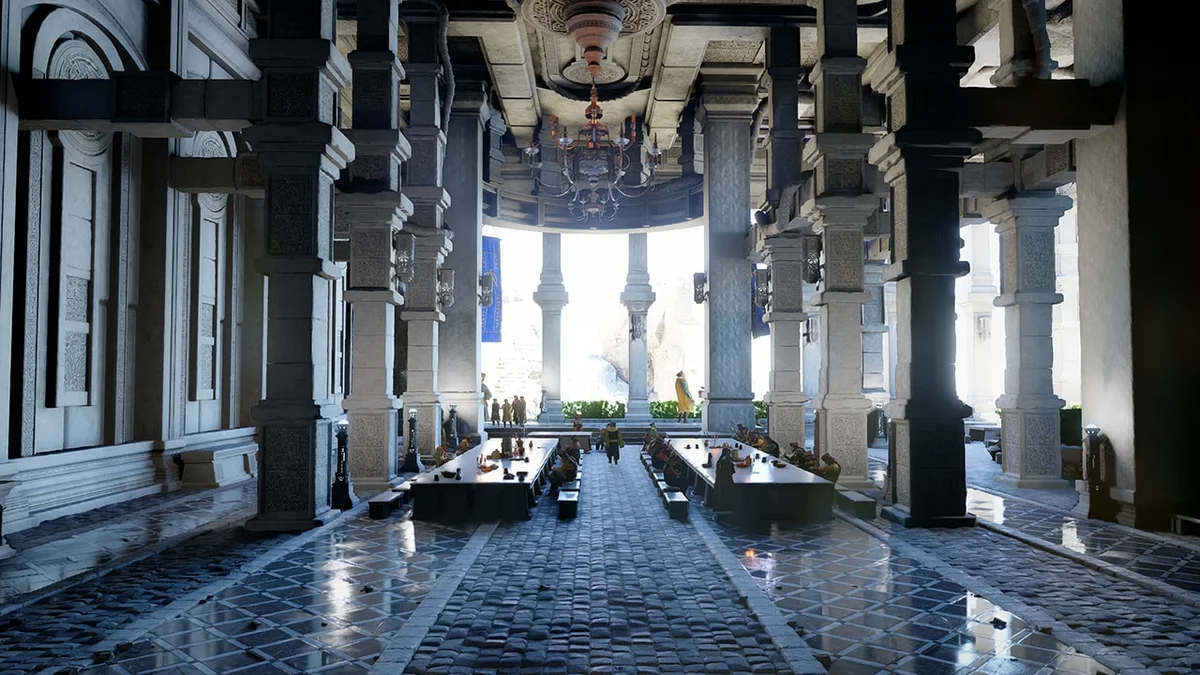
After years of relying on open spatial and temporal algorithms to maintain broad hardware compatibility, AMD is executing a fundamental architectural pivot. Co-engineered closely with Microsoft for its upcoming next-generation Project Helix hardware ecosystem, the newly detailed AMD FSR Diamond suite marks a full transition toward hardware-accelerated neural rendering. By combining machine learning super resolution, Multi-Frame Generation, and neural Ray Reconstruction under one roof, AMD is positioning its graphics pipeline to go toe-to-toe with Nvidia's DLSS 4.
Three Neural Pillars Built for Dedicated Matrix Hardware
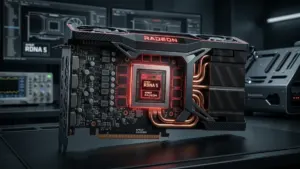
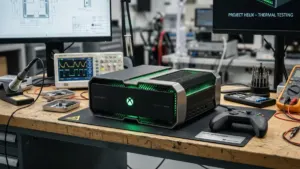
Unlike legacy FidelityFX Super Resolution releases that ran on standard shader workloads, FSR Diamond is designed from the ground up to utilize dedicated hardware matrix cores built directly into next-generation system-on-chips (SoCs) and discrete GPUs. Outlined by Xbox Chief Technology Officer Scott Van Vliet and Microsoft Gaming CEO Asha Sharma alongside Jack Huynh (AMD Senior Vice President and General Manager of Computing and Graphics), the technology is natively woven into the Microsoft Game Development Kit (GDK) for Project Helix devices and future RDNA 5 architectures.
The FSR Diamond architecture rests on three core machine-learning pillars:
- Machine Learning Upscaling: Dedicated matrix accelerators reconstruct crisp 4K frames from lower internal base resolutions such as 1080p, eliminating the fine-geometry shimmering and temporal ghosting trails that affected older analytical upscalers.
- Multi-Frame Generation (MFG): Moving past traditional 2x single-frame interpolation, FSR Diamond's neural network processes per-pixel motion vectors and optical flow fields to predict and synthesize multiple intermediate frames sequentially in real time.
- Ray Reconstruction and Ray Regeneration: A real-time machine-learning denoiser that replaces traditional hand-tuned analytical denoisers, transforming sparse and noisy ray-traced samples into clean, temporally stable lighting.
This deep silicon partnership also reflects Microsoft's broader company-wide pivot toward artificial intelligence, channeling massive R&D resources into neural graphics and a unified hybrid architecture bridging Xbox and PC libraries.
Multi-Frame Generation: Scaling From 40 FPS Baselines Up to Experimental 8x Ratios
For demanding path-traced titles, Multi-Frame Generation is the centerpiece of the FSR Diamond package. By predicting multiple synthetic frames between rendered frames, the neural model can scale a heavy 40 FPS internal render up to a smooth 120 FPS output, giving players the headroom needed to saturate a 240Hz QD-OLED gaming monitor without disabling hardware ray tracing.
Under the hood on PC, strings uncovered within the ADLX (AMD Device Library eXtra) framework have already revealed experimental MfgRatio parameters spanning from 1x all the way up to 8x multipliers. While extreme multipliers remain experimental testbeds, integrating multi-frame pacing and latency management directly at the GDK and driver level gives AMD a direct architectural answer to Nvidia's multi-frame pipeline.
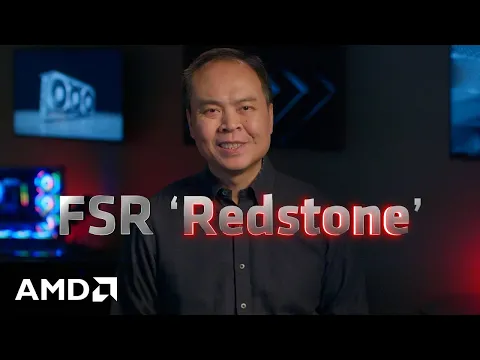
Ray Regeneration on GPUOpen: Decoupled Denoising Laying the Groundwork on RDNA 4
While the full FSR Diamond suite targets upcoming RDNA 5 silicon and Microsoft's Project Helix lineup, PC builders running current AMD Radeon RX 9000 Series (RDNA 4) graphics cards are already seeing the foundational blocks roll out via the FSR Redstone suite on GPUOpen.
Running on DirectX 12 and Shader Model 6.6, FSR Ray Regeneration introduces a critical advantage for game studios: it is completely decoupled from upscaling. Developers can drop AMD's neural denoiser into their rendering pipeline as a standalone module, whether a player is running native resolution or a third-party upscaler. Paired with Neural Radiance Caching, it preserves sharp reflections, contact shadows, and global illumination detail without the heavy performance penalty of casting extra rays per pixel. Meanwhile, AMD and Microsoft are also bringing a tailored FSR 4.1 machine-learning upscaler to existing Xbox Series X|S consoles and ROG Xbox Ally handhelds.
Check Availability for AMD Radeon RX on Amazon→
My Test Bench
For years, I watched AMD cling to shader-based spatial and temporal upscaling while Nvidia pulled ahead in image stability and path-traced denoising through dedicated Tensor hardware. With FSR Diamond and the groundwork already live in FSR Redstone on RDNA 4, Jack Huynh's engineering team is finally addressing Radeon's biggest blind spot head-on. What stands out to me most from a technical standpoint is the decision to keep Ray Regeneration decoupled from the upscaler on GPUOpen. Giving developers a modular neural denoiser instead of locking it inside a monolithic black box is a smart play for PC adoption. Still, no neural network can cheat the laws of input latency: synthesizing three or four intermediate frames only feels responsive if your GPU can maintain a solid 50 to 60 FPS native baseline before frame generation kicks in. And if the manufacturer's team happens to read this, please don't hesitate to reach out to us so we can put this hardware through a full hands-on review on Pro-Gamer!

PC hardware enthusiast and competitive gamer, Arthur 'Heimdall' splits his time between France and the UK working in enterprise B2B software solutions. A business school graduate passionate about component benchmarking, he has been building, modding, and tuning PCs since childhood, optimizing every thermal degree and millisecond of display latency. An avid gamer across Assassin's Creed and sandbox titles, he forged his alliance with Grimtag and Chaya during late-night World of Warcraft raids before joining Pro-Gamer.