PSSR 2 at 2 ms vs QSSR at 4.4 ms: How the PS5 Pro 300 TOPS GPU Doubles 4K Upscaling Speed Over Base PS5
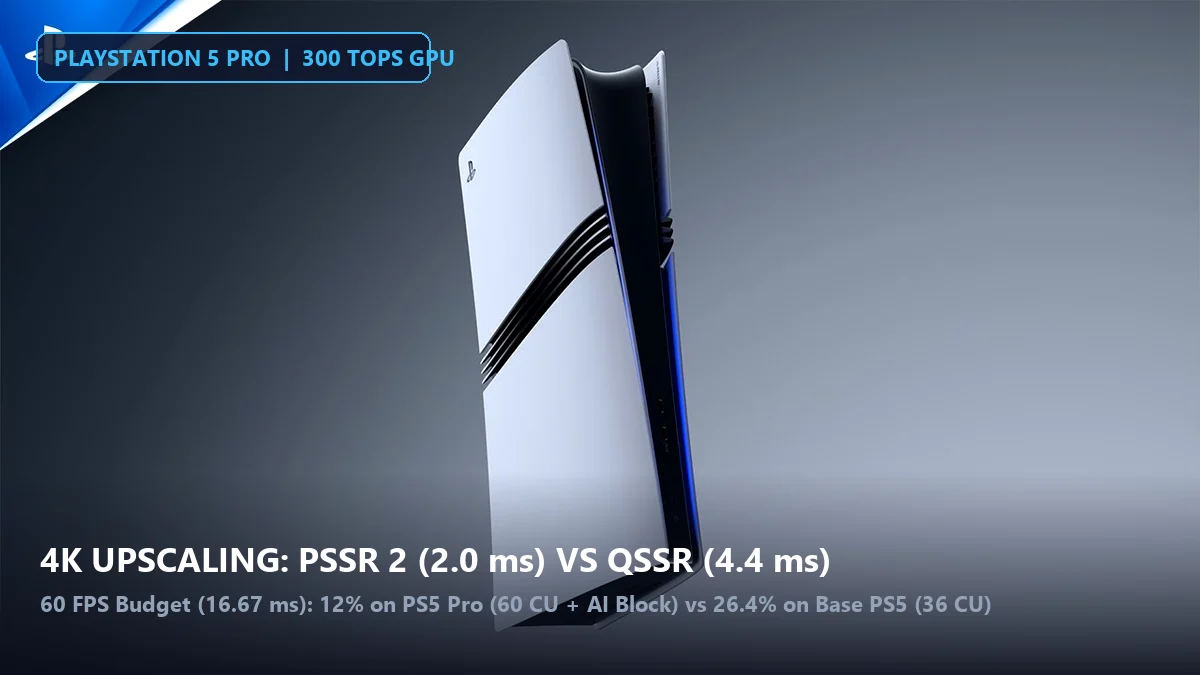
When a modern game engine targets a locked 60 frames per second, the hardware stopwatch leaves zero room for error: the graphics processor has a strict budget of 16.67 milliseconds to compute, shade, and output every single frame. In that race against the clock, the latest frametime measurements from the PlayStation SDK and the joint Project Amethyst engineering partnership between Sony and AMD highlight a massive silicon divide. Reconstructing a full 4K (2160p) frame with PSSR 2 (PlayStation Spectral Super Resolution 2) on the PlayStation 5 Pro takes just 2.0 milliseconds, whereas running QSSR (Quick Spectral Super Resolution) at a 4K target on the base PS5 pushes the processing cost up to 4.4 milliseconds.
That 2.2x speed advantage in favor of Sony's flagship console is far more than a simple software tweak. It demonstrates the raw architectural gap between a custom GPU equipped with dedicated Machine Learning silicon and a standard processor forced to run neural network inference across general-purpose shader units.
PSSR 2 on PS5 Pro: 2.0 ms at 4K Powered by a 300 TOPS AI Block
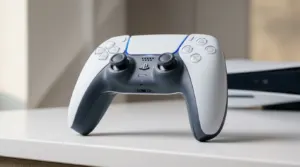
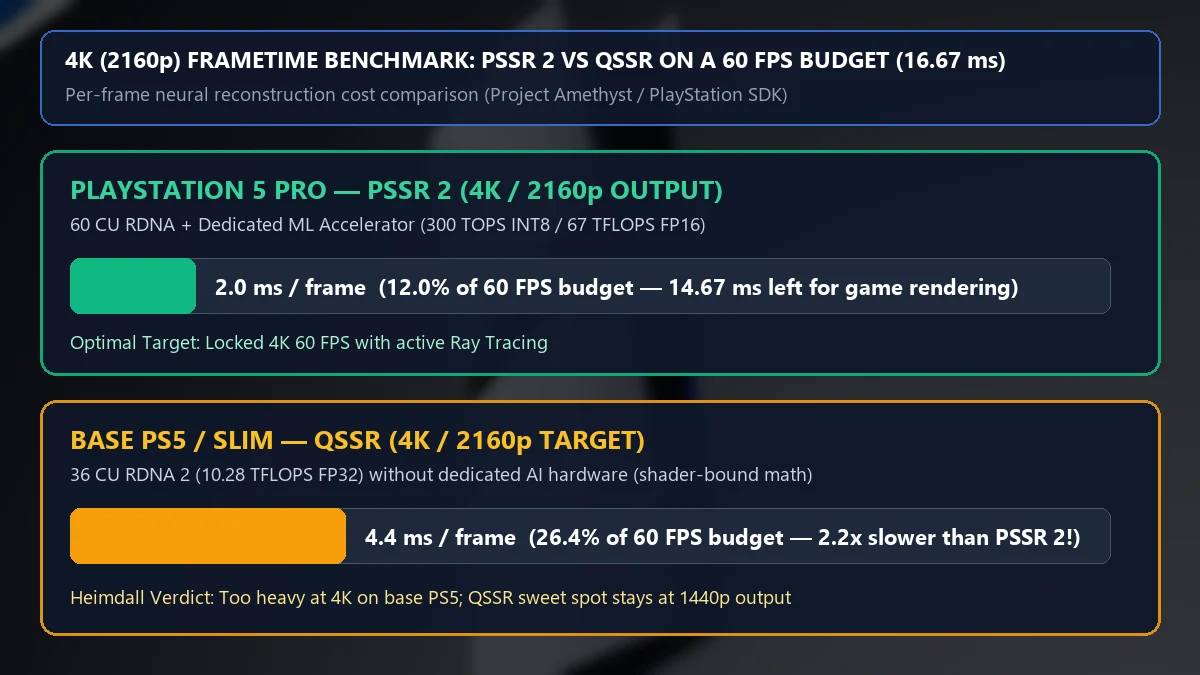
On the PlayStation 5 Pro ($699.99 / €899.99 MSRP in 2026), AI-driven image reconstruction relies on custom hardware built directly into the die. Alongside its expansion to 60 Compute Units (CUs) delivering up to 67 TFLOPS of FP16 compute (33.5 TFLOPS FP32), Sony integrated a custom Machine Learning accelerator capable of reaching 300 TOPS of 8-bit integer (INT8) performance without starving standard vector registers.
Backed by that dedicated matrix throughput and unified memory bandwidth running at 576 GB/s, executing a full PSSR 2 pass to a 4K (3840 x 2160) output requires a fixed frametime cost of roughly 2.0 ms per frame. Measured against the 16.67 ms ceiling of a 60 Hz refresh rate, neural upscaling consumes only 12.0% of the total frame budget. That leaves developers with a generous 14.67 ms of pure GPU headroom for geometry, global illumination, and hardware-accelerated Ray Tracing.
Check Availability PlayStation 5 Pro on Amazon→
QSSR on Base PS5: Why Targeting 4K Spikes the Cost to 4.4 ms
On the standard PlayStation 5 and PS5 Slim ($499.99 / €649.99 Disc Edition MSRP in 2026), the silicon equation changes completely. As we recently detailed when examining why bringing QSSR to the base PS5 comes with a heavy technical catch, the original 2020 graphics processor relies on 36 RDNA 2 Compute Units rated at 10.28 TFLOPS FP32 (20.56 TFLOPS FP16) paired with a 448 GB/s memory bus.
Because the standard PS5 lacks dedicated AI hardware accelerators, it must run the streamlined QSSR neural model directly on its general-purpose RDNA 2 shaders using 16-bit Rapid Packed Math (FP16) instructions. As long as a studio targets a 1440p output resolution, the frametime hit remains manageable and delivers noticeably cleaner temporal stability than legacy AMD FSR 2.
However, pushing QSSR to reconstruct a full 4K (2160p) output buffer on those 36 RDNA 2 CUs sends the processing cost soaring to 4.4 milliseconds per frame. In a 60 FPS performance mode, spending 4.4 ms on the upscaler alone eats up 26.4% of the entire 16.67 ms frame budget before a single triangle is rendered. That leaves just 12.27 ms for the rest of the rendering pipeline, forcing developers either to drop internal base resolution aggressively or to abandon a locked 60 Hz target.
Check Availability PlayStation 5 Slim on Amazon→
Technical Breakdown: PSSR 2 (PS5 Pro) vs QSSR (Base PS5)
To put that 2.4-millisecond per-frame gap into perspective for demanding current-gen engines, a hardware bottleneck we also explored in our 2026 console GPU hardware breakdown, here is how the two PlayStation upscaling pipelines compare side by side:
| Hardware & Pipeline Metric | PS5 Pro (PSSR 2) | Base PS5 / Slim (QSSR) |
|---|---|---|
| GPU Architecture & Compute Units | 60 CU Hybrid RDNA (33.5 TFLOPS FP32 / 67 TFLOPS FP16) | 36 CU RDNA 2 (10.28 TFLOPS FP32 / 20.56 TFLOPS FP16) |
| Dedicated AI Acceleration | Custom 300 TOPS (INT8) ML Block | None (Executed on FP16 shader units) |
| 4K (2160p) Reconstruction Frametime | 2.0 ms per frame | 4.4 ms per frame (2.2x slower) |
| Share of 60 FPS Frame Budget (16.67 ms) | 12.0% (14.67 ms left for game rendering) | 26.4% (Only 12.27 ms left for rendering) |
| Optimal 60 FPS Output Target | 4K (2160p) with Ray Tracing | 1440p (or dynamic resolution locked to 60 Hz) |
| 2026 Retail MSRP | $699.99 / €899.99 | $499.99 / €649.99 (Disc Edition) |
Watch Mark Cerny's official PlayStation 5 Pro technical presentation below for a deeper look at Sony's custom RDNA GPU architecture and machine-learning upscaling hardware:
My Test Bench
Whenever I evaluate a modern rendering pipeline on my test bench, I strip away the marketing buzzwords and look straight at the 16.67 ms frametime bar required for a locked 60 FPS. Having Sony and AMD backport a neural upscaler like QSSR onto the 36 RDNA 2 Compute Units of the 2020 base PS5 is an impressive feat of software engineering. Yet silicon physics never bends: paying 4.4 ms per frame just to output a 4K buffer on a GPU without dedicated matrix cores or INT8 acceleration is a luxury that heavy Unreal Engine 5 titles simply cannot afford at 60 frames per second.
From a pure hardware standpoint, these frametime numbers draw a crystal-clear line between the two consoles. On a standard PS5 or PS5 Slim, QSSR belongs strictly at a 1440p output target, where its compute overhead stays reasonable while cleaning up the shimmering and disocclusion artifacts of older FSR 2 implementations. If you play on a large 4K OLED display and demand razor-sharp 2160p reconstruction at a locked 60 FPS, the PS5 Pro's 300 TOPS accelerator and its 2.0 ms PSSR 2 execution time hold a structural hardware lead that no firmware update can bridge.

PC hardware enthusiast and competitive gamer, Arthur 'Heimdall' splits his time between France and the UK working in enterprise B2B software solutions. A business school graduate passionate about component benchmarking, he has been building, modding, and tuning PCs since childhood, optimizing every thermal degree and millisecond of display latency. An avid gamer across Assassin's Creed and sandbox titles, he forged his alliance with Grimtag and Chaya during late-night World of Warcraft raids before joining Pro-Gamer.