125 FPS on Radeon RX 9070 XT Yet Down to 37 FPS on RX 7800 XT: How the DLSS 4.5 Mod Performs at 1440p in Control Resonant and Cyberpunk 2077
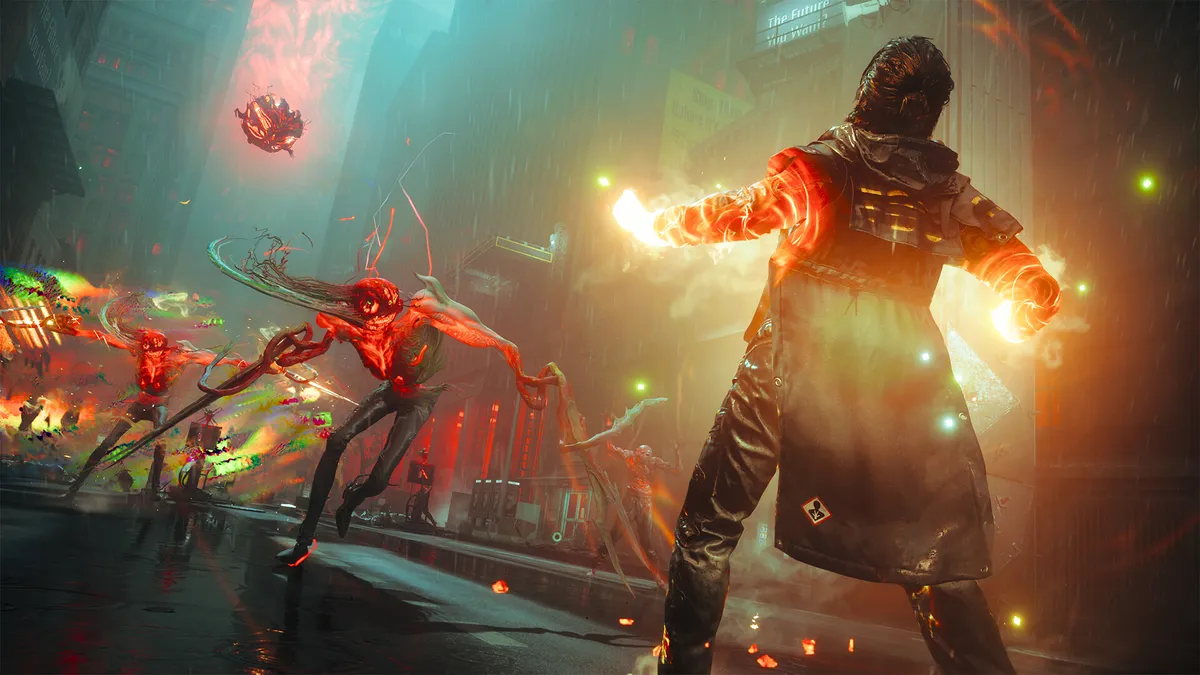
Running NVIDIA's entire neural rendering stack on an AMD Radeon graphics card is no longer just a proof of concept, yet real-world benchmarks reveal a massive divide across RDNA generations. New performance tests using version 0.8.0 of independent developer Daniel Blanco's open-source DLSS-NR-on-AMD mod highlight a stark architectural gap between the RDNA 4 silicon inside the Radeon RX 9070 XT and the older RDNA 3 architecture powering the Radeon RX 7800 XT.
Backed by dedicated hardware FP8 matrix accelerators, the Radeon RX 9070 XT (16GB GDDR6) pushes up to 125 FPS at 1440p in Control Resonant with DLSS 4.5 and Multi Frame Generation (MFG) enabled. Conversely, the lack of native FP8 hardware acceleration on the Radeon RX 7800 XT causes frame rates to plummet in Cyberpunk 2077 compared to AMD's native FSR 4.1.1 upscaler.
Control Resonant at 125 FPS in 1440p: Why the Radeon RX 9070 XT Handles DLSS 4.5 and MFG
Built on the latest evolution of Remedy Entertainment's Northlight engine, Control Resonant places an intense workload on modern GPUs whenever ray-traced lighting and reflections are active, as seen when Remedy's official Control Resonant PC system requirements listed an RTX 5080 for Path Tracing. Even so, injecting DLSS 4.5 (Quality or Balanced modes), Ray Reconstruction, and Multi Frame Generation through the mod's NeuralHub manager allows the Radeon RX 9070 XT to reach 125 FPS at 2560 x 1440 resolution.
This performance scaling comes directly from the physical design of RDNA 4 silicon. Unlike previous generations, Radeon RX 9000 series GPUs feature matrix cores capable of natively executing the FP8 instructions required by NVIDIA's Transformer neural networks, allowing Daniel Blanco's custom-compiled AMD HIP kernels to process the workload without a crippling translation penalty.
To sustain a smooth 125 FPS average at 1440p on the RX 9070 XT without micro-stutters or VRAM bottlenecks, testers pair the High graphics preset (High textures and High ray-traced direct lighting) with Medium settings for indirect lighting, volumetric fog, and reflections. Using the built-in in-game framerate limiter rather than third-party tools is also critical to avoid frame-pacing fluctuations during MFG interpolation.
Check Availability AMD Radeon RX 9070 XT Availability on Amazon→

FSR 4.1.1 vs. DLSS 4.5 on Radeon RX 7800 XT: RDNA 3 Hits a Wall in Cyberpunk 2077
While RDNA 4 thrives under these custom HIP kernels, the picture changes dramatically on RDNA 3 hardware. A direct 1440p comparison in Cyberpunk 2077 with Ray Tracing enabled and Balanced upscaling on a Radeon RX 7800 XT (paired with a Ryzen 7 7700X and 32GB of RAM) exposes the heavy toll of running NVIDIA's Transformer models without native FP8 matrix hardware.
Running AMD's native FSR 4.1.1 (which is also bundled directly inside the mod package), the Radeon RX 7800 XT delivers a smooth 64.30 FPS average, with a minimum of 55.70 FPS and a maximum of 76.48 FPS. Switching to DLSS 4.5 (Preset M) without Ray Reconstruction slashes the average framerate down to 37.47 FPS (34.29 FPS minimum, 41.45 FPS maximum), representing a nearly 42% performance drop.
| Upscaling Mode (Cyberpunk 2077 - 1440p RT) | Graphics Card | Average FPS | Minimum FPS | Maximum FPS |
|---|---|---|---|---|
| AMD FSR 4.1.1 (Balanced Mode) | Radeon RX 7800 XT (RDNA 3) | 64.30 FPS | 55.70 FPS | 76.48 FPS |
| DLSS 4.5 Preset M (No Ray Reconstruction) | Radeon RX 7800 XT (RDNA 3) | 37.47 FPS (-41.7%) | 34.29 FPS | 41.45 FPS |
| DLSS 4.5 + Ray Reconstruction (Preset F) | Radeon RX 7800 XT (RDNA 3) | 27.79 FPS (-56.8%) | 26.16 FPS | 29.42 FPS |
Stacking DLSS 4.5 with NVIDIA's neural denoiser Ray Reconstruction (Preset F) pushes the RX 7800 XT even lower: average performance falls to 27.79 FPS (26.16 FPS minimum, 29.42 FPS maximum) alongside a noticeable spike in input latency. On RX 7000 series cards and older architectures, AMD's native upscaler remains vastly superior in raw efficiency.
Check Availability AMD Radeon RX 7800 XT Availability on Amazon→

DirectX 12, Anti-Cheat Blocks, and Incompatible Engines: Current Limits of Update 0.8.0
Beyond the architectural divide between RDNA 4 and RDNA 3, Daniel Blanco's 0.8.0 update that unlocked Ray Reconstruction and DLSS 5 on AMD Radeon GPUs still carries strict compatibility boundaries. Running custom HIP kernels through the NeuralHub in-game overlay (toggled with the End key) strictly requires Windows 11 and works exclusively in DirectX 12 titles.
Additionally, users must supply their own official NVIDIA runtime libraries (nvngx_dlss.dll, nvngx_dlssd.dll, nvngx_dlssg.dll, and nvngx_dlssnr.dll) for legal reasons. Kernel-level anti-cheat systems in competitive multiplayer games automatically block these injected DLLs, while Radeon RX 6000 (RDNA 2) owners are currently restricted to experimental support for the Neural Rendering module alone.
Finally, several major game engines still exhibit crashes or rendering incompatibilities with the HIP reimplementation at this stage, including Alan Wake 2, Resident Evil Requiem, and Pragmata.
My Test Bench: Hardware FP8 Acceleration Draws a Hard Line Between RDNA 4 and RDNA 3
Looking at these two 1440p benchmarks side by side on my test bench, the architectural takeaway is crystal clear. Watching a Radeon RX 9070 XT hit 125 FPS in Control Resonant with DLSS 4.5 and Multi Frame Generation proves that RDNA 4's hardware FP8 matrix units have the muscle to digest NVIDIA's Transformer models through Daniel Blanco's custom HIP kernels. On the flip side, seeing the RX 7800 XT drop to 37.47 FPS (and 27.79 FPS with Ray Reconstruction) against 64.30 FPS on native FSR 4.1.1 in Cyberpunk 2077 highlights an unavoidable silicon bottleneck: without dedicated FP8 hardware acceleration, executing next-gen neural workloads carries a brutal compute penalty on RDNA 3. If you are gaming on an RX 7000 or RX 6000 card, native FSR 4.1 remains the smarter daily driver by a wide margin.

PC hardware enthusiast and competitive gamer, Arthur 'Heimdall' splits his time between France and the UK working in enterprise B2B software solutions. A business school graduate passionate about component benchmarking, he has been building, modding, and tuning PCs since childhood, optimizing every thermal degree and millisecond of display latency. An avid gamer across Assassin's Creed and sandbox titles, he forged his alliance with Grimtag and Chaya during late-night World of Warcraft raids before joining Pro-Gamer.