The 15-Minute Pro Gamer Warm-Up Routine: Science-Backed Aim & Reflex Prep
How many times have you queued into your first ranked match of the day only to realize, three rounds in, that your fingers feel like frozen bricks? It is the daily trap for thousands of players who mistakenly treat their first competitive match as their warm-up.
In traditional athletics, no competitor would sprint onto the field without prepping muscles and mindset. Esports is no different. The cognitive and fine-motor demands of modern tactical FPS games or fast-paced MOBAs require split-second precision.
To peak the moment the match begins, you need a structured warm-up routine. Effective prep does not take hours: fifteen minutes is all it takes when every second is optimized.
Here is the exact step-by-step protocol elite pros use to fire up neural reflexes, calibrate laser aim, and bulletproof their joints against injury.
The Physiology of Performance: Why Warming Up Works
High-tier gaming reflexes rely on a complex biological circuit linking the eye, the brain, and the muscles of your hand. Jumping into a match cold forces that circuit to run in a compromised state. The first physical variable improved by warming up is muscle temperature. Sports medicine research proves nerve conduction velocity increases by approximately 5% for every degree Celsius rise in muscle tissue. Electrical impulses travel faster from motor cortex to fingertips. That speed gain might sound marginal on paper, but in elite competition, it is the difference between clicking a headshot and getting sent to the spectator screen.
Beyond neural velocity, elevated tissue temperature shifts biomechanical properties. Forearm muscles and tendons gain elasticity. Tendon collagen becomes more viscoelastic when heated, dramatically reducing internal friction during rapid flick transitions.
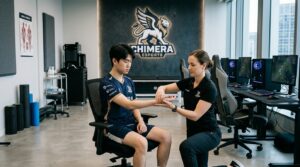
This directly slashes motor latency: the physical delay between deciding to click and the tendon contracting your fingertip. Warm muscles and supple tendons also absorb repeated stress far better, minimizing micro-tears and safeguarding you against repetitive strain injuries like wrist tendonitis and carpal tunnel syndrome.
Neurologically, a warm-up engages working memory and triggers short-term synaptic plasticity. Your brain must dial in its proprioception: calibrating a specific visual distance on screen with precise motor tension in your wrist and forearm to swipe the mouse. That calibration primes the prefrontal cortex for split-second tactical decisions under pressure.
Minutes 1 to 3: Dynamic Joint and Muscle Mobilization
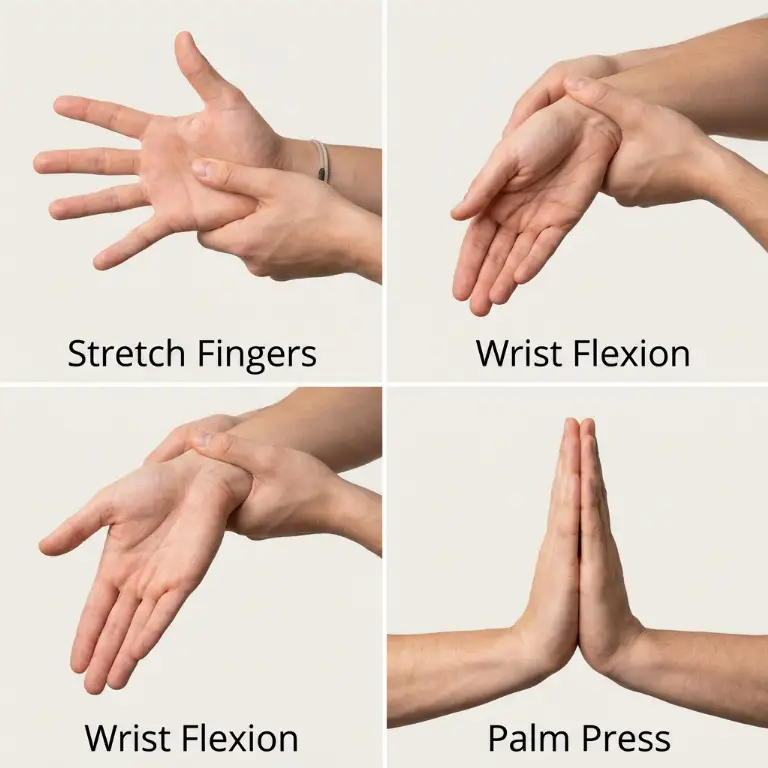
Phase one targets biomechanics. You cannot expect pinpoint micro-adjustments from your fingers if your wrists, elbows, and shoulders are locked up from sitting idle. The primary goal is to lubricate joint capsules by stimulating synovial fluid production and activating stabilizer muscles.
Start with the shoulders and scapulae. Low-sensitivity FPS players use their entire arm to execute wide tracking swipes. Roll your shoulders forward and backward for 30 seconds. Follow up with wider arm circles to engage deltoids and traps.
Next, focus on your wrists. Interlace your fingers with palms together and perform smooth, gentle wrist rotations in both directions for 30 seconds. This gently mobilizes the radiocarpal joint without mechanical irritation.
Spend the final minute on finger extensors and forearm flexors. Extend your arm straight ahead, palm facing forward, and gently pull your fingers back for two to three seconds, then release. Repeat five times per arm. Avoid prolonged static stretches lasting over ten seconds before gaming. Sports science proves extended passive stretching temporarily dampens muscle tone and explosive twitch speed, blunting rapid click reactions.
Minutes 4 and 5: Thermal and Sensory Activation
Have you ever tried landing micro-flicks with ice-cold hands? It is physiologically impossible to maintain peak consistency. When your body feels cold or registers pre-match adrenaline, peripheral vasoconstriction shunts blood away from extremities toward vital organs. This reduces tactile sensitivity and slows contraction velocity in intrinsic hand muscles.
Dedicate two full minutes to warming your hands. If your room is chilly, keep rechargeable electronic hand warmers or reusable heat packs at your desk. Alternatively, run your hands under warm tap water for sixty seconds while massaging palms and fingers.
Once warm, perform a quick targeted self-massage. Work the fleshy thenar eminence at the base of your thumb and the hypothenar pad along your pinky side with firm circular pressure using your opposite thumb. This tactile stimulation primes mechanoreceptors in your skin responsible for tracking micro-vibrations and surface texture. Waking up these sensory receptors sharpens mouse grip tactile feedback and refines micro-adjustments.
Minutes 6 to 10: Cognitive Calibration and Low-Speed Precision
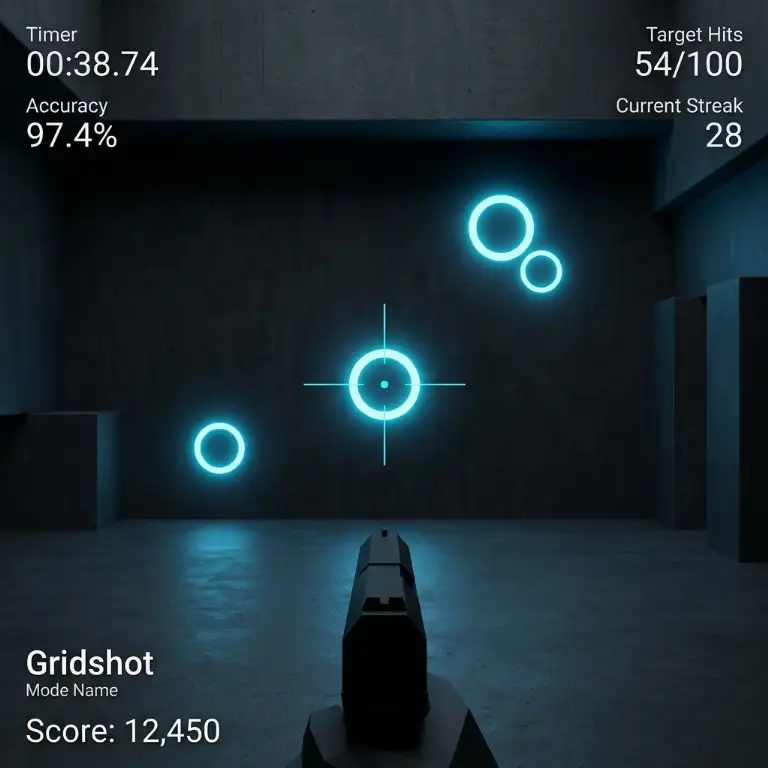
It is time to grip the mouse, but not for aggressive flicking. This five-minute block calibrates hand-eye coordination and primes cognitive pathways without burning mental stamina before your matches even begin.
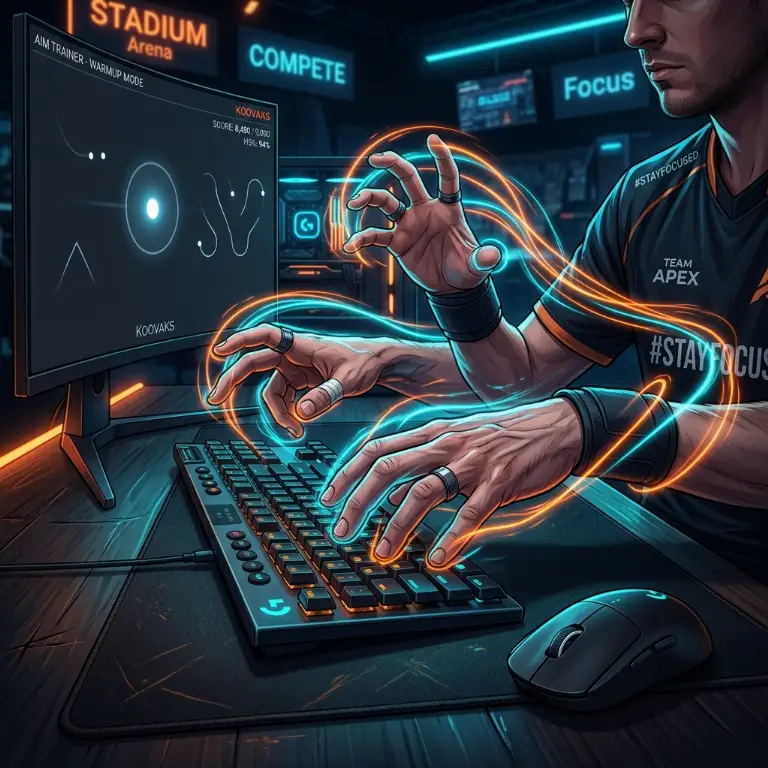
Boot up an aim trainer like AimLab or KovaaK's, or load an empty custom practice map in your tactical shooter. Select a smooth tracking scenario or slow-paced micro-correction routine.
The golden rule for these five minutes is absolute accuracy over speed. Ignore timers, high scores, and leaderboards. Focus on smooth, straight-line crosshair movement. Your crosshair should glide from Point A to Point B with zero path deviation, zero trembling, and zero target overshooting. When tracking, keep the reticle glued dead center on the moving orb.
Slow, deliberate aiming forces your central nervous system to lock in the spatial relationship between physical mouse pad displacement and on-screen pixel movement. This is proprioceptive calibration. If you jump straight into max-speed flicking, you accumulate imprecise trajectory micro-corrections, cementing erratic muscle habits for the rest of your session.
Minutes 11 to 15: Ramp-Up and In-Game Simulation
The first ten minutes primed your body, warmed your muscles, and calibrated sensory feedback. The final five minutes ramp up heart rate and shift your mindset into match mode. Now is the time to layer on speed, dynamic movement, and time pressure.
Jump into a free-for-all Deathmatch lobby or load high-tempo aim trainer scenarios featuring realistic, unpredictable target velocities. Your focus is twofold: crosshair placement and two-handed motor synchronization.
In competitive shooters, duels are won before the trigger is pulled through clean pre-aiming. Keep your crosshair locked at head level along common peek angles even while navigating terrain at full speed.
This phase also synchronizes your movement hand on the keyboard with your aiming hand on the mouse. Drill your counter-strafing: releasing your movement key and instantly tapping the opposite key to halt agent velocity dead before firing. Clean shot accuracy hinges on the micro-synchronization between stopping movement and left-clicking. Play with sharp tournament intensity, simulate genuine clutch duels, but disregard your K/D ratio. The only objective is locking into your peak reaction tempo.
Locking in the Daily Routine
For this 15-minute protocol to deliver maximum returns, make it an unbreakable pre-game ritual. The most frequent pitfall is either skipping phases or stretching warm-ups past 20 minutes, which introduces early eye and wrist fatigue before official matches even kick off.
Peak mechanical performance is fundamentally tied to your baseline biology. Even an elite warm-up cannot undo the reaction-time penalties of chronic sleep deprivation. To take your mental clarity and reaction speeds to the next level, read our deep dive on how sleep impacts esports performance to learn how eight hours of quality recovery directly elevates your ranked win rate.
By integrating this quick, scientific routine into your daily sessions, you will not just hit harder in Game One: you will build mechanical consistency that lasts across long competitive seasons while protecting your most valuable assets: your hands.

SEO consultant for over 20 years and digital entrepreneur, Charles 'Grimtag' Ronchain is the founder of Pro-Gamer.gg, Retrocharting.com, and Gamescharting.com. A competitive gamer, streamer, and retro game collector, he has worked in the video game industry for over 15 years, notably as a consultant for leading game price comparison platforms. Passionate about real-time performance data and gaming technology, he analyzes competitive esports, gaming hardware benchmarks, and creator workflows on Pro-Gamer.gg with an authentic player perspective.