Characters, Cutscenes, and UI: Bandai Namco Studios Reveals Its Role on the Zelda: Ocarina of Time Switch 2 Remake
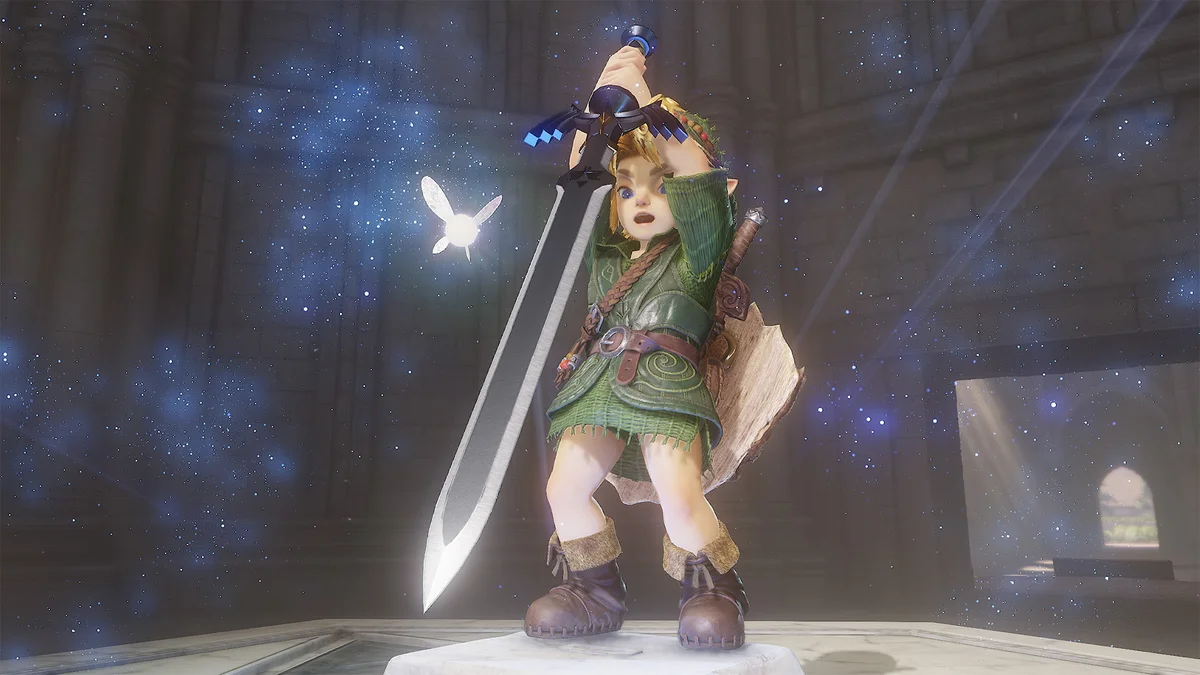
Four days after the global launch of The Legend of Zelda: Ocarina of Time on Nintendo Switch 2 on November 5, 2026, a clearer picture is emerging of the industrial powerhouse assembled behind the scenes to modernize the 1998 masterpiece. While the end credits already pointed to an extensive roster of external support partners backing Kyoto's internal teams, Bandai Namco Studios officially stepped forward this Monday, November 9, to detail the exact scope of its contribution to the project.
Characters, Terrain, Animations, Cutscenes, and UI: Five Visual Pillars Handled by Bandai Namco Studios
In an official portfolio listing published on the Bandai Namco Studios corporate portal, the Tokyo-based development subsidiary confirmed that it handled partial commissioned production for Nintendo Co., Ltd. on the Switch 2 remake. Rather than stepping in for minor late-stage polish, the studio's artists and animators contributed directly across five distinct areas of the game's visual pipeline:
- Characters: Partial production of concept artwork and visual assets for the 3D character models populating Hyrule.
- Environments and Terrain: Environmental art assets and terrain geometry spanning both the Young Link and Adult Link eras.
- Animations: In-game character motion, combat movement, and creature animations.
- Cutscenes: Visual production and staging work on key cinematic sequences throughout the campaign.
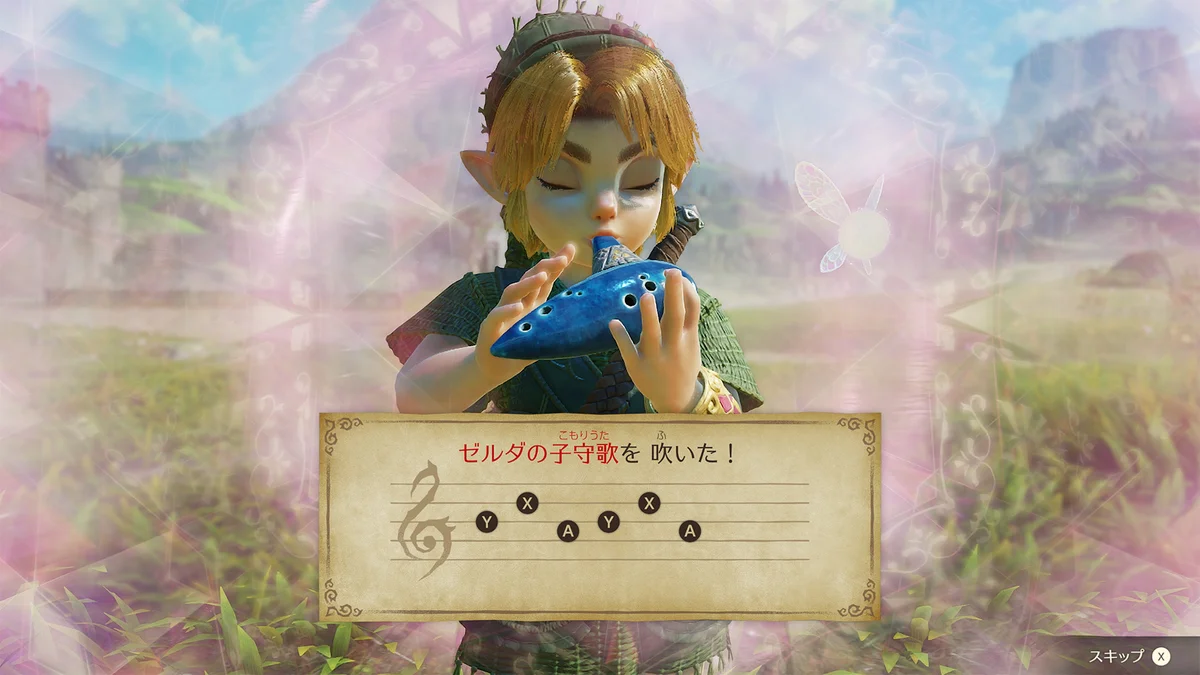
- User Interface (UI): Visual assets for the modernized HUD, quick-assign item menus, and Ocarina sheet music overlays.
This disclosure adds another major piece to a production led internally by Nintendo EPD Production Group No. 3 under director HokWai Ng, art director Aya Shida, programming director Hiroki Taguchi, sound lead Masato Ohashi, and veteran series producers Eiji Aonuma and Hidemaro Fujibayashi. Just last week, Nintendo subsidiary Monolith Soft officially detailed its own contract role on Zelda: Ocarina of Time, which encompassed game design, programming, and environmental graphics.
From Mario Kart World to Hyrule: Nintendo's Go-To Co-Development Partner on Switch 2
To rebuild the Kingdom of Hyrule from the ground up while preserving the spirit of the Nintendo 64 original, Kyoto relied on a battle-tested technical foundation. As datamined executable files recently revealed when showing that the Zelda: Ocarina of Time remake carries the internal codename "Owl" and runs on the Tears of the Kingdom ModuleSystem engine, the core software architecture was already firmly established inside Nintendo EPD. The massive bottleneck lay in crafting thousands of high-resolution character models, terrain textures, dynamic lighting passes, and revamped UI elements tailored for the Switch 2 hardware.
That asset-heavy demand highlights why the long-standing partnership between Nintendo and Bandai Namco Studios has become so vital. Following the formal establishment of its internal Studio 2 and Studio S divisions dedicated to Nintendo-commissioned projects, the Tokyo developer has quietly backed four of the biggest first-party launches of the Nintendo Switch 2 generation between June 2025 and November 2026:
- Mario Kart World (released June 5, 2025): Partial production of visual assets for courses, characters, vehicles, props, and animations.
- Kirby Air Riders (released November 20, 2025): Full co-development alongside Sora Ltd. and HAL Laboratory powered by Bandai Namco Studios' proprietary SOL-AVES engine.
- Splatoon Raiders (released July 23, 2026): Visual asset production for cutscenes and in-game graphics.
- The Legend of Zelda: Ocarina of Time (released November 5, 2026): Artwork and visual assets for characters, environments, animations, cutscenes, and UI.
Working alongside Monolith Soft, SRD, 1-Up Studio, Nintendo Pictures, and Nintendo's global engineering branches at NERD, NTD, and Nintendo Studios Singapore, Bandai Namco Studios exemplifies Kyoto's modern AAA blueprint: keeping creative leadership and core engine architecture strictly inside EPD while leveraging trusted Japanese partner studios to deliver blockbuster visual fidelity on schedule.
My Take
When Bandai Namco Studios published its official project sheet this morning, I immediately shared a grin with Bastien "Orion" in the newsroom. For more than a decade, whenever talk turned to remaking a classic entry in The Legend of Zelda series, fans and historians naturally looked toward Grezzo, the studio that faithfully crafted Ocarina of Time 3D (2011) and Majora's Mask 3D (2015) on the Nintendo 3DS before moving on to Link's Awakening and Echoes of Wisdom. Yet for this full-scale Switch 2 remake celebrating the franchise's 40th anniversary, Nintendo clearly operated on a completely different industrial tier.
Instead of handing the entire project off to an external boutique team, Eiji Aonuma's Production Group No. 3 kept tight control over the core gameplay loop on its internal ModuleSystem engine while calling in its two heaviest external cavalry units: Monolith Soft for environmental design and programming, and Bandai Namco Studios (whose Studio 2 and Studio S veterans have spent years mastering Nintendo's visual polish on titles like Super Smash Bros. Ultimate and Mario Kart World) to elevate the characters, cutscenes, and UI. Playing through the Temple of Time and the Forest Temple this weekend, that collaborative firepower is unmistakable: Aya Shida's art direction honors Yusuke Nakano's timeless 1998 illustrations while delivering the kind of expressive facial animation and crisp interface responsiveness that only a top-tier Japanese co-development alliance could pull off.
Zelda Ocarina of Time
Explore official trailers, technical specs and all latest coverage for Zelda Ocarina of Time.

Based on the outskirts of New York City, Chaya 'Chayane' spent five years studying software engineering in Montreal before returning to her home state. A Full-Stack developer and Deep Learning AI architecture researcher, she explores neural networks and algorithmic optimization while engineering data pipelines for Retrocharting and Gamescharting alongside Grimtag. A gamer for over 20 years and an avid collector of Nintendo history and The Legend of Zelda, she explored World of Warcraft's Azeroth before bringing her deep technical background to video game analysis.