11,000 Wishlists, a 3-Week Delay, and 15 Concurrent Players: Indie Publisher Blames Steam's AI Backlog for Derailing Wheel Make It
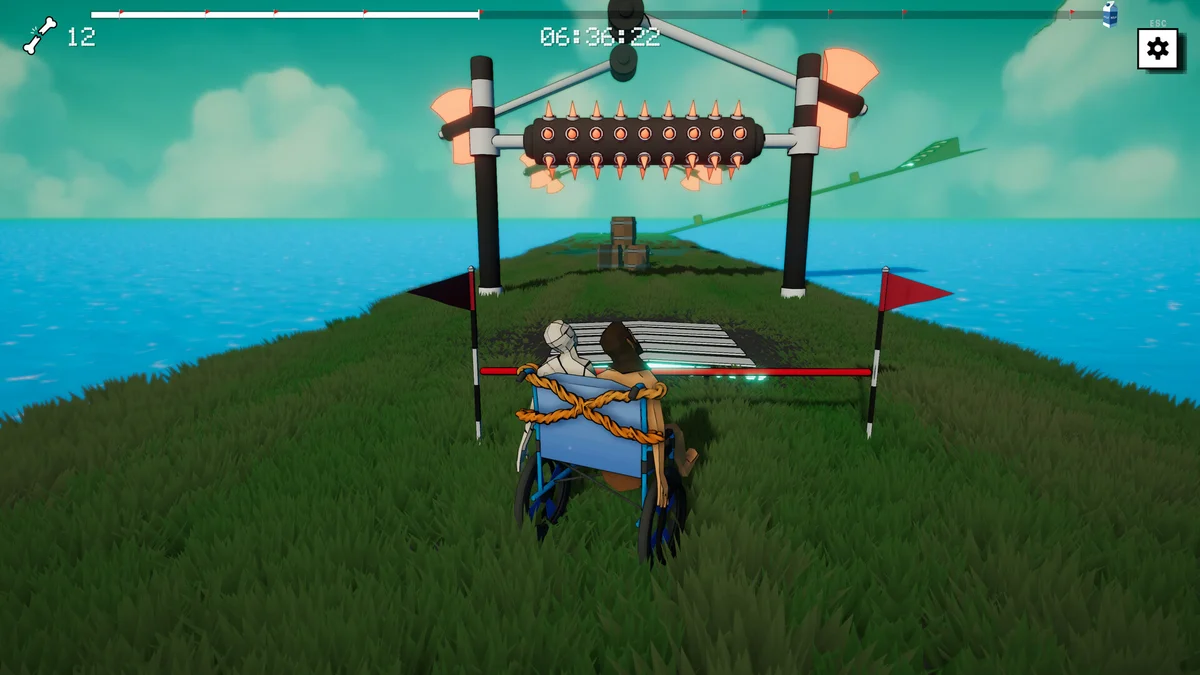
Building up more than 11,000 pre-release wishlists only to peak at just 15 concurrent players on launch day is every indie studio's worst nightmare. That is exactly what happened this weekend to indie publisher 2 Left Thumbs and Serbian developer tlproductions. Originally scheduled to launch on October 12, 2026, their physics-based co-op obstacle game Wheel Make It finally arrived on Steam on November 1, 2026, following nearly three weeks of administrative bottlenecks inside Valve's review queue. According to the publisher, a massive influx of low-effort, AI-generated games clogged Steam's backend verification pipeline and killed their launch momentum.
One Wheelchair, Two Players, and a Stalled Marketing Campaign
On paper, Wheel Make It is built for chaotic co-op sessions and community streaming. Two players share control of a single wheelchair across a four-act campaign, with each player operating one wheel to survive obstacle courses driven by deliberate physics clumsiness. Playable solo, in local split-keyboard co-op, online, or with a single copy through Steam's controller handling and Remote Play infrastructure, the game launched at $4.99 (with a 10% launch discount bringing it down to $4.49) and supports eight languages.
Check Wheel Make It deals on Allkeyshop→
Backed by a well-received public demo during the June 2026 Steam Next Fest and featured prominently in the Serbian Games Week showcase alongside over 200 local titles, the game crossed the coveted 11,000-wishlist threshold. On Steam, passing 10,000 wishlists is widely considered the benchmark needed to trigger algorithmic discovery at launch. Yet that momentum evaporated two weeks prior to the planned October 12 release date when the final build entered Valve's review queue.
Shared Keyboards, Controller Menus, and the "Coming Soon" Trap
In a series of transparent post-mortems published on Steam, 2 Left Thumbs outlined how minor misunderstandings snowballed into a three-week delay. The initial build submission was rejected because Steam's human reviewers could not figure out how to access local co-op, which simply required two players to share a keyboard. Assuming a quick clarification would clear the game in time for October 12, the team instead found itself stuck at the back of a heavily congested queue. While waiting on re-verification, the store page remained locked, preventing the developer from listing newly added localizations, achievements, or local co-op tags.
After Steam support assured the publisher on October 16 that they would help configure a new release window once review wrapped up, the build failed certification a second time on October 21, 2026, for a previously unmentioned reason: a single resolution setting inside the options menu could not be toggled using a gamepad. When final approval finally arrived on October 23, Valve informed the team that they would not be permitted to set a new public countdown date on the store page.
Forced to remain listed under a vague "Coming Soon" banner right up until the second they pressed the publish button, Wheel Make It lost its ability to coordinate a synchronized store launch. The publisher attempted to rebuild hype manually via community news posts targeting November 1, but the damage was already done. Early SteamDB tracking shared by 2 Left Thumbs on November 2 showed an opening peak of just 15 simultaneous players despite the 11,000+ wishlists accumulated beforehand.
8,000 Next Fest Submissions and Valve's Hands-Off AI Policy
According to 2 Left Thumbs, the sluggish turnaround times between review tickets affected numerous indie developers throughout October because Valve's verification staff had to process roughly 8,000 games participating in the October Steam Next Fest, a large portion of which the publisher described as generative AI slop. Beyond crowding storefront carousels and compounding the broader saturation of Steam Early Access in 2026 criticized by Denis Dyack, the sheer volume of automated submissions is now creating real administrative gridlock for handcrafted games waiting on human QA checks.
Valve, however, has shown no appetite for policing generative tools at the gate. Speaking during the Steam Indie Connect event on October 27, 2026, Steam business team member Tom Giardino stated that Valve does not want to act as a gatekeeper telling developers which tools they should or should not use, provided studios fill out the mandatory AI disclosure survey. Fellow Valve representative Marc Wilkinson acknowledged that giving all Next Fest demos random visibility for the first 48 hours before switching to personalized recommendations does surface low-quality titles, and noted the team is exploring discovery adjustments, though without committing to a dedicated AI filter for users.
My Take
Until now, the argument over generative AI on Steam has mostly revolved around storefront clutter and discoverability. What happened to 2 Left Thumbs and tlproductions exposes a much uglier operational problem: human review gridlock in Valve's backend. When a small studio spends months legitimately earning 11,000 wishlists for a $4.99 co-op game, missing its launch window because review queues are backed up by thousands of rapid-fire AI submissions is bad enough. Blocking that studio from setting a new public release date on its own store page afterward is an inexcusable double penalty. Valve collects a $100 Steam Direct fee per app and takes a 30% cut of revenue. If the company refuses to restrict low-effort AI submissions at the door, it owes working developers a fast-track re-review lane and flexible release date tools so a minor menu fix does not nuke an entire launch campaign.

SEO consultant for over 20 years and digital entrepreneur, Charles "Grimtag" is the founder of Pro-Gamer.gg, Retrocharting.com, and Gamescharting.com. A competitive gamer, streamer, and retro game collector, he has worked in the video game industry for over 15 years, notably as a consultant for leading game price comparison platforms. Passionate about real-time performance data and gaming technology, he analyzes competitive esports, gaming hardware benchmarks, and creator workflows on Pro-Gamer.gg with an authentic player perspective.