GeForce RTX 3060 Retakes the #1 Spot on Steam as Linux Surges to 3.95% in Valve's Latest Hardware Survey
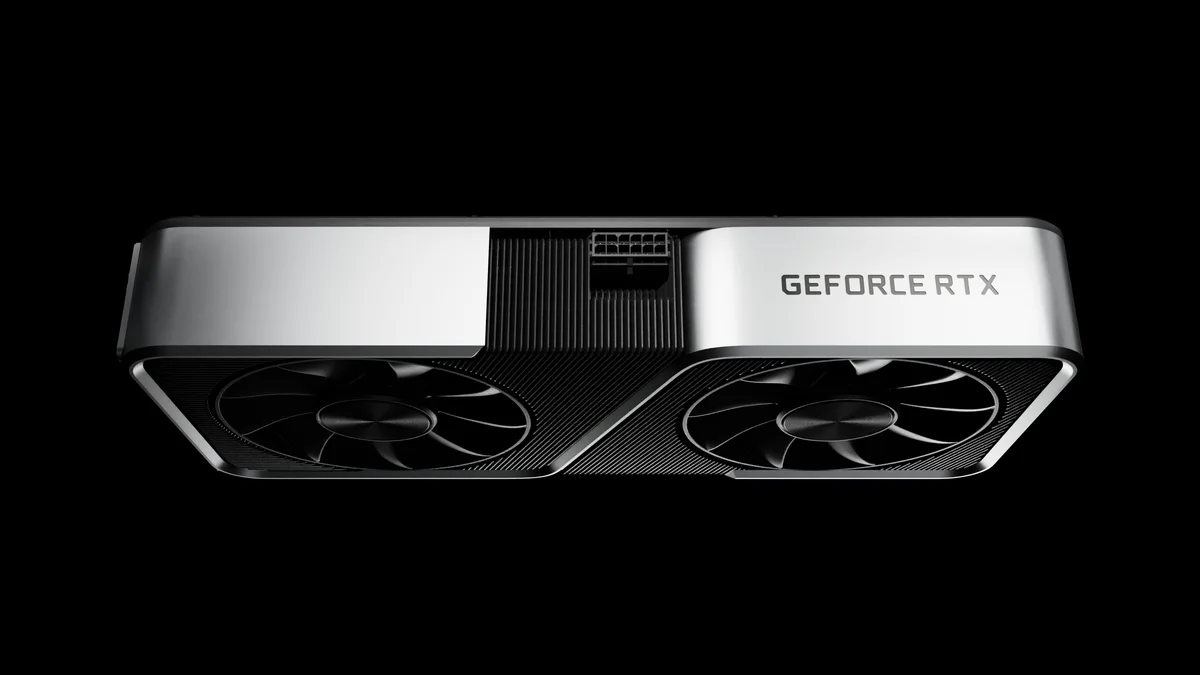
Even as next-generation graphics cards face steep retail markups, Valve's newly released Steam Hardware & Software Survey (reflecting October 2026 data published at the start of November) delivers a reality check for the PC gaming market. Five years after its original Ampere-generation debut, the NVIDIA GeForce RTX 3060 has officially reclaimed the number one spot worldwide with a 3.62% overall share across all surveyed systems (and 3.78% on the dedicated DirectX PC GPU chart). At the same time, a second major milestone is unfolding in Valve's operating system telemetry: Linux has climbed to 3.95% (+0.90 percentage points in a single month), putting it within striking distance of the historic 4% threshold.
Why the GeForce RTX 3060 Dethroned the RTX 5070 and Still Rules 1080p Gaming
Last month's survey raised eyebrows when the GeForce RTX 5070 unexpectedly vaulted into first place at over 5.86% overall (6.15% on the DirectX table), a spike largely attributed to a temporary influx of Asian internet cafe reporting in Valve's sampling pool. With October's sampling returning to normal baseline levels, that anomaly corrected sharply: the GeForce RTX 5070 dropped 2.30 percentage points to settle in second place at 3.56%. Other mainstream Blackwell desktop cards saw similar corrections, with the GeForce RTX 5060 sliding 1.23 points to 2.97% and the GeForce RTX 5060 Ti falling 1.32 points to 2.55%.
By contrast, the GeForce RTX 3060 ticked up another +0.08 points to reclaim the crown at 3.62%. Its staying power comes down to two practical realities. First, the original desktop card's 12GB GDDR6 VRAM buffer continues to handle modern texture pools far more gracefully than several newer budget GPUs limited to 8GB. Second, with global GPU prices surging 35% in three months amid ongoing memory supply pressure, mainstream players are holding onto proven hardware tailored for Full HD gaming. According to Valve's display metrics, 1920 x 1080 (1080p) remains the primary resolution for 50.23% of all Steam users (+2.32 points).
Further down the chart, while Nvidia continues to withhold GeForce RTX 5080 24GB design plans from board partners, the existing RTX 5080 holds a 1.68% share (-0.21 points) and the RTX 5070 Ti sits at 1.81% (+0.02 points). On AMD's RDNA 4 side, the Radeon RX 9070 XT continues its steady climb to 1.49% (+0.14 points), joined by the non-XT Radeon RX 9070 at 0.20%.
| Rank | Graphics Card (GPU) | Overall Steam Share | Monthly Change |
|---|---|---|---|
| 1 | NVIDIA GeForce RTX 3060 | 3.62% | +0.08% |
| 2 | NVIDIA GeForce RTX 5070 | 3.56% | -2.30% |
| 3 | NVIDIA GeForce RTX 4060 Laptop GPU | 3.40% | +0.05% |
| 4 | NVIDIA GeForce RTX 4060 | 3.32% | -0.40% |
| 5 | NVIDIA GeForce RTX 3050 | 3.06% | +0.29% |
| 6 | NVIDIA GeForce RTX 5060 | 2.97% | -1.23% |
| 7 | NVIDIA GeForce RTX 5060 Ti | 2.55% | -1.32% |
| 8 | NVIDIA GeForce RTX 5060 Laptop GPU | 2.52% | +0.19% |
| 9 | NVIDIA GeForce GTX 1650 | 2.32% | +0.22% |
| 10 | NVIDIA GeForce RTX 4060 Ti | 2.17% | -0.56% |
Linux Hits 3.95% on Steam Powered by CachyOS, SteamOS, and Bazzite
The second standout story in the latest survey comes from the operating system breakdown. While Windows slipped 1.33 points overall to 93.70% (with Windows 11 64-bit climbing 1.17 points to 72.51% as Windows 10 fell 2.50 points to 21.11%) and macOS reached 2.35% (+0.43 points), Linux surged by +0.90 points in a single month to reach 3.95% of all Steam users.
Sitting just five hundredths of a percent below the 4% mark, Linux's momentum is no longer driven solely by Valve's Steam Deck handheld. Instead, a wave of gaming-focused desktop and handheld distributions paired with Proton compatibility is reshaping the Linux breakdown:
- CachyOS 64-bit (16.39% of Linux users, 0.65% of all Steam): Built on Arch Linux with CPU-optimized package repositories (x86-64-v3/v4 and Zen 4/5) and low-latency custom kernels, CachyOS now ranks as the single largest individual distribution entry in the Linux tab.
- SteamOS Holo and SteamOS 64-bit (21.98% combined Linux share, 0.87% of all Steam): Split in Valve's reporting between SteamOS Holo 64-bit (13.89% of Linux / 0.55% overall) and SteamOS 64-bit (8.09% of Linux / 0.32% overall), the Steam Deck's operating system remains the foundational pillar of Linux gaming.
- Arch Linux 64-bit (8.92% of Linux users, 0.35% of all Steam): The rolling-release parent distribution continues to hold a strong desktop gaming contingent.
- Linux Mint 22.3 64-bit (8.41% of Linux users, 0.33% of all Steam): A popular landing spot for former Windows 10 users seeking a familiar desktop layout out of the box.
- Bazzite 64-bit (6.74% of Linux users, 0.27% of all Steam): The Fedora-based immutable gaming image continues to gain traction across third-party handhelds (such as the ROG Ally and Legion Go) and living-room HTPCs.
Intel vs. AMD CPUs, System RAM, and VR Headsets in Late 2026
In the processor category, the normalization of the Asian internet cafe sample helped Intel rebound by 0.89 points across the broader PC pool to 53.48%, while AMD stands at 46.51% (-0.90 points). Within the Linux ecosystem, however, AMD processors maintain a commanding lead thanks to the Steam Deck's custom APU and mature open-source Mesa graphics drivers.
Elsewhere in the survey, 16GB of system RAM remains the most common memory configuration at 41.42% (+3.60 points), while 8GB of VRAM still leads the video memory table at 26.92% (+0.21 points). Finally, in virtual reality, the Meta Quest 3 continues to lead SteamVR adoption at 27.27% (+0.36 points).
My Take on This Steam Hardware Survey
This latest Steam telemetry captures the widening split in PC gaming hardware. On one side, GPU manufacturers keep pushing four-figure halo cards, yet once sampling noise clears out, the five-year-old GeForce RTX 3060 and its 12GB VRAM buffer still carry the 1080p majority. On the other, seeing Linux climb to 3.95% with CachyOS and Bazzite surging alongside SteamOS proves that Windows 10's sunset and Proton's maturity are turning Linux into a genuine desktop gaming alternative rather than just a handheld niche. (Transparency note: this article includes an independently selected Amazon affiliate link.)

PC hardware enthusiast and competitive gamer, Arthur 'Heimdall' splits his time between France and the UK working in enterprise B2B software solutions. A business school graduate passionate about component benchmarking, he has been building, modding, and tuning PCs since childhood, optimizing every thermal degree and millisecond of display latency. An avid gamer across Assassin's Creed and sandbox titles, he forged his alliance with Grimtag and Chaya during late-night World of Warcraft raids before joining Pro-Gamer.