RE Engine on Nintendo Switch 2: How Capcom's In-House Tech Powers Monster Hunter Wilds While Leaving World Behind
While many third-party publishers struggled during the original Switch era and frequently resorted to cloud streaming compromises, Capcom has established itself as a powerhouse on the Nintendo Switch 2. With heavy hitters like Resident Evil Requiem, Pragmata, Dragon's Dogma 2, and the upcoming December 4, 2026 launch of Monster Hunter Wilds, the Osaka publisher is reaping the rewards of a decisive technical advantage: full internal ownership of its proprietary RE Engine.
The Positive Cycle of an In-House Engine
Speaking about the studio's multiplatform pipeline around Tokyo Game Show, Capcom's producers detailed how their internal architecture allowed them to support Nintendo's new hybrid hardware so aggressively. According to Naoto Oyama, producer on Pragmata and key contributor to the Dragon's Dogma 2 port, the secret lies in owning the RE Engine (Reach for the Moon Engine) entirely in-house, allowing every breakthrough to ripple across all internal teams.
Unlike studios bound to third-party commercial engines where individual teams often build isolated workarounds, Capcom's engineering divisions share a unified codebase and accumulated know-how. Whenever one team discovers a way to reduce CPU overhead or streamline memory bandwidth for the Nintendo Switch 2 architecture, those low-level optimizations immediately carry over to other projects in development.
Even better, Oyama notes that this "positive cycle" works both ways: the deep engine-level optimizations engineered to get demanding current-generation games running smoothly on the Switch 2 have actively fed back into performance improvements and more stable 60 FPS modes on PlayStation 5, Xbox Series X|S, and PC, while laying the groundwork for Capcom's upcoming transition toward the REX engine initiative.
Monster Hunter Wilds on Switch 2: From Not Booting in June 2025 to a Locked 30 FPS
That engine flexibility faced its ultimate stress test with the massive undertaking of porting Monster Hunter Wilds. As series producer Ryozo Tsujimoto, executive director Kaname Fujioka, and Switch 2 producer Genki Sunano revealed, the project's early days in June 2025 were daunting: when the team first attempted to run the game on Switch 2 hardware, "it didn't run at all."
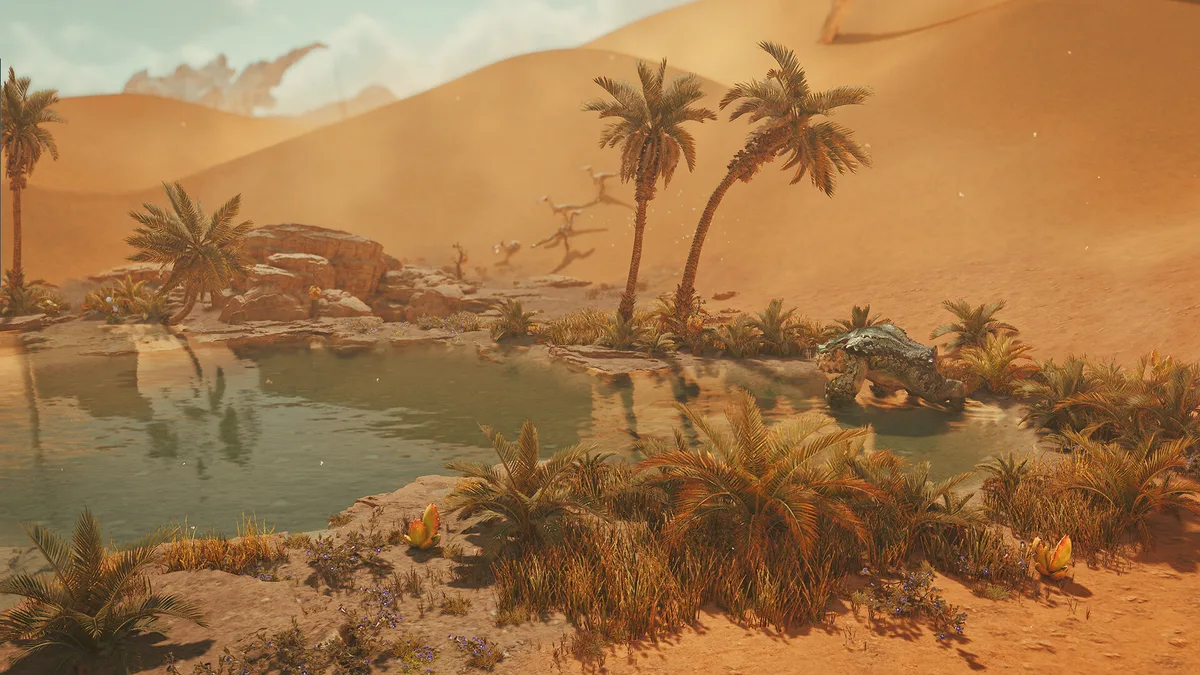
Built around seamless open ecosystems, dynamic weather shifts, and complex monster herds processed simultaneously in real time, Monster Hunter Wilds initially overwhelmed the portable target envelopes. After a slow initial ramp-up, full-scale development accelerated in late 2025 once core engineers from the main development team joined the effort.
Firmly rejecting the idea of shipping a watered-down or compromised version of the hunting experience, Kaname Fujioka mandated a painstaking, ground-up pass over the game's inner workings. Instead of applying a blunt resolution downgrade, the team inspected assets, background CPU processing, and visual effects one by one, completely rebuilding specific shaders from scratch inside the RE Engine to hit a stable 30 FPS target with full cross-play support for its December 4, 2026 release, even amid community debate over the visual trade-offs seen in the free Switch 2 demo.
Why Monster Hunter: World Remains Locked Out of the Switch 2 Lineup
If the Nintendo Switch 2 can handle a demanding ninth-generation giant like Monster Hunter Wilds, why is 2018's Monster Hunter: World still nowhere to be found on Nintendo's platform? Addressing fan requests directly, Ryozo Tsujimoto shut down hopes for a port, clarifying that the roadblock has nothing to do with raw hardware specifications.
While Monster Hunter Rise and every modern Capcom blockbuster run on the RE Engine, Monster Hunter: World was built on a heavily customized version of Capcom's legacy MT Framework engine. Because all of Capcom's modern toolsets, rendering pipelines, and Switch 2 optimization workflows are tailored exclusively around the RE Engine, bringing World over would require the studio to "completely remake the game from the ground up." Rather than sinking years of manpower into rebuilding an older MT Framework title, Capcom chose to pour its full energy into native RE Engine releases.
My Perspective
After enduring years of frustrating Cloud Versions on the original Switch that barely functioned on a shaky Wi-Fi connection, watching Capcom go all-in on native Switch 2 cartridges feels like a massive breath of fresh air for portable players. Owning the RE Engine outright and sharing every single optimization across internal teams is the smartest long-term play any publisher has made this generation. Sure, squeezing a massive open-world beast like Monster Hunter Wilds onto a handheld required visual compromises that sparked plenty of debate during the demo, but knowing the game literally wouldn't even boot on Switch 2 back in June 2025 makes the engineering turnaround genuinely impressive. And while it stings a little that Monster Hunter: World is permanently stuck in MT Framework purgatory, having native Wilds with full cross-play ready for December 4 is more than enough to keep our hunting parties busy for hundreds of hours.

Based on the outskirts of New York City, Chaya 'Chayane' spent five years studying software engineering in Montreal before returning to her home state. A Full-Stack developer and Deep Learning AI architecture researcher, she explores neural networks and algorithmic optimization while engineering data pipelines for Retrocharting and Gamescharting alongside Grimtag. A gamer for over 20 years and an avid collector of Nintendo history and The Legend of Zelda, she explored World of Warcraft's Azeroth before bringing her deep technical background to video game analysis.