Faerie Court Intrigue, Tactical Match-3, and IGF Grand Prize Winner: Titanium Court Launches Today on Nintendo Switch 2 and Switch
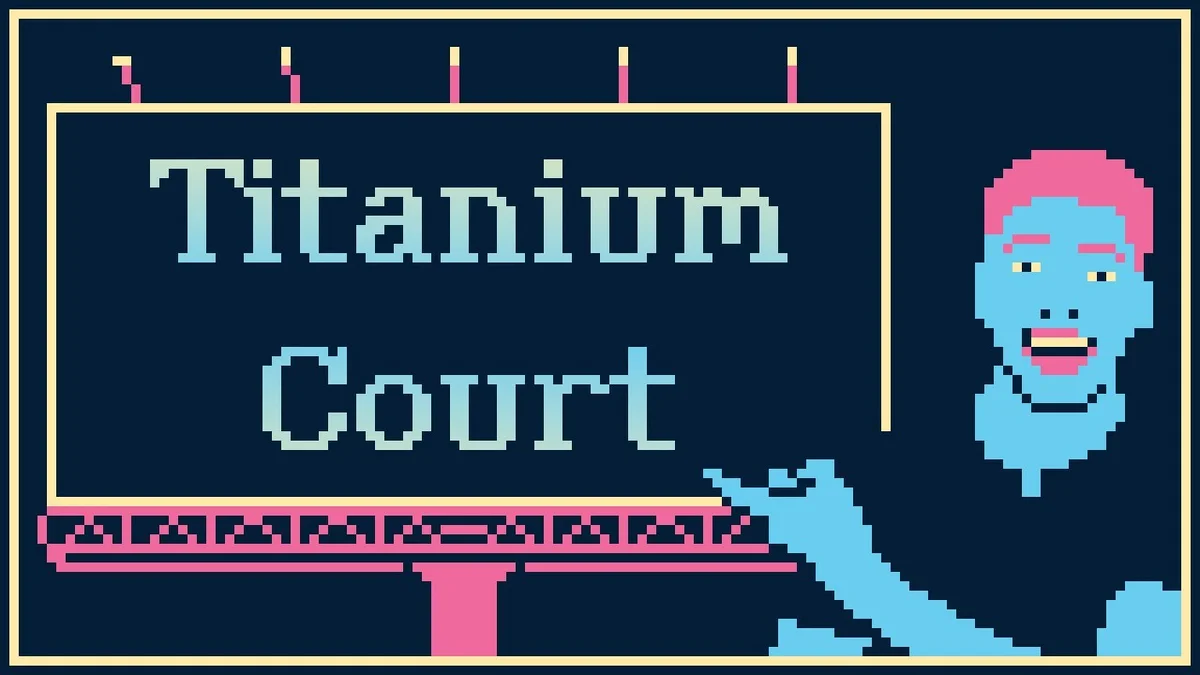
After sweeping the indie strategy scene on PC earlier this year, Titanium Court officially launches today, October 29, 2026, on Nintendo Switch, Nintendo Switch 2, PlayStation 5, iOS, and Android. Created by solo developer AP Thomson (known for Fortune-499 and Consume Me) and published by Fellow Traveller, this wonderfully bizarre tactical hybrid finally brings its theatrical faerie intrigue to Nintendo's handheld hardware.
Crowned with both the Seumas McNally Grand Prize and the Excellence in Design award at the Independent Games Festival (IGF), the game already boasts an 85 Metacritic score from its Steam debut. Its console arrival caps off a stacked Thursday for puzzle fans on Nintendo's new system, landing on the eShop the exact same day as The Spectrum Retreat: Redux on Nintendo Switch 2.
When Match-3 Combos Physically Sculpt Your Tactical Battlefield
Framed by heavy pink stage curtains and retro pixel art, Titanium Court refuses to behave like a conventional tile-matching puzzle game. Where standard match-3 titles simply clear tokens for points, every line of three you align here directly reshapes the physical geography and economy of your territory.
Each encounter alternates between two distinct phases: High Tide and Low Tide. During the puzzle planning phase, swapping tiles allows you to raise hills, grow forests, and carve out rivers while harvesting the resources needed to fund your court's defenses.
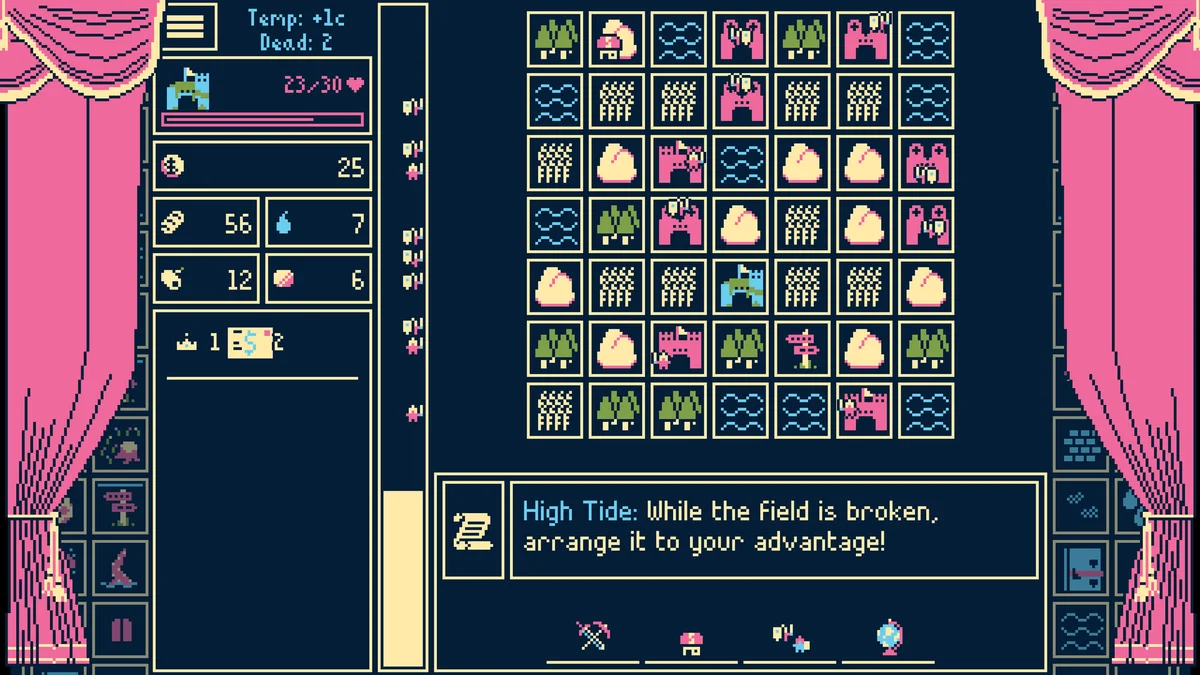
Once the battle phase begins, that handcrafted topography becomes your primary line of tower defense. Placing a mountain ridge near your castle physically slows down invading faerie armies, buying precious seconds for your farmers to gather supplies and your soldiers to intercept enemy units.
Missing Queens, Lost Keys, and Insurance Fraudster Career Paths
Beyond its interlocking grid mechanics, AP Thomson's creation stands out for its deadpan comedic writing, riffing on a surreal, Shakespearean faerie court. The developer famously jokes in the official synopsis that the entire game is merely a clever ploy to trick gamers into reading a book.
Between tactical skirmishes, players are tasked with helping the Court's eccentric residents search for their missing queen, helping the queen hunt down her misplaced keys, and helping the theater audience figure out the actual point of the spectacle. Built to last anywhere from 6 to 30 hours depending on how deep down the rabbit hole you go, its roguelite structure unlocks absurd career paths across runs.
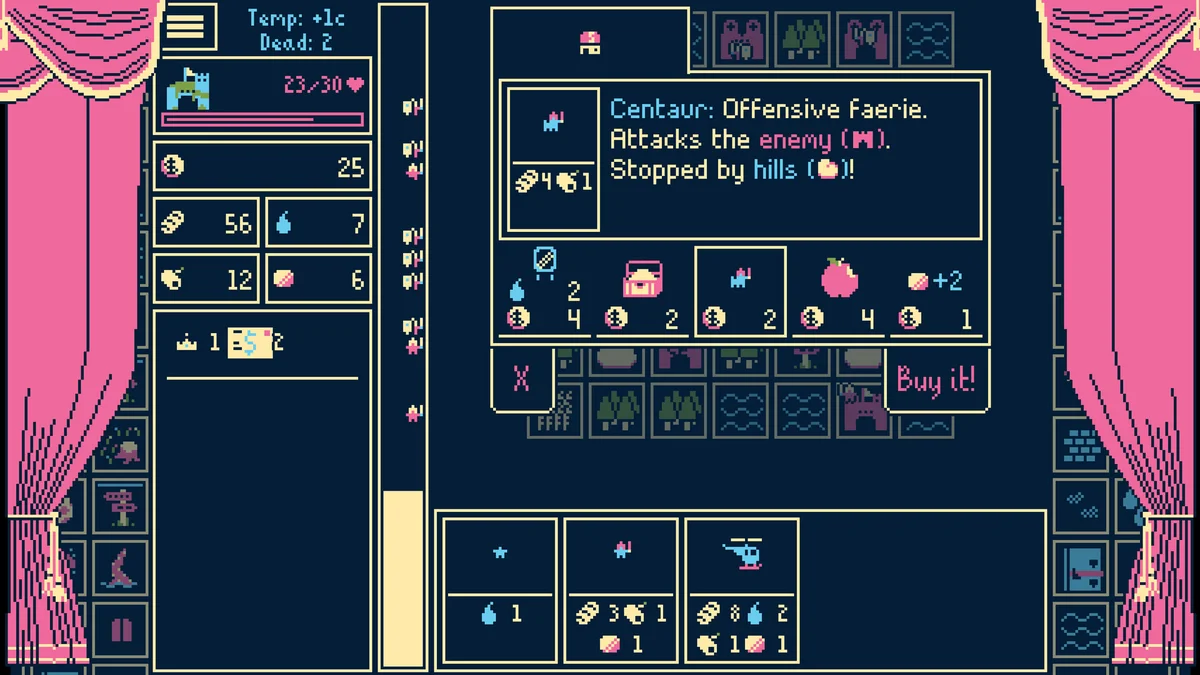
Successful runs qualify you for exalted positions ranging from Warlord and Arsonist to Celebrity and Insurance Fraudster. Each vocation introduces new modifiers and upgrades that radically alter how you manipulate the board and exploit your rivals.
A Lightweight 526 MB Switch and Switch 2 Port Built for Handheld Play
On the technical side, Titanium Court is a breeze to install across both generations of Nintendo hardware. Weighing in at a compact 526 MB on the Nintendo eShop and priced around $14.99 (€12.49), the game boots in seconds and runs effortlessly whether docked or in handheld mode.
Following its clever pre-launch community puzzle collaborations with Pantaloon, the title feels right at home on a portable screen where you can squeeze in a quick High Tide turn at any time. Players looking for more sharp narrative adventures on Nintendo's new console today can also check out the simultaneous launch of Urban Myth Dissolution Center and Schrödinger's Call on Nintendo Switch 2.
Check Availability Nintendo Switch 2 Availability on Amazon→
My Perspective
I completely fell into AP Thomson's trap during my very first half hour on the grid: you boot up a run thinking you are just going to match three tiles for ten minutes before bed, and suddenly it is two in the morning and you are calculating the exact angle of a hill ridge to block a Centaur rush while arguing with a philosophical pink cat.
I am thrilled to see this IGF Grand Prize winner finally land on Switch and Switch 2, because its back-and-forth rhythm between High Tide planning and Low Tide defense is practically Tailor-made for handheld play on the couch. When an indie strategy game dares to combine genuinely punishing tactical depth with the ability to major in faerie insurance fraud for fifteen bucks, it is a joyful reminder of why solo developers are carrying 2026's creativity on their backs.

Based on the outskirts of New York City, Chaya 'Chayane' spent five years studying software engineering in Montreal before returning to her home state. A Full-Stack developer and Deep Learning AI architecture researcher, she explores neural networks and algorithmic optimization while engineering data pipelines for Retrocharting and Gamescharting alongside Grimtag. A gamer for over 20 years and an avid collector of Nintendo history and The Legend of Zelda, she explored World of Warcraft's Azeroth before bringing her deep technical background to video game analysis.