Savage Wind Recomp Brings Zelda: Breath of the Wild Natively to PC at 4K With DLSS, FSR 4, and Unlocked FPS
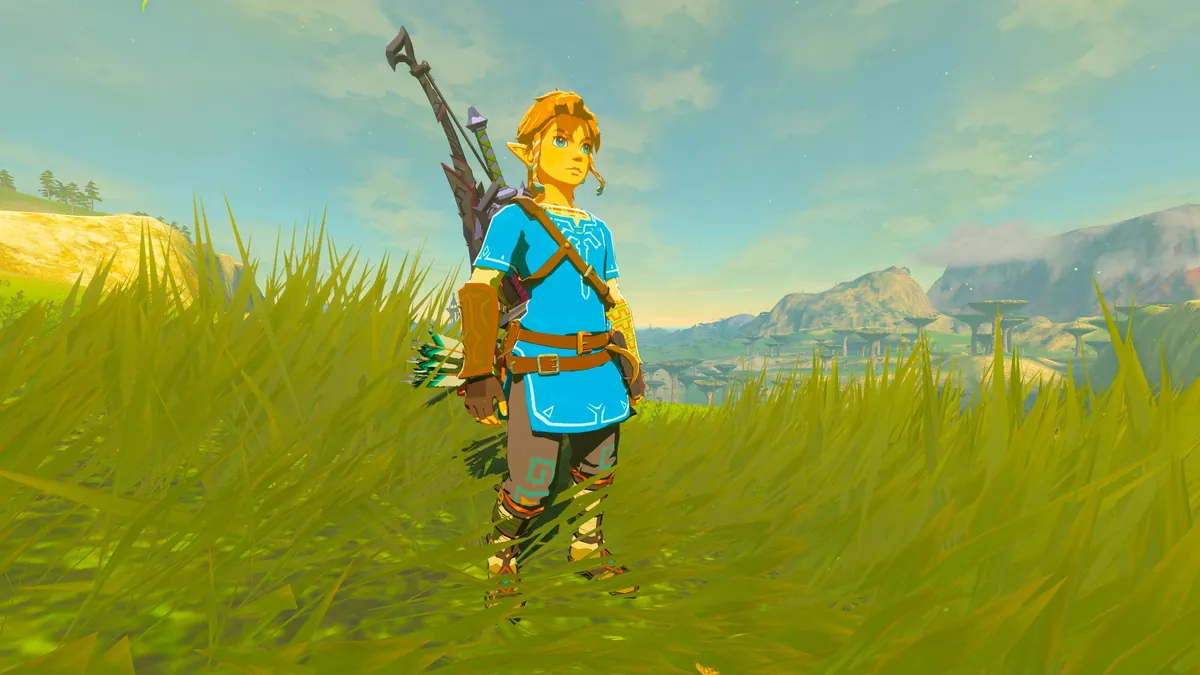
Running The Legend of Zelda: Breath of the Wild on PC without an emulator is no longer theoretical. Launched in mid-October 2026 and already past 5,100 stars on GitHub, the open-source Savage Wind Recomp project has hit a major engineering milestone with Alpha 6 (v0.6.0-alpha.6), released on November 16, 2026.
Rather than relying on traditional console emulation, the tool statically translates the Nintendo Switch v1.9.0 release into a native application for Windows and Linux, including SteamOS handhelds like the Steam Deck. The full campaign and both DLC packs are playable from start to finish, complete with 4K resolution, ultrawide support, and frame rates scaling all the way from 30 to 360 FPS.
Static Recompilation vs. Emulation: Why Performance Changes Completely
Until recently, playing Hyrule's open-world adventure on PC meant relying on emulators such as Cemu, Yuzu, or Ryujinx. Those programs mimic console hardware and translate CPU instructions on the fly during gameplay, introducing heavy processor overhead and shader compilation hitches.
Savage Wind Recomp takes the native path, echoing what the community achieved with native PC recompilation for Zelda: Ocarina of Time. During initial setup, the utility reads the Switch game's original ARM64 binaries (main, SDK, and multimedia modules) and compiles them once into native x86-64 PC machine code. That one-time build takes roughly 15 minutes on a 12-thread CPU.
From that point on, your desktop or handheld processor executes native code directly. Nintendo's proprietary NVN graphics calls and Maxwell shaders are translated to Vulkan 1.3, while Horizon OS system services are reimplemented natively. According to the project's status tracker, the recompiler itself sits at 100% completion, Horizon OS services at 95%, and Vulkan graphics rendering at 92%.
Alpha 6 Brings NVIDIA DLSS, AMD FSR 4, PGO, and 11,615 Precompiled Pipelines
Dubbed "the upscaler update," release v0.6.0-alpha.6 on the official Savage Wind Recomp GitHub repository packs an impressive stack of low-level PC upgrades. Headlining the update is NVIDIA DLSS support on Windows for GeForce RTX GPUs, paired with smart hardware-aware model selection: RTX 20 and RTX 30 cards automatically use NVIDIA's CNN model, while RTX 40 series and newer GPUs default to the Transformer model.
The developer's benchmarks explain why. On an RTX 3060, the heavier Transformer model cost more frame time than DLSS recovered. Using the right model at 4K with the demanding Savage preset at 100% render scale, an RTX 3060 jumps from 94 FPS native to 123 FPS with DLSS Performance. Savage Wind does not bundle NVIDIA's proprietary library either; instead, Savage Wind Configuration fetches the official DLL directly from NVIDIA's own repository on the user's machine.
AMD FSR 3 and FSR 4 also return in full force, adding a Native anti-aliasing mode and moving motion vector generation onto a dedicated CPU thread so CPU-bound scenes stop stalling. Combined with fixed frame-generation pacing on its own thread, the reference RTX 3060 and Ryzen 5 5600X test system at 1440p (Savage preset) climbs from 102 to 125 FPS on the Great Plateau, 88 to 116 FPS in Kakariko Village, and 40 to 66 FPS in the notoriously heavy Korok Forest.
Several under-the-hood refinements further tighten frame pacing in Alpha 6:
- PGO and ThinLTO release builds: Profile-guided optimization lifts 1080p FSR 3 Quality output on the same RTX 3060 and Ryzen 5 5600X rig from 106 to 118 FPS in Kakariko and from 174 to 187 FPS at Central Tower.
- Massive anti-stutter pipeline precompilation: 11,615 graphics pipelines are compiled before gameplay begins (up from 3,993 in Alpha 5), dramatically reducing first-time traversal stutters across Hyrule.
- Lower VRAM footprint and PC-first features: Video memory allocation shrinks to 64 MB blocks instead of 256 MB (saving roughly 230 MB in short sessions), alongside native mouse camera controls, extended HDR tone mapping via RenoDX, full gyro support (Steam Input and DSU servers), Wii U save importing, and one-click updates right inside Savage Wind Configuration.
AI-Assisted Development and Strict Legal Boundaries
Project creator Revivedx is notably upfront about how quickly the codebase came together: almost all code, tooling, reverse engineering, and documentation were authored with AI assistance (Anthropic's Claude via Claude Code), directed, tested, and reviewed by a human maintainer, building on lessons from LAS Recomp. While Alpha 6 has no known progression-blocking bugs from the Shrine of Resurrection to Dark Beast Ganon, it remains an alpha release where certain cutscenes or physics interactions can still misbehave above 30 FPS and require temporarily capping the frame rate.
Just as important is the legal framework. Savage Wind Recomp ships zero copyrighted assets, zero ROMs, zero encryption keys, and no dumping or decryption utilities. It is an independent fan project unaffiliated with Nintendo that strictly follows a bring-your-own-dump model: players must supply their own legally extracted files (exefs and romfs directories) from their own Nintendo Switch copy of Breath of the Wild updated to v1.9.0 (plus optional DLC v3.0). Recompilation happens locally for personal use only and resulting binaries must never be shared.
Hardware requirements stay approachable: Windows 10 or Linux x86-64 (via AppImage), a Vulkan 1.3 capable GPU, 16 GB of RAM, a CPU with SSE4.2 support (AVX2 recommended), and around 20 GB of free disk space. For hardware enthusiasts who previously watched experiments like Zelda: Breath of the Wild running at 4K on PlayStation 5, seeing this level of polish on native PC hardware is striking. While Alpha 7 will arrive at a slightly slower pace, a full Beta targeting comprehensive mod support remains slated for the coming weeks.
My Test Bench
What stands out most to me on this spec sheet is not simply seeing an RTX 3060 clear 120 FPS at 4K, but how thoughtfully the project tackles classic PC bottlenecks. Splitting DLSS CNN for RTX 20 and 30 cards from the Transformer model on RTX 40 and newer hardware, offloading FSR motion vectors to a separate thread, and precompiling 11,615 Vulkan pipelines before launch show a level of low-level care that many official commercial ports still miss.
The open acknowledgment of AI-assisted static recompilation also signals a real shift in how fast preservation tooling can mature when guided by disciplined human review. In roughly a month, Savage Wind Recomp has built a leaner, sharper alternative to runtime emulation while drawing a strict line around copyright compliance. High-framerate physics quirks still need smoothing out before Beta, yet as an engineering showcase, Alpha 6 is already remarkable.

PC hardware enthusiast and competitive gamer, Arthur 'Heimdall' splits his time between France and the UK working in enterprise B2B software solutions. A business school graduate passionate about component benchmarking, he has been building, modding, and tuning PCs since childhood, optimizing every thermal degree and millisecond of display latency. An avid gamer across Assassin's Creed and sandbox titles, he forged his alliance with Grimtag and Chaya during late-night World of Warcraft raids before joining Pro-Gamer.