"I Lost Track of the Versions": Former Capcom Manager Reveals How Resident Evil 7 Was Rebuilt From Scratch
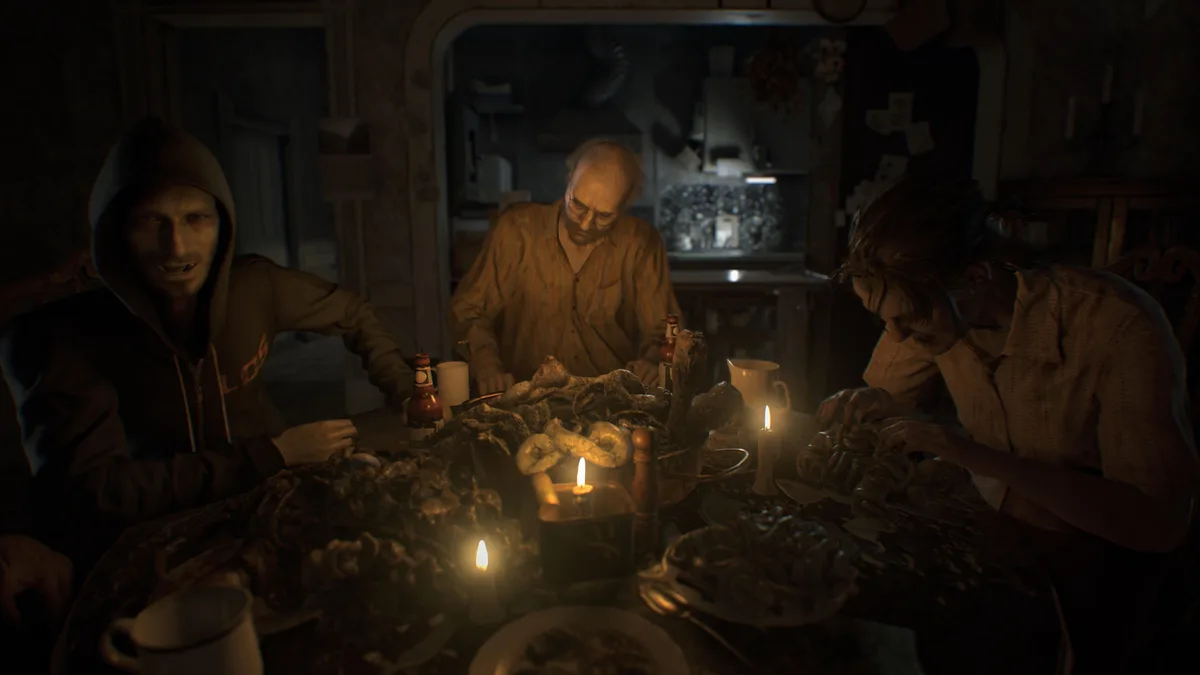
When it launched in January 2017, Resident Evil 7: Biohazard delivered one of the boldest creative reinventions in modern survival horror history. Yet behind the suffocating Louisiana bayou atmosphere and the mastery of its first-person camera, internal development at Capcom long resembled a chaotic maze. Taking to Bluesky, former Capcom senior localization and global production manager Miguel E. Corti (who notably coined the name of the in-game Sewer Gators crew and voiced the Blue Umbrella pilot) pulled back the curtain on the turbulent false starts that nearly derailed the seventh mainline entry before it found its true identity.
The Shadow of Resident Evil 6 and a Revolving Door of Scrapped Legacy Heroes
Miguel E. Corti first highlights an often-overlooked paradox: from a purely commercial standpoint, Capcom executives were thrilled with Resident Evil 6, which sold roughly 6 million copies in its first year and saw North American and European sales outpace Japan for the first time in franchise history. However, stung by the harsh critical reception and watching The Last of Us sweep both awards and sales charts (despite also featuring voice actor Troy Baker), the development team desperately wanted to win back critical prestige with a narrative-driven single-player experience.
Early iterations of Resident Evil 7 initially tried doubling down on deep series lore and Umbrella connections. Developers cycled through numerous pitches starring legacy protagonists, floating Leon S. Kennedy, then Rebecca Chambers, before pivoting to Jill Valentine and even the mercenary Hunk (whose codename, Corti reveals, originally stemmed from an early Japanese mistranslation of the name "Hank"). "It was so all over the place, I lost track of the versions. The development was in a rut," the former Capcom manager explained.
The First-Person Mandate, Evil Dead (2013) Inspirations, and a Silent Ethan Winters
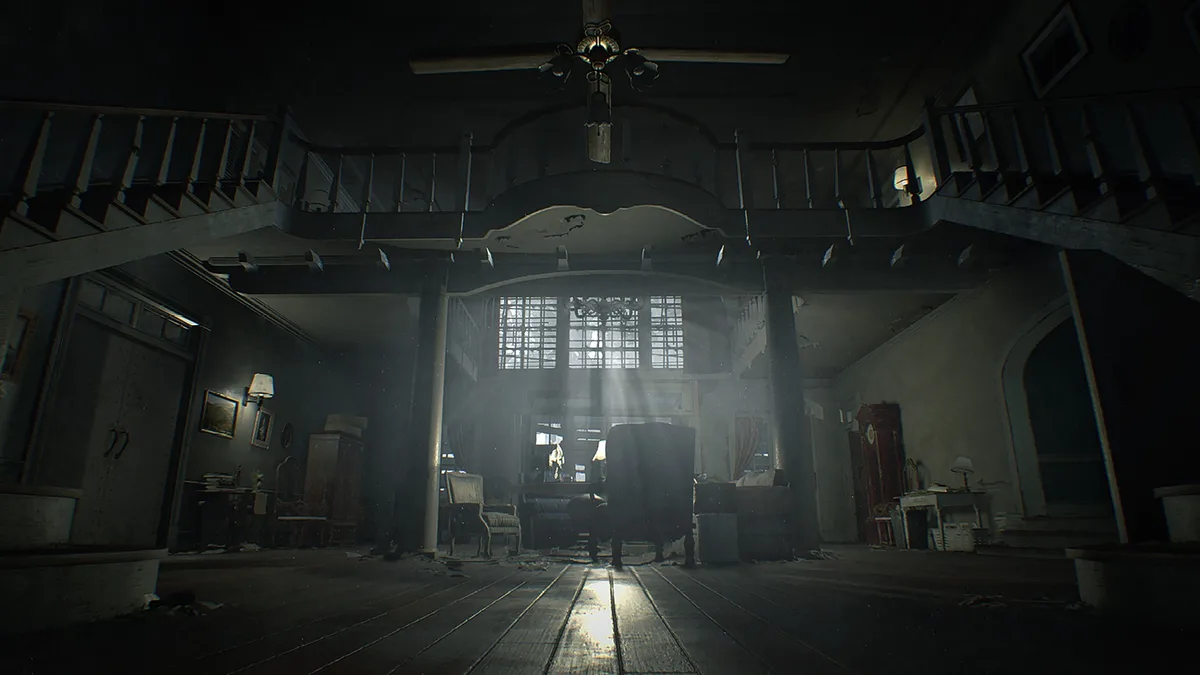
The breakthrough came following a major corporate restructuring at Capcom, which consolidated the franchise under a dedicated division and issued a mandate to rebuild Resident Evil 7 from scratch. Driven directly by hands-on executive producer Jun Takeuchi, the team made a bombshell decision: shift the perspective to first-person, build photogrammetric assets on a brand-new proprietary engine (whose technological foundation continues to evolve today through Capcom's REX Project upgrade for RE Engine), and develop full virtual reality compatibility starting with the Kitchen E3 tech demo.
To recapture the intimate dread of the original 1996 mansion inside a single terrifying house, director Koshi Nakanishi and external screenwriter Richard Pearsey drew direct inspiration from the visceral 2013 Evil Dead film remake. In fact, the name of Ethan's missing wife, Mia, was lifted directly from the protagonist of the 2013 movie. Even the found-footage VHS tapes filmed by the Sewer Gators sparked internal debate: localization staff pointed out how strange it was for 2010s internet content creators to carry analog VHS camcorders instead of digital cameras, though the developers insisted on keeping the retro horror trope.
Corti also revealed that the executive producer originally wanted Ethan Winters to be a completely silent protagonist in the vein of Gordon Freeman from Half-Life. The concept was eventually scrapped once the team realized an emotional reunion with a wife presumed dead simply could not work if the lead character failed to speak or react, though remnants of that restraint still explain why Ethan famously under-reacts to gruesome injuries throughout the final game.
A Dragon Quest Moral Choice and Last-Minute Panic Over Chris Redfield's Face
According to Miguel E. Corti, the late-game moral choice between curing Mia or Zoe was injected when story production was nearly finished, simply because the executive producer had been playing a Nintendo DS entry of Dragon Quest featuring a similar bride-selection dilemma. Internal playtesting immediately exposed a fascinating cultural divide: every Japanese team member chose Mia, while every Western staff member picked Zoe. When the director asked why overseas staff favored Zoe over the protagonist's wife, Corti replied: "She's Ethan's wife, not mine. He thinks she's dead and then cuts off his hand and tries to kill him. Zoe has helped me and needs help." That disconnect prompted the team to shoehorn in the opening video message from Mia to build player sympathy.
Similarly, as time and budget ran tight, growing anxiety that fans might reject a title lacking classic series trappings, within a subgenre where intimate dread continues to inspire new first-person psychological horror experiences on Steam, led the team to cram in a late-game boss fight, a rocket launcher, a helicopter extraction, and Chris Redfield wearing an Umbrella patch. While fans spun wild theories over Chris's unrecognizable face, Corti explained the real reason was purely technical: because the game relied on full-body photogrammetry for visual parity, Capcom had to scan a real-life model and simply could not find anyone who looked like the classic stylized Chris.
Although Resident Evil 7: Biohazard initially disappointed Capcom by barely reaching 3 million sales in its first year after the 6-million launch of its predecessor, glowing critical acclaim, word of mouth, and the momentum of Resident Evil Village ultimately gave the game extraordinary legs and cemented its reputation alongside the series' greatest entries.
My Perspective: How Creative Chaos Saved the Soul of Survival Horror
Reading Miguel E. Corti's candid recollections, I am struck by how often the survival of a legendary franchise hinges on a studio's willingness to admit when a project has hit a dead end. Had Capcom stubbornly pushed forward with those early drafts overloaded with convoluted Umbrella callbacks and legacy heroes parachuted in for safe fan service, I have no doubt the series would have exhausted itself for good. What has always captivated me about Resident Evil 7: Biohazard, even with its stitched-together third act and that jarring choice between Mia and Zoe, is the raw, suffocating honesty of its opening hours inside the Baker house. By tearing everything down and locking players inside a decaying estate in first-person, the team proved that genuine vulnerability remains the beating heart of horror.

Based on the outskirts of New York City, Chaya 'Chayane' spent five years studying software engineering in Montreal before returning to her home state. A Full-Stack developer and Deep Learning AI architecture researcher, she explores neural networks and algorithmic optimization while engineering data pipelines for Retrocharting and Gamescharting alongside Grimtag. A gamer for over 20 years and an avid collector of Nintendo history and The Legend of Zelda, she explored World of Warcraft's Azeroth before bringing her deep technical background to video game analysis.